
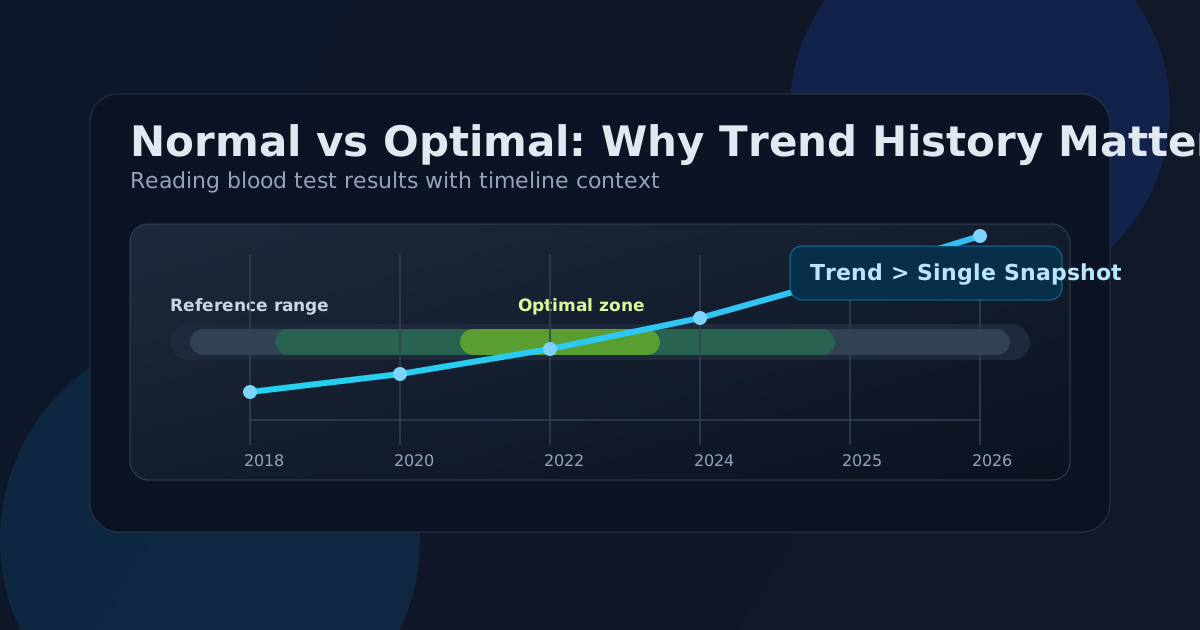
You get a blood test, open the report, and immediately look for one thing: is the number inside the lab range? That is a sensible first step, but it is not the whole story.
This guide focuses on one practical distinction: normal vs optimal. In real life, the most useful signal is often not one number, but how that number moves over time.
What normal range actually means
A lab reference range is a statistical interval from a population sample. It helps flag values that are clearly unusual, but it does not automatically define your personal target.
On a report, you usually see the measured value, the unit, and the reference interval. Example: Ferritin 38 ng/mL with a reference range of 30 to 400 ng/mL.
A broad interval like this can label very different physiological states as in-range. That is why "normal" is not always the same as "optimal."
Why normal does not always mean optimal
Optimal is context-dependent — not a universal numeric target printed on reports. It reflects your baseline, symptoms, medications, and long-term trajectory when reviewed with a clinician. Two people can have the same in-range value and very different clinical interpretation.
This distinction appears often with various biomarkers: one result may look fine in isolation, while the trend tells a different story.
Why history often matters more than one result
A single blood test is a snapshot. Hydration, illness, inflammation, season, and lab variability can shift that snapshot.
Repeated measurements show direction. A gradual decline or rise across years is often more meaningful than a one-time in-range flag.
For a full workflow on building and maintaining a timeline, use tracking lab results over time.
Use a personal baseline, not only population ranges
Your baseline is where a marker tends to sit when you are stable. Over time, this baseline often becomes more useful than a generic range printed on one report.
Example ferritin trend:
- 2018: 92 ng/mL
- 2020: 84 ng/mL
- 2022: 79 ng/mL
- 2024: 38 ng/mL
Even if 38 is still in-range on one report, a sustained decline may be worth discussing with a clinician — ferritin interpretation also depends on inflammation markers, transferrin saturation, and symptoms, not trend alone. This is why prior reports are important during follow-ups.
A practical interpretation checklist
When reviewing a new report, this five-step check is usually enough:
- Confirm marker name, unit, and report-specific range.
- Compare with your previous one to three measurements.
- Check trend direction before reacting to one value.
- Add context notes (illness, meds, supplements, routine changes).
- Bring this summary to your clinician.
Where this fits in your reading flow
If you want the bigger report-reading playbook, start with how to read blood test results. This page is the focused add-on for one question people ask all the time: "in range, but is it good for me?"
Use it as a quick lens before follow-ups: normal range for screening, personal baseline for context, and trend direction to discuss with your clinician — not to self-diagnose or change treatment on your own.
The bottom line
Reference ranges are useful, but they are not the whole story. Personal baseline plus trend history usually gives better interpretation than one isolated measurement.
Frequently asked questions about blood test results
What is the difference between normal and optimal blood test levels?
Normal means a value falls inside the lab reference interval printed on your report. Optimal is not a separate lab category — it describes whether a value fits your personal baseline, symptoms, and goals when reviewed with a clinician.
Can an in-range result still matter clinically?
Yes. A value can stay in-range while trending in a direction worth discussing over time. Trend context can be more useful than one isolated result, but interpretation still depends on the marker, panel, and clinical context.
Why should I keep older lab reports?
Older reports establish your personal baseline and make trends visible. Without historical context, a current value is harder to interpret accurately.
Build your blood test history as a timeline
If you want your blood test history in one place instead of scattered PDFs, MedicalHistory can help you organize and compare biomarkers over time.