
If you are new to lab tracking, HbA1c can look confusing at first. The short version: HbA1c is a long-range glucose marker. It does not show only today's blood sugar. It shows your average glucose exposure over the last few months.
That is why HbA1c is useful for trend tracking. One reading gives a snapshot, but repeated readings show direction: stable, improving, or drifting. If your HbA1c results are spread across multiple lab reports, MedicalHistory can automatically extract them and build the trend.
Here is the practical part: how to actually track HbA1c results over time.
If you are building a core tracking dashboard around HbA1c, check which markers to prioritize in your first panel.
Quick summary
- HbA1c estimates average glucose exposure over roughly 2-3 months.
- Trend direction is usually more useful than one isolated result.
- Use consistent units and dates in one timeline.
- Review HbA1c together with fasting glucose, fasting insulin, and clinical context.
- HbA1c should always be interpreted with full clinical context.
What HbA1c actually is
HbA1c means glycated hemoglobin. Glucose in blood attaches to hemoglobin molecules inside red blood cells. Because red blood cells live for around 3 months, HbA1c reflects average glucose exposure across that period.
In practical terms, HbA1c is a long-horizon marker. It is less sensitive to one unusual day and more useful for understanding medium-term metabolic direction.
If you are building a long-term lab timeline, HbA1c is usually one of the core markers to track early.
HbA1c units and common ranges
Most reports show HbA1c in percent (%). Some labs use mmol/mol. The table below shows common orientation ranges in %.
| Category | Common HbA1c range (%) |
|---|---|
| Lower risk range | Below ~5.7% |
| Intermediate range | ~5.7-6.4% |
| Higher range | ~6.5% and above |
These ranges are general orientation only. Always use your own report references and discuss interpretation with a licensed clinician.
HbA1c vs estimated average glucose
Many people wonder what an HbA1c value means in terms of daily glucose. The table below gives rough equivalents (mg/dL) for common HbA1c values. These are derived from population formulas and should not replace clinical interpretation.
| HbA1c (%) | Estimated avg glucose (mg/dL) |
|---|---|
| 5.7 | ~117 |
| 6.0 | ~126 |
| 6.5 | ~140 |
| 7.0 | ~154 |
Why HbA1c trends matter more than single values
A one-time value can be informative, but trend direction tells you whether your current strategy is working.
- Stable trend: process likely consistent.
- Gradual rise: metabolic drift may be developing.
- Gradual decline: may reflect improving long-term control when context supports it (not always reversible).
This is exactly why repeated testing in a structured timeline is more actionable than isolated report reviews.
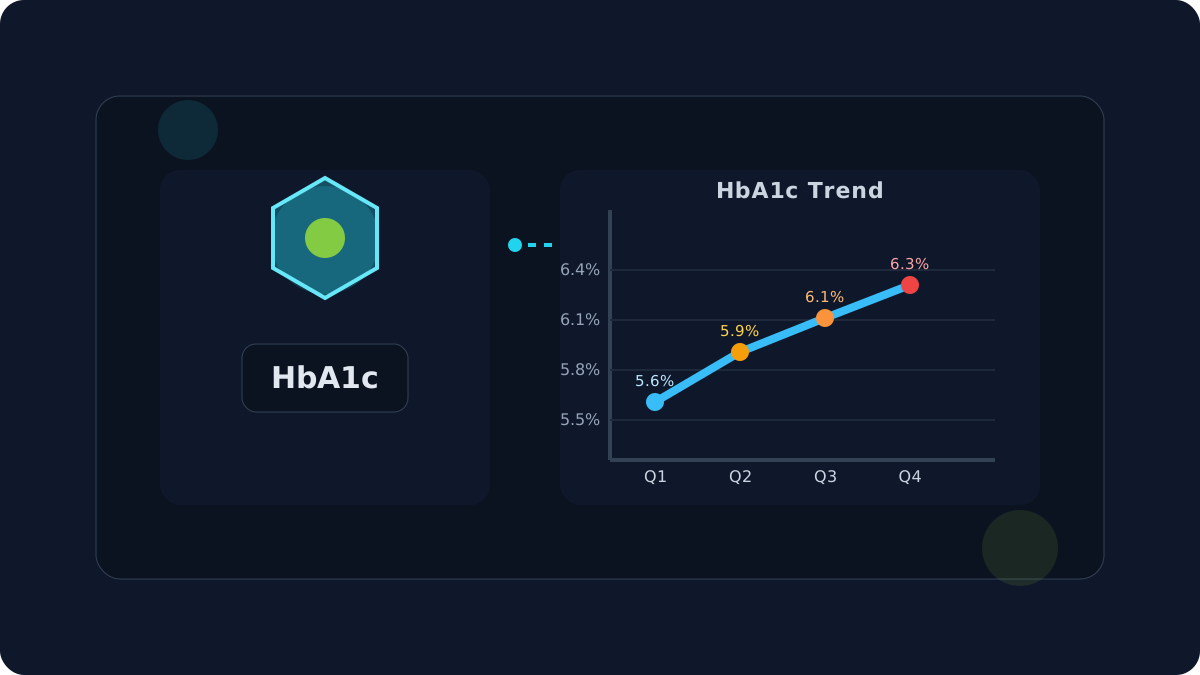
Example HbA1c trend
Example pattern showing meaningful upward drift over time:
| Quarter | HbA1c (%) |
|---|---|
| Q1 | 5.6 |
| Q2 | 5.9 |
| Q3 | 6.1 |
| Q4 | 6.3 |
Each result alone might look only slightly different, but the slope is clear. Without a timeline, this kind of drift is easy to underestimate. Most people never see this pattern because results stay buried in separate lab reports. MedicalHistory automatically builds this timeline from uploaded PDFs.
Interpretation note: what this trend usually indicates
A sustained upward HbA1c trend often indicates worsening average glucose exposure over the last several months. It does not diagnose cause by itself, but it is a strong monitoring signal that should be reviewed early.
A sustained downward trend, especially after clear lifestyle or treatment changes, can indicate improving long-range glucose control. Again, this should be interpreted with full clinical context.
What can shift HbA1c over time
- Changes in nutrition patterns and total carbohydrate exposure.
- Physical activity consistency and training interruption periods.
- Medication starts, stops, or adherence changes.
- Sleep and stress patterns over longer intervals.
- Conditions affecting red blood cell turnover (important for interpretation accuracy).
Because many factors move together, HbA1c should be read as part of a broader timeline, not as a stand-alone verdict.
Practical tracking checklist
- Keep original reports in one archive path.
- Use one canonical label for HbA1c values.
- Store test date, value, and unit every time.
- Add short notes for major lifestyle or treatment changes.
- Compare direction every 2-3 checks, not just one check.
For a full step-by-step system that connects multiple biomarkers in one timeline, read how to track lab results over time.
Related guides
Keep your dashboard focused on markers that stay comparable over time and review HbA1c together with broader metabolic context.
Frequently asked questions about HbA1c
What is the long form of HbA1c?
HbA1c stands for hemoglobin A1c, also called glycated hemoglobin. It reflects glucose attached to hemoglobin in red blood cells and is used to estimate average glucose exposure over roughly 2-3 months.
Track HbA1c with full trend context
HbA1c tracking is most useful when every result stays in one timeline with source context. Upload reports, review extracted values, and keep a clean history you can discuss at follow-ups.