
LDL cholesterol tracking helps monitor cardiovascular risk over time. A single LDL value can be useful, but risk interpretation is usually stronger when you review trend direction and full lipid panel context. If your LDL results are spread across multiple PDFs, instead of manually copying values into spreadsheets, MedicalHistory automatically extracts lipid panel results from lab reports and builds the trend.
This guide focuses on lipid panel tracking: how to read LDL in context, keep units consistent, and use direction over time instead of one snapshot.
To see where LDL fits in a broader prevention-focused marker set, read the starter guide to high-value biomarkers.
Quick summary
- Track LDL with HDL, triglycerides, and total cholesterol for full lipid context.
- Use one unit system (mg/dL or mmol/L) across all entries.
- Trend direction usually matters more than one isolated value.
- Discuss interpretation with a licensed clinician before any treatment changes.
What LDL cholesterol actually measures
LDL cholesterol (LDL-C) represents the amount of cholesterol transported by low-density lipoprotein particles in your bloodstream. It is often called “bad” cholesterol because excess LDL can build up in artery walls and contribute to cardiovascular risk. What matters for health is not one snapshot but how LDL moves over time in the context of HDL, triglycerides, and lifestyle.
LDL in the lipid panel context
LDL alone does not tell the full story. Clinicians interpret the full lipid panel: LDL, HDL, triglycerides, and total cholesterol. LDL carries cholesterol into arterial walls, while HDL helps remove it. Triglycerides provide additional metabolic context. Tracking all four markers in one timeline gives a clearer cardiovascular signal than LDL alone.
In many modern cardiovascular guidelines, LDL is interpreted together with ApoB or non-HDL cholesterol to estimate atherogenic particle burden.
If you build a lipid timeline, start with LDL and HDL at minimum. Add triglycerides and total cholesterol when available so panel relationships stay visible.
Units and typical LDL ranges
Lab reports use mg/dL or mmol/L. Do not mix them. The table below shows common orientation ranges in mg/dL.
| Category | Common LDL range (mg/dL) |
|---|---|
| Lower range (orientation) | Below ~100 |
| Near optimal | ~100-129 |
| Borderline high | ~130-159 |
| High | ~160 and above |
LDL cholesterol is sometimes reported as LDL-C in lab reports; they refer to the same value. These ranges are orientation only — treatment targets vary by overall cardiovascular risk, age, and guideline (not one universal "optimal" for everyone). Your report uses its own reference intervals. Always discuss with a clinician.
Why LDL changes over time
LDL can move gradually with diet, exercise, weight, medication, or genetics. Common drivers:
- Dietary fat and saturated fat intake patterns
- Statin or other lipid-lowering medication starts or dose changes
- Body composition and weight trends
- Physical activity consistency
- Genetic factors (e.g. familial hypercholesterolemia)
Because lipids shift slowly, a single value can miss whether you are improving or drifting. See how to track lab results over time for the full system.
Cardiovascular trend interpretation
A declining LDL trend over repeated checks often indicates that lifestyle or medication changes are having the intended effect. A rising trend can signal the opposite and deserves early review. Stable trends suggest maintenance.
LDL is sometimes used together with ApoB for cardiovascular risk assessment. If your panel includes ApoB, track both in the same timeline for richer context.
LDL vs ApoB and non-HDL cholesterol
LDL-C, ApoB, and non-HDL cholesterol are related but not identical. LDL-C estimates how much cholesterol is carried in LDL particles. ApoB estimates the number of atherogenic particles, and non-HDL captures total atherogenic cholesterol beyond HDL.
In some patients, LDL-C and ApoB move in the same direction. In others, discordance appears, where LDL-C may look acceptable while ApoB remains elevated. That is one reason many modern lipid guidelines include ApoB or non-HDL as additional risk-context markers.
Practical tracking rule: when available, keep LDL-C, ApoB, and non-HDL in the same timeline and compare trajectory, not just one isolated threshold.
What LDL levels mean
Practical orientation table for common LDL categories (mg/dL):
| LDL level | Typical interpretation |
|---|---|
| <100 | Lower range in many frameworks; individual targets vary by risk profile. |
| 100-129 | Near optimal range; monitor trend and full lipid context. |
| 130-159 | Borderline high; review lifestyle, risk factors, and trend slope. |
| 160-189 | High range; clinical follow-up is usually recommended. |
| 190+ | Very high range; needs timely clinician review and risk evaluation. |
These categories are general orientation only. Individual interpretation depends on overall risk profile, comorbidities, treatment status, and panel trend direction.
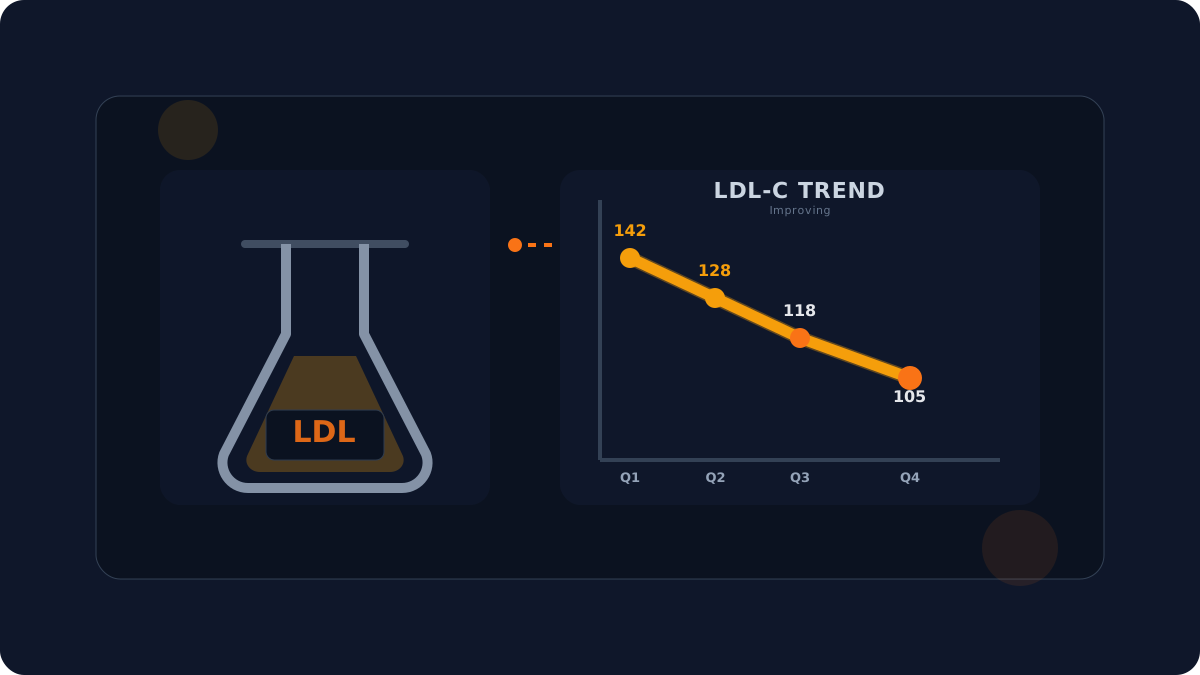
Example LDL trend
Example pattern showing meaningful downward drift after intervention:
| Quarter | LDL (mg/dL) |
|---|---|
| Q1 | 142 |
| Q2 | 128 |
| Q3 | 118 |
| Q4 | 105 |
Each quarter alone might look modest, but the slope shows sustained improvement. Most people never see this pattern because LDL results stay buried in separate lab reports. MedicalHistory automatically builds this timeline from uploaded PDFs.
Practical tracking checklist
- Keep original reports in one archive.
- Use one canonical label (LDL or LDL-C) and one unit across entries.
- Note whether LDL was measured directly or calculated from the Friedewald formula.
- Track HDL and triglycerides when available for panel context.
- Compare direction every 2-3 checks, not only one value.
Related biomarkers in the lipid panel
- HDL – reverse transport context; interpret with full panel, not in isolation.
- Triglycerides – add metabolic and dietary context to LDL interpretation.
- ApoB – particle-count context; complementary to LDL-C, not a universal replacement.
- Total cholesterol – panel summary; useful for consistency checks.
Interpreting LDL in panel context improves decision quality compared with isolated LDL-only reviews.
Common LDL questions
What is the long form of LDL?
LDL stands for low-density lipoprotein. LDL particles transport cholesterol through blood and are a core part of lipid-panel cardiovascular risk interpretation.
Is LDL 130 high?
LDL around 130 mg/dL is often considered borderline high in many frameworks. The practical next step is to review full lipid context and direction over time.
Is LDL 160 dangerous?
LDL around 160 mg/dL is commonly categorized as high. Risk depends on the full clinical picture, but this level usually warrants structured follow-up.
Can LDL be high with normal triglycerides?
Yes. LDL and triglycerides can diverge. That is why single-marker interpretation is weaker than full lipid panel review.
Does fasting affect LDL results?
In some panels, fasting status can affect calculated values, especially triglycerides and derived LDL estimates. Keep testing conditions consistent when comparing results.
Track LDL with full lipid panel context
LDL tracking is most useful when every result sits in one timeline with the rest of your lipid panel. Upload reports, review extracted values, and keep a clean history you can discuss at follow-ups.