
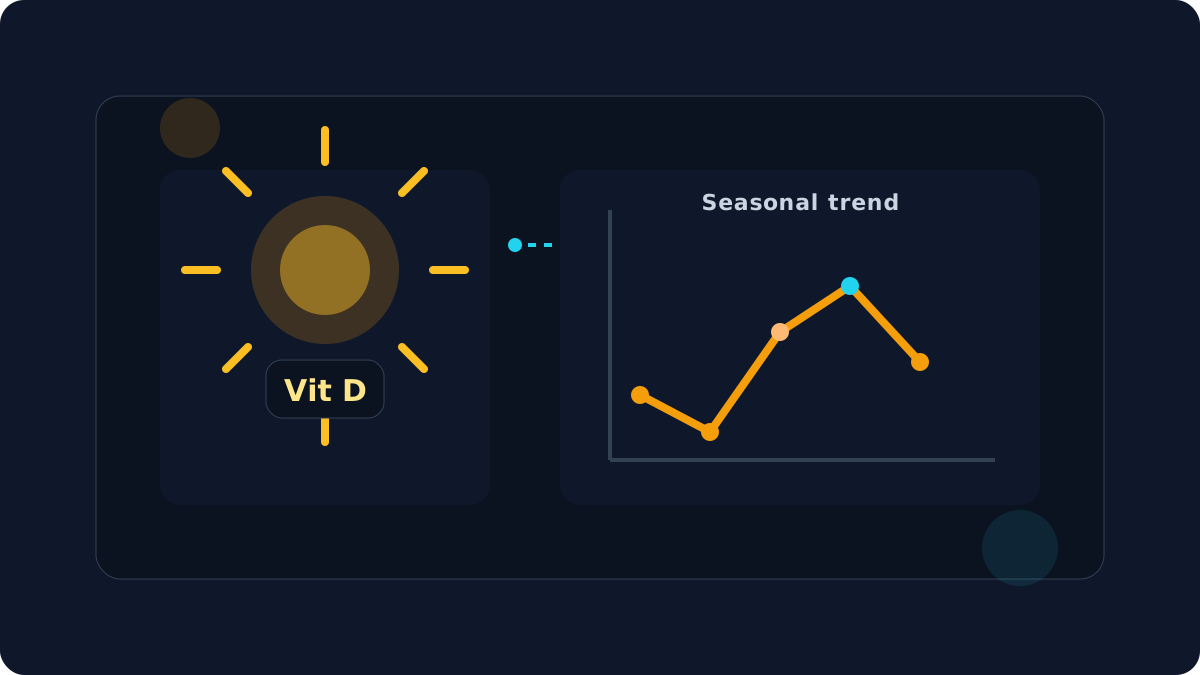
Vitamin D is tested often, but interpretation is still reduced to one threshold label too often. In practice, direction over time is more useful than one isolated result.
This guide is practical: what vitamin D reflects, why values shift by season, and how to keep a clean timeline with consistent units.
Before focusing on vitamin D alone, it helps to review which blood biomarkers are most useful to track first.
Quick summary
- Track 25(OH)D trends by season.
- Keep one canonical unit in your timeline.
- Note supplementation phases next to test dates.
- Review trajectory, not only threshold labels.
What 25(OH)D actually measures
Most reports use 25-hydroxyvitamin D (25(OH)D). This marker estimates overall vitamin D status by combining sunlight exposure, diet, and supplementation effects over time.
The key practical point is continuity. Vitamin D is highly context-dependent, so one result rarely explains your longer pattern without season and intervention history.
Seasonal vitamin D cycles first, numbers second
Before reading threshold labels, map where the test sits in the annual cycle:
- Winter: lower values are common because UV exposure drops.
- Spring: gradual recovery may start with increased outdoor time.
- Summer: values often peak with higher sunlight exposure.
- Autumn: decline can begin as daylight and outside activity decrease.
This seasonal curve is why vitamin D tracking should be trend-based, not snapshot-based.
Vitamin D levels: what the numbers mean
| Level (ng/mL) | Level (nmol/L) | Category |
|---|---|---|
| Below 12 | Below 30 | Severely deficient |
| 12–20 | 30–50 | Deficient |
| 20–30 | 50–75 | Insufficient |
| 30–50 | 75–125 | Adequate |
| 50–80 | 125–200 | Optimal (many practitioners) |
| Above 100 | Above 250 | Potentially excessive |
ng/mL and nmol/L are both common — multiply ng/mL by 2.5 to convert to nmol/L. Keep one unit in your personal timeline for consistent trend tracking.
Category labels vary by laboratory and clinical guideline — use your report's reference interval as the primary anchor; this table is orientation for trend context, not a universal treatment target.
Supplementation response curves
Vitamin D trends are often intervention-driven. Instead of only asking if a value is normal, ask how the curve reacts to your regimen:
- Slow recovery curve: gradual month-to-month improvement after dose initiation.
- Flat response curve: little change despite supplementation, requiring context review.
- Season-dominant curve: summer rise followed by autumn or winter decline.
- Over-correction pattern: rapid increase that later stabilizes after dose adjustment.
Example timeline: seasonal dip and recovery
| Month | Vitamin D (ng/mL) |
|---|---|
| Jan | 16 |
| Mar | 22 |
| Jun | 29 |
| Sep | 35 |
This shape often appears when supplementation and sun exposure both support recovery in warmer months.
Practical monitoring cadence
- Keep original reports in one archive.
- Use one consistent marker label (25(OH)D or Vitamin D).
- Normalize units before adding values to your timeline.
- Compare by season, not only by calendar date.
- Document supplementation phases next to lab dates.
For many users, a practical cadence is every 3-6 months depending on prior status and care plan. The exact interval is clinical and should be decided with a licensed professional, but consistency in timing is what makes the trend interpretable.
If possible, compare similar months year-over-year (for example winter to winter) in addition to adjacent checks. This removes some seasonal noise and gives a cleaner read on long-term trajectory.
Common vitamin D tracking mistakes
- Mixing ng/mL and nmol/L values in one chart without conversion.
- Comparing winter and summer values as if season had no effect.
- Not recording supplementation start/stop dates next to lab checkpoints.
- Treating one outlier as a trend instead of waiting for repeated pattern.
- Looking only at "normal/abnormal" labels and ignoring direction.
Most confusion in vitamin D monitoring is data-structure confusion, not biology. Once unit consistency, seasonality, and intervention timing are captured clearly, interpretation becomes much simpler.
When to recheck vitamin D
Recheck timing depends on your baseline, clinical goal, and whether you changed supplementation. As a practical tracking rule, recheck after enough time has passed for meaningful movement, then compare against both previous value and season.
A common pattern is to recheck after a regimen change, then reassess again in a different season. This gives a more realistic view of whether improvement is stable or mainly seasonal.
Quick FAQ
Is one vitamin D result enough?
Usually no. One result can show status at one point in time, but trend and season context are needed for useful monitoring.
Can vitamin D look fine in summer but drop in winter?
Yes. That seasonal swing is common, which is why timeline-based review is better than isolated checks.
Should I change dose based on this page?
No. This guide is for tracking and organization, not medical dosing decisions. Dose changes should be made with a qualified clinician.
When to pair vitamin D with related markers
- Calcium — helps contextualize vitamin D-related mineral balance.
- Magnesium — supports vitamin D metabolism and utilization pathways.
- PTH (where clinically relevant) - often complements vitamin D interpretation.
- Phosphate - adds context for broader mineral regulation trends.
- hs-CRP - helps frame immune and inflammation context when recovery patterns are unclear.
Related guides
Vitamin D review is strongest when seasonality, units, and intervention timing are tracked consistently across repeated checks.
Track vitamin D seasonality with confidence
Vitamin D trend monitoring is easiest when report ingestion is consistent. Upload reports, review extracted values, and keep one timeline you can revisit every season.