
High-sensitivity C-reactive protein (hs-CRP) is the body's low-grade inflammation signal, sensitive enough to detect chronic stress patterns that standard panels often miss.
You can have normal cholesterol, normal glucose, and normal thyroid labs while hs-CRP remains elevated. That matters because chronic inflammatory stress can shift multiple systems under the surface.
If you already track metabolic and thyroid markers, hs-CRP often explains why patterns drift over time instead of staying stable.
If this is your first pass at system-level tracking, begin with the core biomarker priority map before expanding into inflammation layers.
Quick summary
- hs-CRP is a low-grade inflammation signal.
- It does not diagnose a single disease by itself.
- It can be elevated while other labs still look in range.
- It interacts with metabolic, thyroid, and cardiovascular patterns.
- Trend direction over time is stronger than one isolated value.
What hs-CRP actually measures
C-reactive protein is produced by the liver in response to inflammatory signaling, especially IL-6-mediated pathways.
Standard CRP is mainly used for stronger acute inflammation. hs-CRP is tuned for smaller chronic elevations.
- CRP: something may be acutely wrong now
- hs-CRP: something may have been off for a while
This is why hs-CRP appears in cardiovascular risk frameworks and metabolic research models.
Reference ranges (orientation only)
Typical hs-CRP risk bands:
- below 1 mg/L: low inflammation signal
- 1-3 mg/L: moderate
- above 3 mg/L: elevated
These are risk bands, not strict diagnostic cutoffs. Values above 10 mg/L often reflect acute inflammation or infection and should usually be retested after recovery.
hs-CRP as a system-level signal
Many biomarkers answer one local question:
- LDL tracks lipid transport context.
- Insulin reflects glucose-regulation pressure.
- TSH reflects thyroid regulation signaling.
- White blood cell count (WBC) adds immune-cell activity context when inflammatory pressure persists, and neutrophils sharpen that first-line response pattern.
hs-CRP answers a broader question: is the system under inflammatory stress?
That stress can influence insulin sensitivity, lipid behavior, thyroid conversion, and recovery quality.
Why hs-CRP matters even when other labs look normal
A common pattern can look like:
- LDL in range
- glucose in range
- TSH in range
- hs-CRP elevated
This is not contradiction. It usually means output markers look stable while the environment is stressed.
Over time, that environment can shift those output markers if stress remains persistent.
The hidden connection: inflammation and thyroid conversion
One overlooked link is inflammation pressure on thyroid hormone conversion:
- FT4 can remain in range.
- TSH can remain in range.
- FT3 may still drift lower.
If hs-CRP is elevated in this context, it can help explain part of the pattern. This is a mechanistic link, not proof of single-cause diagnosis.
hs-CRP and cardiovascular risk context
hs-CRP is used in risk models because inflammatory activity can affect:
- endothelial function
- plaque stability dynamics
- lipoprotein oxidation behavior
You can still have normal LDL with elevated hs-CRP, and long-horizon risk context may still be less favorable.
hs-CRP and metabolic function
Chronic inflammation is also associated with:
- reduced insulin sensitivity
- altered energy regulation
- fatigue and slower recovery
Example pattern:
- insulin: high-normal
- glucose: in range
- hs-CRP: elevated
This can indicate early stress before obvious dysfunction appears in standard panels.
Practical pattern reading
| Pattern | What it often suggests |
|---|---|
| hs-CRP high + lipids normal | Hidden cardiovascular risk pressure signal. |
| hs-CRP high + insulin high | Metabolic stress and reduced sensitivity context. |
| hs-CRP high + FT3 low | Worth reviewing conversion context together with your clinician. |
| hs-CRP low + markers stable | System likely in a lower-stress baseline state. |
Why hs-CRP alone is not enough
hs-CRP tells you something is happening, but not the exact source.
It does not identify duration, mechanism, or single-cause diagnosis by itself.
It is strongest when combined with metabolic and thyroid markers plus context signals.
What can elevate hs-CRP
- Excess body fat and adipose-derived inflammatory signaling.
- Poor sleep quality or duration.
- Chronic psychological stress load, often reflected through stress-related cortisol patterns.
- Acute or lingering infection and illness.
- Training-load imbalance without adequate recovery, often alongside slower hemoglobin reserve resilience patterns.
- Smoking and alcohol exposure patterns, which can increase IL-6 signaling and inflammatory tone.
Trends matter more than single values
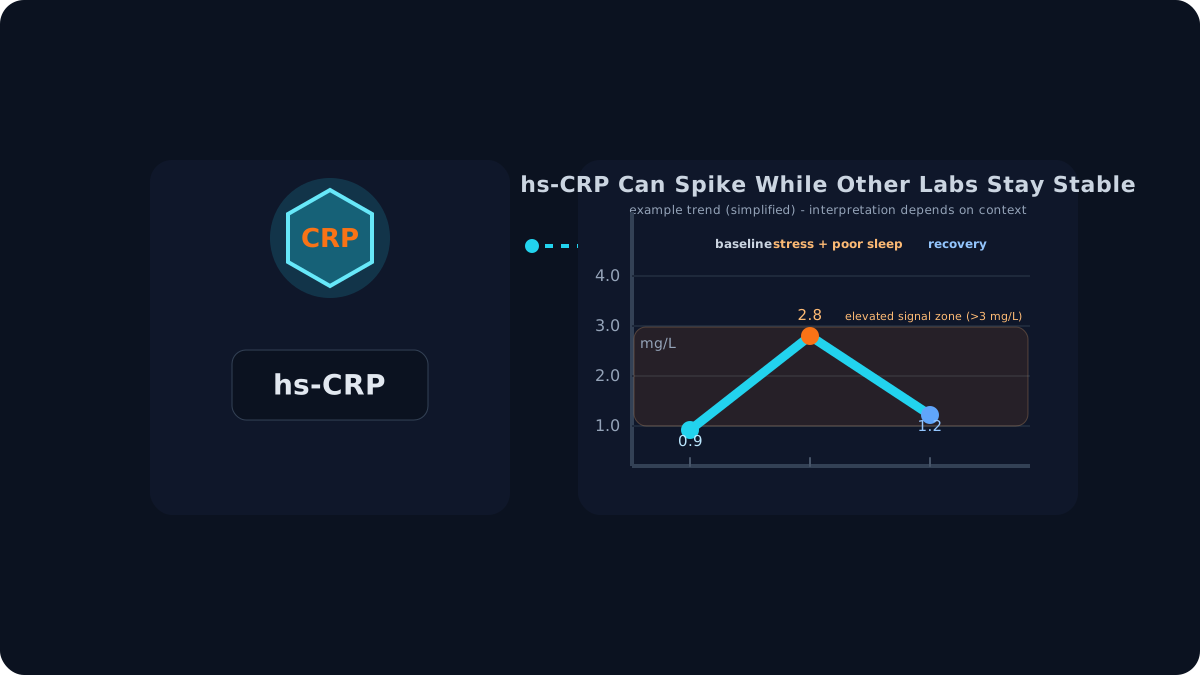
hs-CRP can be variable, so one result is easy to overinterpret.
| Time | hs-CRP | Context |
|---|---|---|
| Month 1 | 0.9 | baseline |
| Month 2 | 2.8 | poor sleep + stress |
| Month 3 | 1.2 | recovery improving |
Direction is often more informative than a snapshot: spike with context, then recovery.
Practical interpretation framework
- Check hs-CRP level: low, moderate, or elevated signal band.
- Rule out acute illness first: values above 10 mg/L often require retesting later.
- Compare with previous results under similar conditions.
- Review context: sleep, stress, illness, training load, body composition.
- Cross-check with insulin, LDL, and FT3.
For repeatable longitudinal analysis, use how to track lab results over time.
What to do if hs-CRP is elevated
This is not treatment advice, but common system levers include:
- improve sleep regularity and recovery quality
- reduce excess body fat where clinically relevant
- balance training intensity with sufficient recovery
- address chronic stress load
- retest after conditions stabilize
These are general lifestyle factors associated with inflammation in research contexts. Individual causes vary — discuss persistent elevation with a clinician before drawing conclusions.
Interpret changes across time, not in isolation.
Final takeaway
hs-CRP is not a disease label by itself. It is a system signal.
It indicates whether internal conditions look calm or under inflammatory pressure.
The most useful question is usually not "is hs-CRP high or low?" but "how does inflammatory stress interact with thyroid, metabolic, and lipid patterns in this person over time?"
Frequently asked questions about hs-CRP blood tests
What is the long form of hs-CRP?
hs-CRP stands for high-sensitivity C-reactive protein. It is a more sensitive version of the CRP blood test used to detect lower-grade inflammatory activity.
What is a normal hs-CRP level?
Generally, below 1 mg/L is considered a low inflammation signal. Interpretation should still include context and trend direction over time.
Can hs-CRP be temporarily elevated?
Yes. Illness, poor sleep, heavy stress, and recent training strain can raise hs-CRP temporarily. Retesting helps confirm whether elevation persists.
Is hs-CRP a cardiovascular risk marker?
Yes. hs-CRP is commonly used with lipid markers to estimate long-term cardiovascular risk context.
Can hs-CRP affect thyroid function patterns?
Inflammatory load can influence thyroid hormone conversion dynamics, especially T4 to T3, in some contexts.
Should hs-CRP be tested fasting?
Fasting is usually not required, but consistent testing conditions improve comparability across repeat measurements.
How often should hs-CRP be measured?
Periodically, especially when monitoring lifestyle changes, recovery quality, metabolic drift, or chronic stress load.
Track inflammation with metabolism and thyroid markers
Upload your lab results and align hs-CRP with FT3, FT4, TSH, insulin, and lipids in one timeline so system-level patterns become visible instead of hidden.