
Insulin is one of the central hormones regulating human metabolism. It controls how the body moves glucose from the bloodstream into tissues, how energy is stored, and how nutrients are partitioned between immediate use and long-term reserves.
Because of this central role, the insulin blood test is widely used to evaluate metabolic health. Insulin levels are often measured when investigating insulin resistance, metabolic syndrome, prediabetes, and early type 2 diabetes risk.
Unlike many lab markers, insulin values are often most meaningful when interpreted together with other metabolic markers such as HbA1c, fasting glucose, triglycerides, and HDL cholesterol.
This guide explains how insulin blood tests work, how to interpret insulin levels in context, and why tracking insulin trends over time is more informative than reviewing one isolated measurement.
If you want to prioritize which markers to track first, see the core biomarker priority guide.
What the insulin blood test measures
Insulin is a hormone produced by the pancreas, specifically by beta cells in the islets of Langerhans. Its main function is to regulate blood glucose.
After a meal, rising blood glucose stimulates the pancreas to release insulin. Insulin then signals tissues such as muscle, liver, and adipose tissue to absorb glucose from the bloodstream.
In laboratory testing, insulin is usually measured from a blood sample. The most common test is fasting insulin, taken after an overnight fast.
Typical measurement units include:
- µIU/mL (micro-international units per milliliter)
- pmol/L in some laboratories
The insulin test itself does not diagnose a specific disease. Instead, it provides context about how strongly the body is signaling tissues to manage blood glucose.
Fasting insulin versus post-meal insulin
Most routine lab panels measure fasting insulin, because it provides a stable baseline for metabolic interpretation.
Fasting insulin reflects how much insulin the body needs to maintain normal fasting glucose levels. When fasting insulin is elevated, it can indicate that the body requires more insulin than usual to maintain glucose balance.
Post-meal insulin measurements may also be used in research or specialized testing, but fasting insulin remains the most common clinical reference point.
For long-term metabolic tracking, fasting insulin measured under consistent conditions is typically the most comparable metric.
Typical reference ranges for insulin
Reference ranges vary between laboratories, but fasting insulin commonly falls within a range such as:
2 – 25 µIU/mL
However, reference ranges represent population statistics rather than optimal metabolic targets.
Some clinicians view lower fasting insulin levels within the reference range as consistent with higher insulin sensitivity. Higher fasting insulin values within the same range may still be interpreted differently depending on context.
This is why insulin results are usually interpreted alongside additional markers, particularly fasting glucose and HbA1c.
What high insulin levels may indicate
Elevated fasting insulin often reflects reduced insulin sensitivity, meaning tissues require stronger insulin signaling to absorb glucose efficiently.
Common contexts where higher insulin levels may appear include:
- insulin resistance
- metabolic syndrome
- early stages of type 2 diabetes risk
- obesity or central adiposity
- high carbohydrate intake combined with sedentary lifestyle
Importantly, insulin elevation may appear years before glucose markers change. This is one reason some clinicians consider insulin measurement useful for early metabolic context.
A single elevated insulin result does not establish diagnosis. Interpretation requires trend review and comparison with related biomarkers.
What low insulin levels may indicate
Low fasting insulin values may appear in several contexts:
- high insulin sensitivity
- prolonged fasting or low carbohydrate intake
- advanced pancreatic beta cell dysfunction
- certain endocrine disorders
In isolation, a low insulin value is rarely interpreted as problematic if glucose markers remain stable.
As with most biomarkers, clinical meaning depends on the broader metabolic picture rather than one isolated measurement.
Why insulin trends matter
Insulin values can fluctuate depending on recent diet, sleep quality, physical activity, and stress-related cortisol patterns, and can also be reviewed with liver-context markers such as ALT. For this reason, trend analysis across multiple measurements is more useful than interpreting one report.
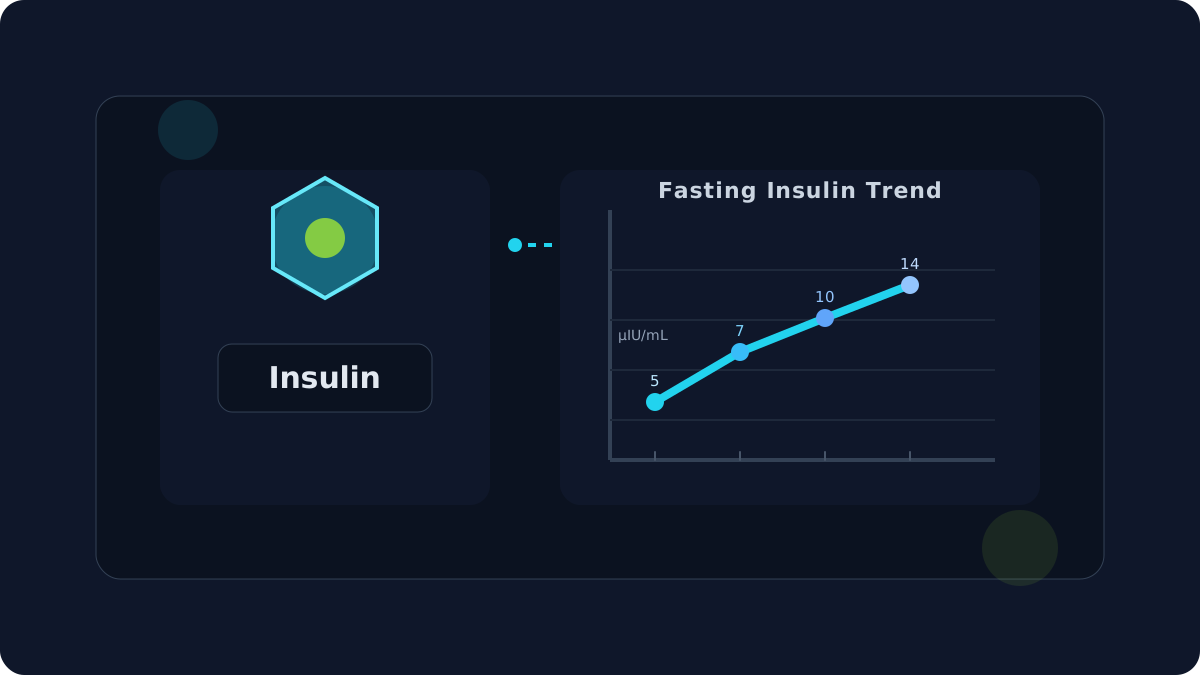
Consider a simplified trend example:
Fasting insulin trend:
- 2019 — 5 µIU/mL
- 2021 — 7 µIU/mL
- 2023 — 10 µIU/mL
- 2025 — 14 µIU/mL
Even if all values fall within a laboratory reference range, a steady upward pattern may indicate gradual loss of insulin sensitivity.
Trend direction often provides more useful insight than one threshold crossing.
Tracking insulin together with glucose and HbA1c helps clarify whether metabolic regulation is stable, improving, or gradually drifting.
Insulin with related metabolic markers
Insulin interpretation is stronger when combined with related biomarkers.
Important markers often reviewed together include:
- HbA1c — Reflects average blood glucose over the previous two to three months.
- Fasting glucose — Represents immediate blood glucose regulation.
- Triglycerides and HDL cholesterol — Provide additional metabolic context, particularly for insulin resistance patterns.
When these markers move together, they often provide clearer metabolic insight than any single value alone.
For example, rising fasting insulin combined with increasing triglycerides and declining HDL may suggest evolving metabolic imbalance even before glucose levels change significantly.
Practical steps after receiving an insulin result
A useful post-report routine can improve interpretation quality.
Practical steps include:
- Confirm the measurement unit and reference range from the laboratory.
- Compare the result with previous insulin measurements if available.
- Review fasting glucose and HbA1c results from the same time period.
- Note major lifestyle factors such as sleep, diet, weight change, or illness.
- Record the value in a long-term biomarker timeline.
Keeping results organized chronologically makes future interpretation much easier.
Why long-term tracking improves interpretation
Insulin levels are part of a dynamic metabolic system rather than a static number. Reviewing results over months or years reveals patterns that single reports cannot show.
Long-term tracking helps answer practical questions such as:
- Is insulin stable or gradually increasing?
- Did lifestyle interventions influence insulin trends?
- Are glucose and HbA1c changing in parallel?
Organizing lab results in a clear timeline allows both patients and clinicians to see metabolic direction instead of isolated values.
Final takeaway
The insulin blood test provides valuable insight into metabolic regulation and glucose handling. However, interpretation rarely comes from one number alone.
The most useful approach is structured interpretation: verify the report context, compare related biomarkers, and track insulin values over time.
When insulin trends are reviewed together with glucose markers and lipid profiles, they provide a clearer picture of long-term metabolic health.
Common questions about insulin blood tests
What is a normal fasting insulin level?
Typical laboratory reference ranges for fasting insulin are often around 2–25 µIU/mL, although ranges vary between laboratories. Interpretation depends on context and should be considered together with glucose and HbA1c.
What insulin level indicates insulin resistance?
Persistently elevated fasting insulin — even within laboratory reference ranges — may suggest reduced insulin sensitivity when combined with rising glucose, triglycerides, or HbA1c. No single threshold value defines insulin resistance; clinical evaluation requires trend context and related markers.
Does high insulin always mean diabetes?
No. Elevated insulin can appear years before glucose levels rise. It often reflects reduced insulin sensitivity rather than diabetes itself.
Should insulin be measured fasting?
Most clinical insulin tests are measured after an overnight fast. Fasting conditions make results more comparable between tests.
How often should insulin levels be checked?
Frequency depends on clinical context. Some people measure insulin during routine metabolic panels or when monitoring metabolic health trends.
Track insulin with glucose and lipid markers
If you want your insulin results in one timeline with HbA1c, fasting glucose, and lipids, MedicalHistory can help you organize and compare metabolic biomarkers over time.