
A common moment: you open your blood test panel, scan the markers, and notice ALT slightly above range. Everything else may look acceptable. No major symptoms. No obvious explanation. Yet that one number creates uncertainty.
ALT is often interpreted too quickly: elevated equals bad, normal equals safe. In reality, ALT is not a diagnosis or a performance score. It is a signal of how liver cells are handling stress, often detected before symptoms appear.
If you are building a clean baseline first, start with the core biomarker priority framework and then interpret ALT as part of a layered system pattern.
ALT is a cellular leakage signal, not a performance metric
ALT (alanine aminotransferase) is an intracellular enzyme. Under stable conditions, ALT stays inside liver cells. When those cells are stressed, damaged, or turning over faster, ALT leaks into bloodstream.
This distinction is central: ALT does not directly measure how well the liver performs. It reflects how much cellular stress or disruption is currently present.
Low ALT usually reflects minimal detectable leakage, while elevated ALT reflects greater cellular stress. Direction matters just as much: rising ALT suggests ongoing pressure, and falling ALT usually suggests recovery or reduced load.
ALT shows that stress exists. It does not, by itself, explain the cause.
Why ALT can rise without symptoms
The liver has significant reserve capacity. It can preserve metabolic and regulatory output while still experiencing cellular stress.
This creates a familiar pattern: no pain, no obvious dysfunction, but elevated ALT. That is not a paradox. It usually means compensation is still working.
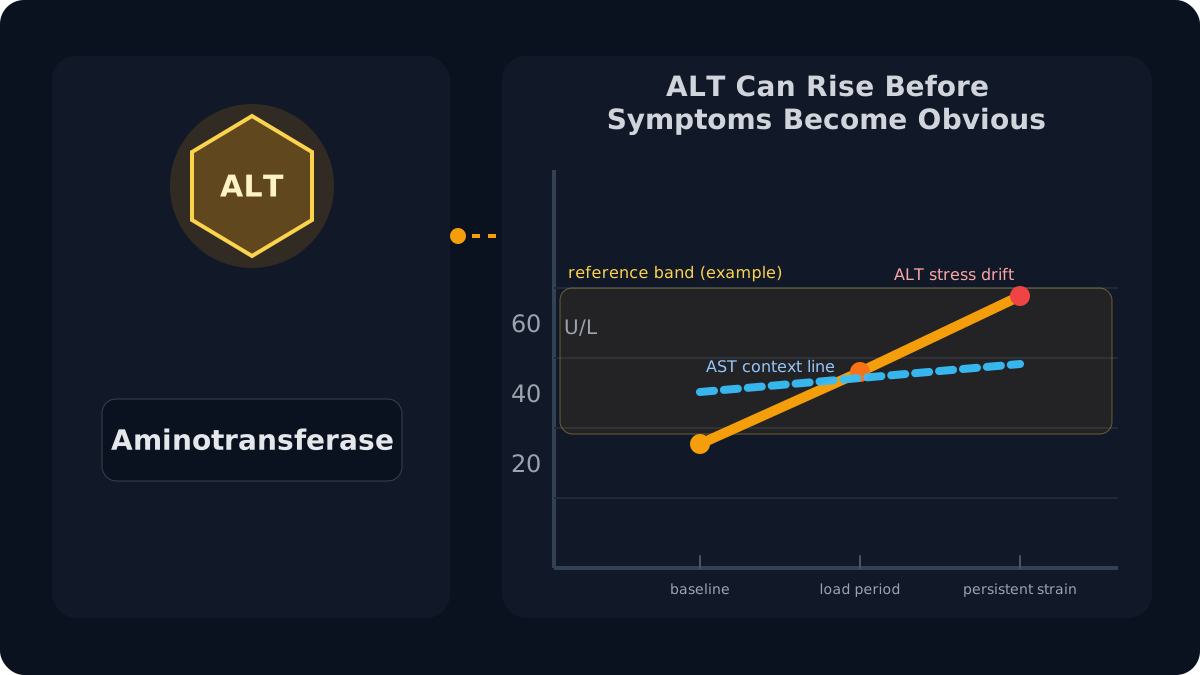
ALT often rises before functional decline becomes overt. That can make it a useful monitoring signal when read with AST and context, but it is easy to misread when isolated from context.
ALT vs AST: why one number is incomplete
ALT becomes much more informative when reviewed with AST. ALT is relatively liver-dominant, while AST can reflect liver, muscle, and other tissue contribution.
ALT above AST often suggests a more liver-dominant stress pattern, while AST above ALT can reflect muscle load or a different systemic context. This comparison is still not diagnostic by itself, but it turns ALT from a partial signal into a directional pattern.
What actually drives ALT elevation
1) Metabolic pressure
Excess energy intake, insulin resistance, and hepatic fat load can increase intracellular stress. ALT often rises alongside metabolic-load markers such as insulin and triglycerides.
2) Alcohol exposure
Alcohol metabolism increases oxidative burden in liver cells. Even moderate but repeated intake can produce cumulative enzyme leakage over time.
In these patterns, GGT often adds early sensitivity before larger ALT drift appears.
3) Medication and compound load
Many compounds are processed through liver pathways. Depending on dose, duration, and individual variability, this can elevate ALT through repeated cellular stress.
4) Physical stress and training
Intense training can transiently raise ALT, especially when recovery quality is poor. In highly active people, this often reflects systemic load and tissue turnover rather than direct pathology.
5) Inflammatory environment
Chronic low-grade inflammatory pressure can contribute to hepatocellular stress. ALT can drift together with hs-CRP in broader system-load patterns.
Can stress and exercise raise ALT?
Yes - both physical and psychological stress can transiently raise ALT. Intense or unfamiliar training can increase ALT because muscle and liver cells experience higher turnover.
In active people, ALT can rise modestly above baseline after a heavy training block and still reflect transient load rather than pathology, especially when it improves after recovery.
Sustained psychological or physiological stress may contribute to liver-cell load through broader metabolic and recovery pathways; interpret ALT changes with training, sleep, and illness context rather than one hormone alone.
The key distinction: stress-related elevation is usually transient. Retesting after a recovery period helps separate temporary load from persistent liver-cell stress.
The problem with normal ranges
Reference ranges are statistical windows, not guarantees of optimal physiology. Two people can both be in range while showing very different trajectories.
- Person A: stable ALT over time.
- Person B: ALT rising within range.
Those are biologically different states. A slightly elevated ALT moving down can be lower risk than a normal-range ALT that is steadily rising.
Time matters more than one ALT value
A single ALT result is a snapshot without direction. Trend often carries the real signal.
Pattern A: 24 - 36 - 49 over three checks. Pattern B: 62 - 41 - 27 over three checks.
Pattern A is near range but worsening. Pattern B started high but is resolving. Without time context, ALT is easy to overinterpret or underinterpret.
ALT in a system framework
ALT answers whether cellular stress exists. AST adds direction and tissue context. Albumin adds slower liver synthetic context. Metabolic and inflammatory markers explain why that stress may be happening. Bilirubin helps show whether recycling, processing, and clearance flow are staying aligned as load changes over time, and repeated testing shows whether the pattern is resolving or compounding.
Transient versus persistent elevation
Transient elevation
- Recent illness.
- Intense training block.
- Short-term dietary or lifestyle shift.
These patterns often normalize when conditions stabilize.
Persistent elevation
- Ongoing metabolic overload.
- Regular alcohol exposure.
- Sustained inflammatory pressure.
This distinction cannot be made from one test. It requires repeat measurement under comparable conditions.
Practical interpretation approach
- Check whether ALT is stable, rising, or falling across repeated tests.
- Review recent context changes: diet, alcohol, training, sleep, and illness recovery.
- Compare ALT with AST for directional pattern context.
- Layer metabolic and inflammatory markers when ALT pattern remains unclear.
- Retest after conditions normalize to separate transient drift from persistent load.
Final takeaway
ALT is not a disease label. It is a reflection of how liver cells handle load over time. Normal ALT does not always mean optimal conditions. Elevated ALT does not always mean irreversible damage.
ALT is not telling you what is broken. It is telling you how much pressure the system is under.
The highest-value interpretation sequence is simple: ALT, AST, context, then time. That turns ALT from a confusing isolated value into a meaningful adaptation signal.
Frequently asked questions about ALT blood tests
What is the long form of ALT?
ALT stands for alanine aminotransferase, an enzyme found mostly in liver cells that can rise in blood when hepatocytes are stressed or damaged.
What is a normal ALT level?
Reference ranges vary by laboratory, but are often around 7 to 56 U/L. Direction of change and clinical context usually matter more than one isolated value.
Can ALT be elevated without liver disease?
Yes. Exercise load, alcohol intake, medications, supplements, and short-term metabolic stress can all elevate ALT without structural liver disease.
Is ALT specific to the liver?
ALT is relatively liver-focused, but it should still be interpreted with AST and broader context for better signal quality.
Can exercise increase ALT?
Yes. Intense or unfamiliar training can temporarily increase ALT, especially when recovery is insufficient.
How quickly can ALT change?
ALT can shift over days depending on stressors such as illness, alcohol exposure, training load, and recovery conditions.
Should ALT be retested?
Usually yes. Repeat testing under comparable conditions helps separate transient changes from persistent liver-cell stress patterns.
One uncomfortable question
If your ALT is still in range but rising each cycle, are you truly in a stable state, or quietly compensating while liver-cell stress keeps accumulating?
Keep ALT in trend context
Review ALT alongside AST, metabolic load, and inflammatory context so direction is visible before noise becomes confusion.