
Triglycerides are lipid molecules used by the body to store and transport energy. In blood tests, triglyceride concentration reflects how much energy is circulating in triglyceride-rich lipoprotein particles at the time of measurement.
Although triglycerides appear on the same panel as cholesterol markers, they represent a different biological process. Cholesterol mainly supports cellular structure and hormone synthesis, while triglycerides function primarily as a transportable energy reserve.
Quick summary
- Triglycerides represent circulating energy stored in lipid form.
- Most fasting triglycerides travel inside VLDL (very-low-density lipoprotein) particles.
- Elevated values can reflect increased hepatic lipid production or reduced metabolic clearance.
- Triglycerides interact with LDL cholesterol, HDL cholesterol, and ApoB.
- Long-term trends provide more useful metabolic context than isolated measurements.
What triglycerides measure in blood tests
Triglycerides consist of three fatty acids attached to a glycerol backbone. This structure allows them to store a large amount of chemical energy in a compact molecular form.
After dietary fat is absorbed in the intestine, triglycerides are packaged into chylomicrons, which transport lipids through the bloodstream to peripheral tissues.
Between meals, the liver synthesizes triglycerides from excess energy substrates and releases them into circulation inside VLDL particles. These particles deliver fatty acids to muscles, the heart, and adipose tissue.
Blood triglyceride measurements reflect the concentration of triglyceride-rich particles circulating in plasma at the time of the test.
Triglycerides in the lipid panel
Triglycerides are usually measured together with other lipid markers in a standard lipid panel:
- LDL cholesterol
- HDL cholesterol
- Total cholesterol
- Non-HDL cholesterol
- ApoB (when available)
Each marker reflects a different aspect of lipid transport. Triglycerides provide information about circulating metabolic fuel and hepatic lipid production, while LDL and ApoB add cholesterol and particle-burden context.
Typical triglyceride ranges
Triglycerides are usually reported in mg/dL, although some laboratories use mmol/L.
| Category | Triglycerides (mg/dL) |
|---|---|
| Lower range (orientation) | Below ~100 |
| Normal | ~100-149 |
| Borderline high | ~150-199 |
| High | ~200-499 |
| Very high | 500 and above |
These ranges are general orientation points, not strict diagnostic thresholds or universal "optimal" targets. Interpretation depends on full lipid panel context, fasting status, metabolic markers such as glucose, insulin, and HbA1c, plus individual clinical history.
Why triglyceride levels change
Triglycerides are sensitive to metabolic conditions that influence energy balance and hepatic lipid production.
- Dietary carbohydrate intake
- Alcohol consumption
- Insulin sensitivity
- Total calorie balance
- Body fat distribution
- Physical activity levels
- Genetic lipid metabolism traits
One important pathway is de novo lipogenesis, where the liver converts excess carbohydrate into fatty acids and triglycerides. Because this pathway can respond relatively quickly to metabolic inputs, triglyceride levels may shift faster than many cholesterol markers and can be interpreted alongside liver context markers such as ALT.
Triglycerides and metabolic signaling
Triglycerides often reflect how efficiently the body processes circulating energy. When excess fuel is present, the liver tends to increase production of triglyceride-rich lipoproteins.
In metabolic states associated with insulin resistance, liver VLDL production can rise, increasing triglycerides and influencing broader lipid panel composition.
Triglycerides and the HDL relationship
Triglycerides are frequently evaluated together with HDL cholesterol because these markers often move in opposite directions in common metabolic patterns.
Some clinicians use the triglyceride-to-HDL ratio as a rough context signal, especially when evaluating insulin sensitivity patterns. Ratios should still be interpreted with full clinical context, not as standalone diagnostics.
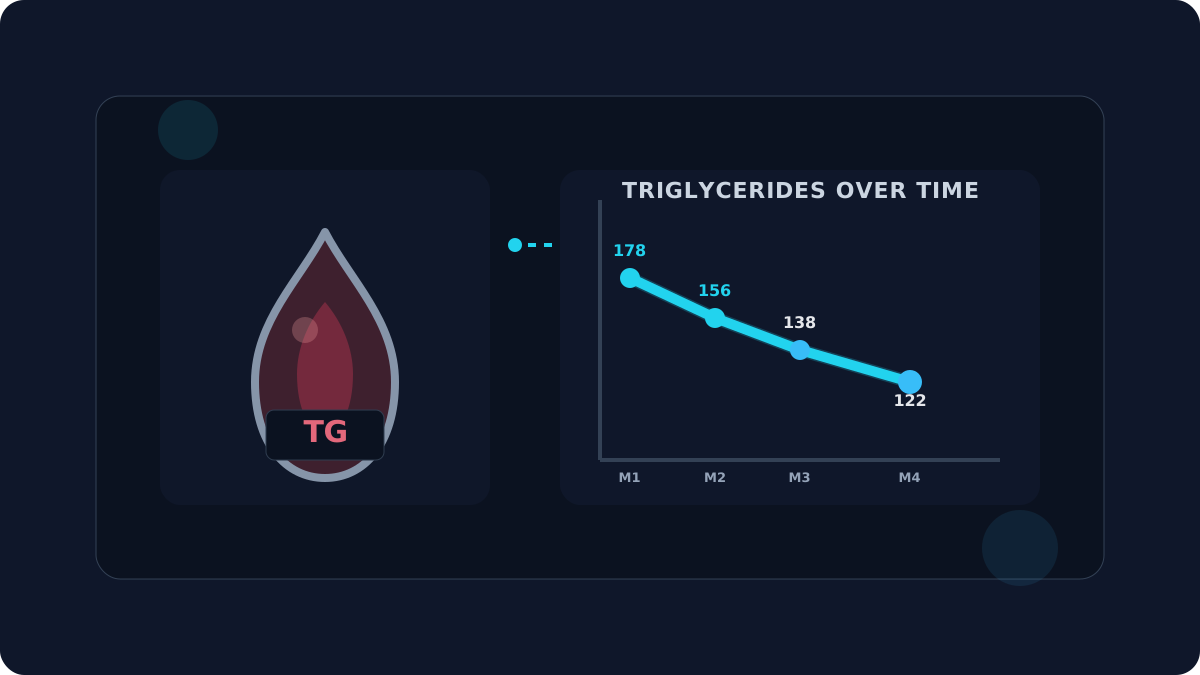
Example triglyceride trend over time
Example sequence showing a sustained downward trend:
| Measurement | Triglycerides (mg/dL) |
|---|---|
| Measurement 1 | 178 |
| Measurement 2 | 156 |
| Measurement 3 | 138 |
| Measurement 4 | 122 |
Each value may look only moderately different on its own, but the full sequence shows clear directional change. Timeline review helps distinguish short-term fluctuation from sustained metabolic shift.
Triglycerides vs LDL cholesterol
Triglycerides and LDL cholesterol describe different aspects of lipid biology. LDL cholesterol measures cholesterol carried in LDL particles, while triglycerides represent circulating energy-storage lipids carried primarily in triglyceride-rich lipoproteins.
Together with ApoB, these markers can help describe both particle number and lipid cargo composition.
Practical triglyceride tracking checklist
- Track triglycerides with LDL, HDL, and ApoB from the same panel when possible.
- Keep testing conditions consistent (fasting status and test timing).
- Avoid alcohol for 24-48 hours before testing to reduce short-term variability.
- Record major lifestyle changes such as diet shifts or new training routines.
- Compare direction across multiple measurements, not one isolated value.
If you are narrowing your dashboard to the highest-signal markers first, use this biomarker prioritization framework.
Related lipid biomarkers
- LDL cholesterol - cholesterol carried in LDL particles.
- HDL cholesterol - reverse cholesterol transport context marker.
- ApoB - estimate of circulating atherogenic particle number.
- Non-HDL cholesterol - total cholesterol in atherogenic particles.
Common triglyceride questions
Do triglyceride levels change quickly?
They can respond relatively quickly to dietary pattern changes, alcohol intake, and metabolic shifts. Repeated checks often reveal useful direction over shorter intervals.
Are triglycerides always measured during fasting tests?
Historically yes, but some modern workflows allow non-fasting panels. Fasting conditions may still improve comparability when tracking trend direction.
Is one triglyceride result enough for interpretation?
Usually no. One result is a snapshot. Multiple results show stability, slope, and context over time.
Track triglyceride patterns over time
Triglycerides become more informative when each measurement is stored in one timeline together with related lipid markers. Longitudinal review helps reveal metabolic patterns that isolated reports can hide.