
Most people see albumin on a blood test and move past it.
It rarely gets flagged. It often sits quietly inside the normal range. Compared to markers like ALT or hs-CRP, it does not feel urgent or dramatic. But that perception misses what albumin actually represents.
Albumin is not just a protein. It is a continuous signal of how your body builds, maintains, and distributes critical resources.
If you read albumin as a static number, it looks unremarkable. If you understand what it tracks over time, it becomes one of the clearest background indicators of systemic resilience.
If you are building a baseline first, start with core blood biomarkers to track first, then layer albumin as a long-horizon stability signal.
What albumin actually is
Albumin is the most abundant protein in human blood plasma. It is produced exclusively in the liver and released into circulation, where it performs multiple roles simultaneously.
At a basic level, albumin maintains oncotic pressure - the force that keeps fluid inside blood vessels instead of leaking into surrounding tissues. Without adequate albumin, fluid balance shifts and edema can develop.
But its function goes further. Albumin acts as a carrier protein, binding and transporting hormones, fatty acids, bilirubin, medications, and micronutrients across the bloodstream.
It also participates in antioxidant defense and buffering systems, contributing to overall metabolic stability.
When you measure albumin, you are observing the output of a system responsible for synthesis, transport, and internal balance - not a single isolated function.
Why albumin reflects liver function - but not only liver function
Because albumin is produced in the liver, it is often categorized as a liver marker. That classification is directionally correct, but incomplete.
Albumin reflects liver synthetic capacity over time. Unlike enzymes such as ALT or AST, which can rise quickly during acute stress, albumin changes more slowly. It represents longer-term function rather than immediate damage.
But albumin is also influenced by factors outside the liver. Hydration status can dilute or concentrate albumin levels. Inflammatory states can suppress albumin production through cytokine signaling. Nutritional status affects the availability of amino acids required for synthesis.
Albumin sits at the intersection of multiple systems. That is what makes it powerful - and easy to misinterpret.
Albumin as a stability marker
One of the most important ways to understand albumin is as a stability marker.
Because albumin has a relatively long half-life - approximately 2 to 3 weeks - it does not fluctuate rapidly in response to short-term changes. Instead, it reflects sustained conditions.
A sudden infection may spike white blood cells within hours. Albumin will not respond that way. It changes gradually, which makes it useful for tracking underlying trends rather than acute events.
It is less about what happened yesterday and more about what has been happening for weeks.
Low albumin: what it usually means
Low albumin (hypoalbuminemia) is clinically more significant than high albumin. At a surface level, it suggests reduced protein availability in circulation - but mechanism matters.
One pathway is decreased production, which can occur in chronic liver disease where hepatocytes lose synthetic capacity. Another is increased loss - kidney conditions such as nephrotic syndromes can cause albumin to leak into urine, while gastrointestinal disorders can also cause protein loss.
Inflammation introduces a different mechanism. During systemic inflammatory responses, the body shifts protein synthesis away from albumin toward acute-phase reactants. Albumin production decreases even if liver structure is intact.
There is also dilution: overhydration can lower measured albumin concentration without changing total protein mass.
Low albumin is not one signal. It is a convergence of potential pathways - and without context, the number alone does not tell you which one is active.
High albumin: what it actually reflects
Elevated albumin is less common and usually less concerning. In most cases, high albumin reflects dehydration - when plasma volume decreases, proteins become more concentrated.
True overproduction of albumin is rare. The liver does not typically increase albumin synthesis beyond physiological needs in a way that causes clinically meaningful elevation.
So when albumin is high, interpretation is often straightforward: relative concentration rather than increased function. Still, trend context matters - a sudden increase following fluid loss behaves differently than a stable high baseline.
Albumin and inflammation
Albumin is strongly influenced by inflammation, even when it is not the primary marker being evaluated.
In inflammatory states, cytokines alter liver protein synthesis priorities. The body produces more acute-phase proteins and reduces albumin production.
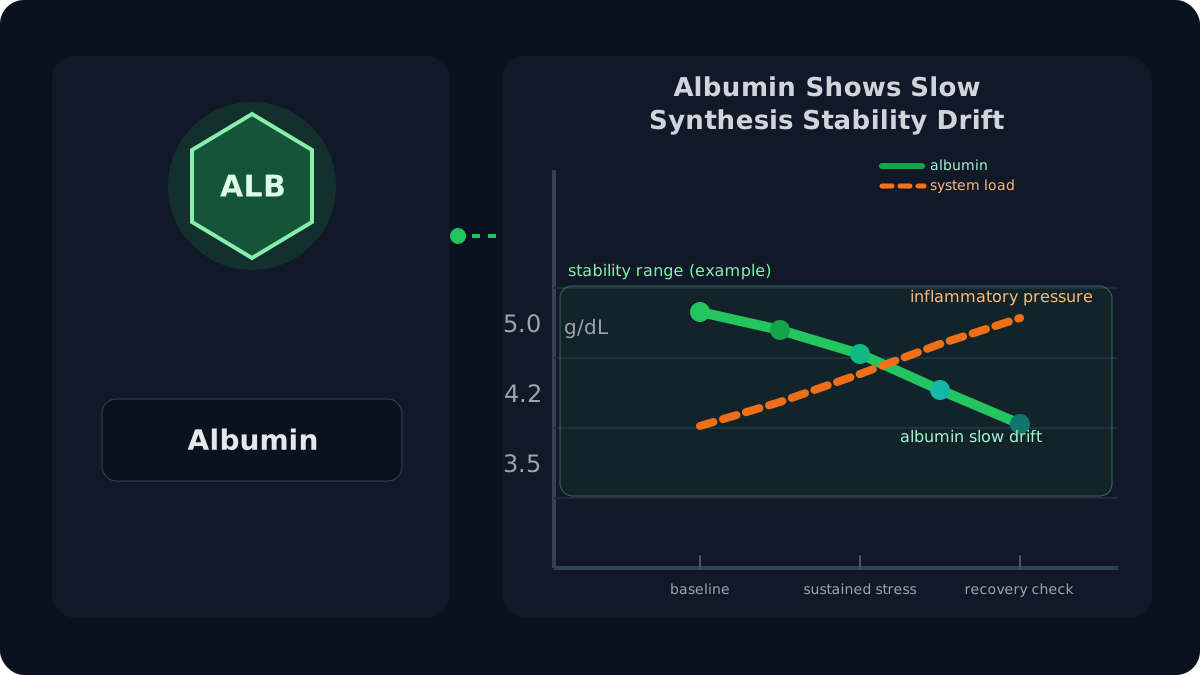
This means albumin often moves inversely to markers like hs-CRP. When CRP rises, albumin may fall. When inflammation resolves, albumin gradually returns toward baseline.
This dynamic makes albumin a useful complementary marker in chronic inflammatory conditions - reflecting not just presence of inflammation, but its systemic impact over time.
Albumin and corrected calcium (paired reading)
Total serum calcium is partly bound to albumin. When albumin is low, total calcium can look falsely low even if biologically active calcium is adequate. That is why calcium interpretation often includes a corrected-calcium estimate.
One widely taught orientation formula adds about 0.8 mg/dL to measured total calcium for each 1 g/dL that albumin is below a reference level (labs may use Payne or other variants). Formulas differ — use your report's method when provided, and discuss high-stakes decisions with your clinician (ionized calcium may be needed).
Low albumin does not by itself prove malnutrition; inflammation, kidney loss, liver synthetic change, and hydration can all shift albumin independently of diet.
Albumin in nutritional context
Albumin has historically been used as a marker of nutritional status, particularly protein intake. That interpretation is partially valid but often oversimplified.
Severe protein deficiency can reduce albumin levels. However, mild-to-moderate dietary variation does not usually cause rapid changes in albumin due to its long half-life.
More importantly, inflammation can suppress albumin even when protein intake is adequate. This creates situations where low albumin is incorrectly attributed to nutrition when the underlying issue is inflammatory signaling.
Why albumin should not be read alone
Albumin becomes meaningful when placed inside a network of related markers.
If albumin is low and liver enzymes are elevated, interpretation leans toward hepatic involvement. If albumin is low with high hs-CRP, inflammation becomes central. If albumin is low alongside kidney markers like creatinine or eGFR, protein loss pathways enter consideration.
Albumin is not a diagnostic endpoint. It is a contextual anchor.
What trends in albumin reveal
A single albumin result shows position. Repeated results show direction.
Gradual decline may indicate sustained stress on synthesis or chronic inflammation. Stable values suggest equilibrium. Recovery trends - slow increases over time - often reflect resolution of underlying pressure.
Because albumin moves slowly, it is particularly useful for evaluating whether the body has actually returned to baseline after illness or stress.
You may feel recovered in days. Albumin may take weeks to normalize. That gap reveals something important about physiological recovery versus subjective perception.
Practical interpretation framework
- Check albumin position within reference range and compare with prior results.
- Review alongside ALT and AST to frame liver synthetic context.
- Compare with hs-CRP - if CRP is elevated and albumin is low, inflammation suppression is likely contributing.
- Check hydration context: recent illness, fluid intake, or clinical dehydration can shift values.
- Evaluate trend direction across repeated tests under comparable conditions.
For repeatable longitudinal review across multiple markers, use a structured lab tracking workflow.
What albumin does not tell you
Albumin does not diagnose specific diseases on its own and does not respond quickly to acute events.
It is not a direct measure of liver damage - only of liver synthetic output over time. It also does not capture all aspects of nutritional status or immune function.
It is a background signal. Its value comes from integration, not isolation.
The real value of albumin
Albumin reflects how well your body maintains internal balance over time.
It captures whether protein synthesis is stable, whether inflammatory load is shifting priorities, and whether fluid and transport systems are functioning efficiently.
On one test, it can look unremarkable. Across time, it becomes a quiet but reliable indicator of systemic stability. It is not loud. But it is persistent.
Frequently asked questions about albumin blood tests
What does low albumin mean in a blood test?
Low albumin can reflect reduced liver protein synthesis, increased protein loss through kidneys, chronic inflammation, or dilution from fluid imbalance. Context from other markers is essential to identify the cause.
Can albumin be low without liver disease?
Yes. Inflammation, kidney conditions, gastrointestinal protein loss, and hydration changes can all lower albumin without primary liver damage.
What does high albumin mean?
High albumin is usually due to dehydration, where reduced plasma volume concentrates proteins. It rarely reflects increased production.
Is albumin a good marker of nutrition?
It can reflect severe protein deficiency, but it is heavily influenced by inflammation and other factors. It should not be used alone to assess nutritional status.
Should albumin be tracked over time?
Yes. Trends provide more meaningful insight than a single value, especially given albumin's slower response to physiological changes.
What is a normal albumin level?
Common reference ranges fall roughly between 3.5 and 5.0 g/dL, though exact values vary by laboratory. Direction of change over time is usually more informative than one isolated result.
The uncomfortable question
If your albumin has been slowly drifting downward over multiple tests while still technically in range, are you truly stable - or is your body quietly reallocating resources in response to a stress you are not fully seeing yet?
Track albumin as a long-horizon stability signal
Upload your blood panel and review albumin alongside liver enzymes, inflammation markers, and kidney context in one timeline, so slow systemic drift is easier to discuss at follow-ups.