
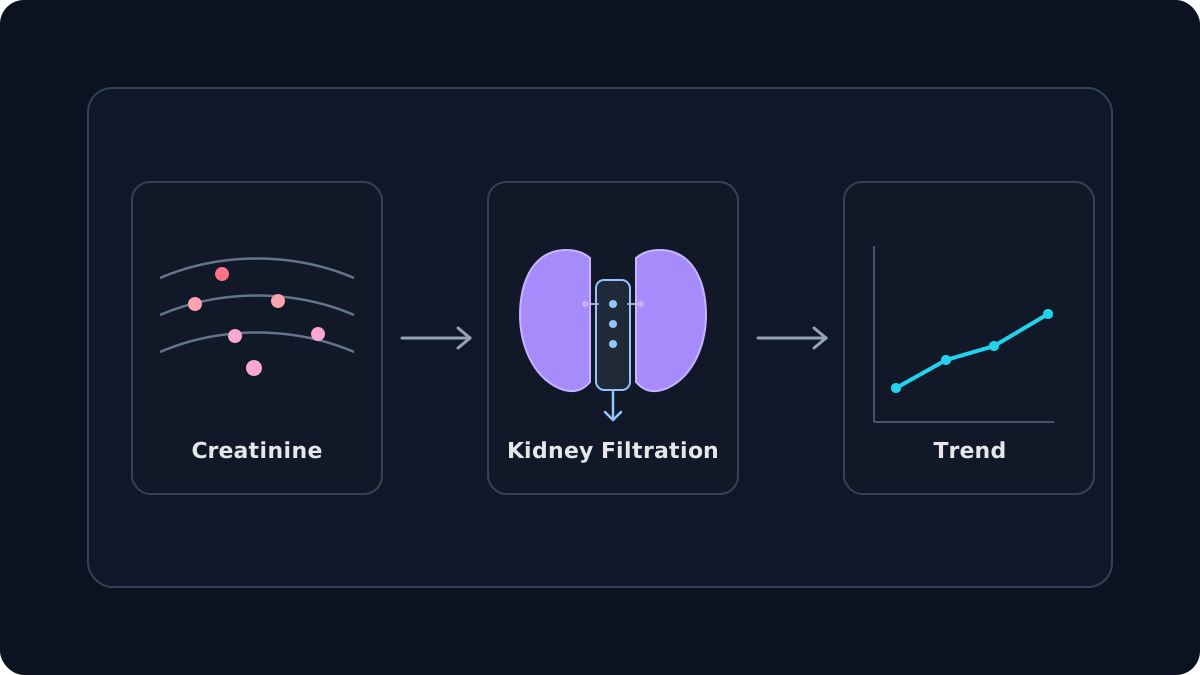
Creatinine is one of the most common markers reviewed when interpreting blood test results related to kidney function. In daily practice, clinicians look at creatinine together with eGFR and clinical context, not as a standalone verdict.
This matters because many people see one mildly elevated value and panic, while others ignore gradual drift because each individual result still appears near range. The useful clinical question is not only "is this number high today?" but also "what is the direction over time?"
If you are building a broader tracking strategy first, start with which blood biomarkers to prioritize. Then use creatinine as a core kidney-function trend marker.
Quick summary
- Creatinine is a standard kidney filtration marker in routine chemistry panels.
- Interpret it together with eGFR, hydration status, and muscle mass context.
- One value can mislead; trend direction across repeated tests is more useful.
- Small chronic increases may matter even before values cross the upper limit.
What creatinine measures
Creatinine is a metabolic breakdown product generated from creatine and phosphocreatine in muscle tissue. It is produced continuously and released into blood, then cleared primarily by the kidneys through glomerular filtration.
Because production is relatively stable for a given person and clearance depends on kidney function, serum creatinine works as a practical filtration marker. This is why creatinine appears in standard blood work and why it is used to calculate estimated glomerular filtration rate (eGFR).
In plain terms: if kidney filtration worsens, creatinine often rises; if filtration is preserved and other factors stay stable, creatinine usually remains near baseline.
Normal creatinine range
Exact reference intervals vary by laboratory and method, but typical adult ranges are often close to the following values:
| Group | Typical range (mg/dL) | Typical range (µmol/L) |
|---|---|---|
| Men | ~0.7-1.3 | ~62-115 |
| Women | ~0.6-1.1 | ~53-97 |
Always prioritize your own lab report reference range. Different assay methods and calibration standards can produce small but important differences between labs.
Why creatinine rises (and when it doesn't mean kidney disease)
Elevated creatinine is often interpreted as reduced kidney filtration, but non-kidney factors can also move the value:
- Hydration status: dehydration can transiently increase measured concentration.
- Muscle mass: larger muscle mass can raise baseline creatinine without kidney disease.
- Recent heavy exercise: short-term increases may appear after intense training.
- Dietary pattern: high meat intake near testing can affect results in some people.
- Medication effects: some drugs alter renal hemodynamics or creatinine handling.
- True filtration decline: persistent rise over time may signal kidney function change.
That is why clinicians combine creatinine with eGFR, urinalysis, blood pressure, clinical history, and repeat testing before drawing conclusions.
Creatinine level interpretation table
The table below is a practical orientation aid, not a diagnostic rulebook:
| Creatinine pattern | Possible interpretation |
|---|---|
| Slightly elevated (single test) | Dehydration, muscle mass, recent exercise, or lab variation. |
| Moderately high and persistent | Possible filtration issue; review eGFR, urine, and trend history. |
| Rapidly rising or very high | Needs timely clinical evaluation and broader renal workup. |
Context still wins. A stable mildly elevated baseline in a muscular person is clinically different from a new upward trend in someone with hypertension or diabetes.
Trend example: why direction matters
Example timeline (all values in mg/dL):
| Month | Creatinine | eGFR |
|---|---|---|
| Jan | 0.96 | 97 |
| Apr | 1.04 | 89 |
| Jul | 1.12 | 81 |
| Oct | 1.19 | 74 |
Each single result may still appear "near normal," but the longitudinal pattern is clinically relevant. Trend slope, not just threshold crossing, guides follow-up decisions.
How doctors review creatinine trends
A practical workflow for better creatinine interpretation:
- Use the same lab and similar test timing when possible.
- Document hydration, exercise, and medication changes near blood draw date.
- Track creatinine with eGFR in one timeline, not separate notes.
- Compare new results to your baseline and slope, not only to range cutoffs.
- Escalate persistent upward trends for clinical review, even if changes look small.
Related biomarkers
- eGFR (estimated filtration context from creatinine-based equations).
- Uric acid (clearance-sensitive marker that can rise with renal or metabolic stress shifts).
- BUN (complementary renal chemistry marker).
- Albumin-to-creatinine ratio (urinary kidney-damage context).
- Cystatin C (alternative filtration context in selected cases).
Track kidney markers in one longitudinal view
Upload your lab reports to keep creatinine and related kidney markers in one timeline, so trend changes are visible early and easier to discuss with your clinician.