
Cortisol is often framed as only a stress hormone. That framing is incomplete. Cortisol is a regulatory signal for energy allocation, immune balance, and survival priorities.
It also interacts with broader hormonal balance, including estradiol signaling under prolonged stress load.
The core problem is usually not cortisol itself. The core problem is chronic misalignment of cortisol rhythm. You can have normal glucose, normal thyroid labs, and normal lipids while cortisol dynamics still drive fatigue, anxiety, poor recovery, or metabolic drift.
If you want a clearer baseline before stress-physiology interpretation, set up a prioritized biomarker core and then add rhythm-focused cortisol context.
Quick summary
- Cortisol is a system-level stress and energy regulation signal.
- It follows a daily rhythm, not a static fixed value.
- Acute elevation is often adaptive.
- Chronic dysregulation can affect multiple systems.
- Timing and context usually matter more than one value.
What cortisol actually does
Cortisol is produced by the adrenals under HPA-axis control:
Hypothalamus -> Pituitary -> Adrenal glands -> Cortisol.
Its core role is to allocate energy where the body perceives it is most needed.
- increases glucose availability
- mobilizes stored energy
- suppresses non-priority processes during stress load
- modulates immune activity
- changes alertness and cognitive focus
This is adaptive physiology, not automatically pathology.
The cortisol rhythm (this is everything)
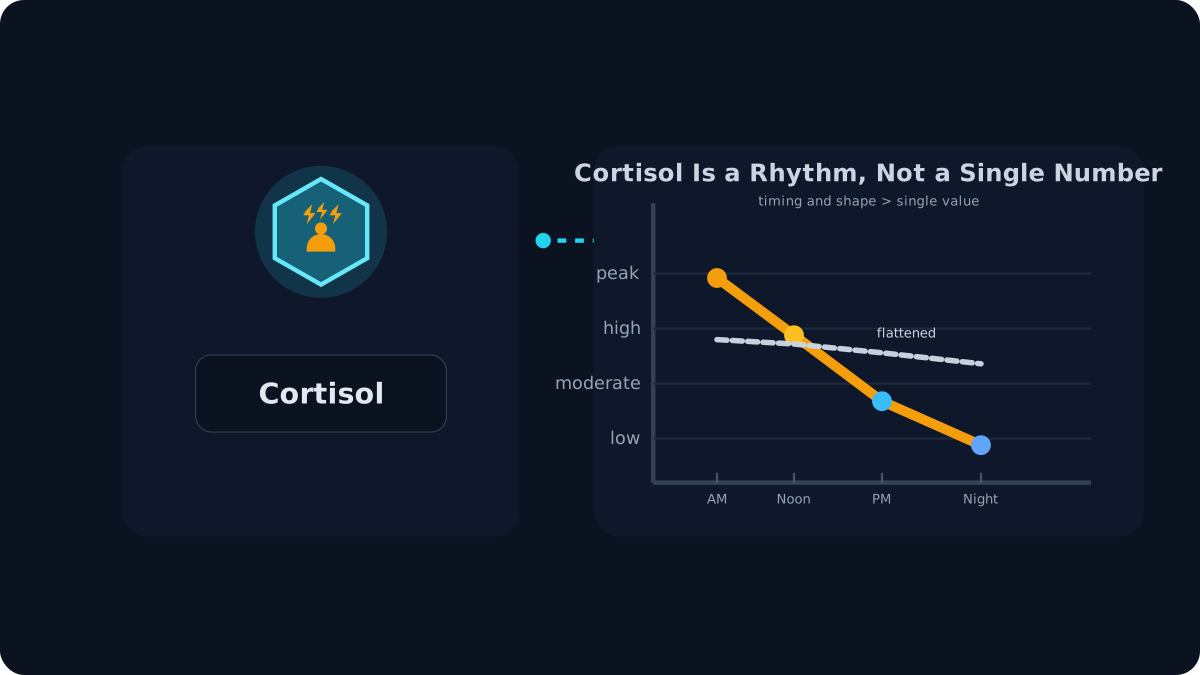
Cortisol is not designed to stay flat. It follows a circadian curve:
- morning peak for wake activation
- gradual daytime decline for stable function
- low evening values for recovery and sleep preparation
Healthy direction is usually: higher morning signal, steady decline, low night signal.
Why a single cortisol blood test is limited
A single value answers what cortisol is at one moment.
It does not directly answer rhythm quality, slope, timing alignment, or evening suppression status.
A normal 10:00 result can still coexist with flat curves, delayed peaks, or elevated evening cortisol, which are often more relevant than one snapshot.
When cortisol becomes a problem
1) Chronically elevated cortisol
Common context includes prolonged stress load, overtraining, poor sleep, and sustained cognitive strain.
Typical effects include higher glucose pressure, reduced insulin sensitivity, sleep disruption, anxious hyperarousal, and downstream inflammatory signaling changes.
2) Flattened or blunted cortisol rhythm
Often appears after prolonged stress exposure.
Pattern often includes lower morning activation and weaker day-to-night variation.
Reported states often include fatigue despite sleep, low motivation, slow cognitive startup, and wired-but- tired patterns. This is usually loss of dynamic regulation, not just one low value.
Cortisol and metabolism
Cortisol influences gluconeogenesis, insulin sensitivity, and fat distribution patterns.
A common drift pattern is chronic cortisol pressure followed by rising insulin and reduced metabolic flexibility, even before obvious glucose abnormalities appear.
In real-world interpretation, this is also a stress regulation capacity question: when magnesium status may be one of several factors clinicians review when stress recovery is impaired — not a cortisol rule on its own.
Cortisol and thyroid function
Chronic stress signaling can influence thyroid conversion dynamics, especially T4 to T3 direction.
This often appears as normal TSH and FT4 with lower active output. For that conversion layer, the most direct marker in this cluster is FT3.
Cortisol does not automatically break thyroid function, but it can modulate output under persistent load.
Cortisol and inflammation
Cortisol has a dual role: short-term anti-inflammatory effects, but potential long-term imbalance when rhythm is chronically dysregulated.
If stress load persists, inflammatory regulation can drift. The clearest low-grade tracking marker in this system view is hs-CRP.
Practical loop: stress load -> cortisol dysregulation -> inflammatory drift -> more stress signaling.
Practical pattern reading
| Pattern | Interpretation direction |
|---|---|
| High cortisol + high insulin | May suggest metabolic stress context (not diagnostic alone). |
| High cortisol + poor sleep | May suggest rhythm disruption context. |
| Low morning cortisol + fatigue | May suggest blunted activation pattern. |
| Dysregulated cortisol + lower FT3 | May suggest conversion pressure under stress load. |
| Dysregulated cortisol + elevated hs-CRP | May suggest stress-inflammation feedback loop. |
What disrupts cortisol regulation
- Sleep disruption and fragmented sleep timing.
- Chronic unresolved psychological stress load.
- Overtraining without adequate recovery.
- Aggressive or prolonged calorie restriction.
- Circadian misalignment from irregular schedules and late light exposure.
Cortisol testing: what actually works
Blood cortisol is simple but timing-sensitive and snapshot-limited.
Multi-point salivary testing is often more informative for rhythm shape and slope.
Salivary cortisol testing is typically ordered or interpreted with clinical guidance.
Core insight: cortisol is a curve, not just a number.
Trends and context matter more than values
| Time | Cortisol | Context |
|---|---|---|
| Week 1 | normal | baseline |
| Week 3 | high | stress + sleep loss |
| Week 6 | lower | recovery improving |
This usually indicates a dynamic system responsive to inputs rather than fixed dysfunction.
Practical interpretation framework
- Confirm timing: morning sample or random snapshot?
- Check whether value direction matches expected rhythm phase.
- Map current context: sleep, stress, diet, and training load.
- Cross-check with insulin, FT3, and hs-CRP in the same time window, and include vitamin B12 when fatigue and cognitive symptoms persist.
- Repeat testing under comparable conditions before high-confidence conclusions.
What to do if cortisol is dysregulated
This is not treatment advice, but common levers include:
- stabilize sleep timing first
- reduce chronic stress load where possible
- balance training intensity with recovery capacity
- avoid prolonged aggressive calorie deficits
- retest in more stable conditions
These are general lifestyle factors associated with stress physiology in research contexts. Individual causes vary — discuss persistent out-of-range results or persistent symptoms with a clinician before drawing conclusions.
Final takeaway
Cortisol is not the enemy. It is a system signal for survival-versus-recovery prioritization.
The most useful question is usually not whether cortisol is high or low, but whether rhythm is aligned with the demands placed on the system.
Interpreted with thyroid, metabolic, and inflammation markers, cortisol often explains why systems drift may help explain symptoms or drift in related markers when reviewed with context.
Frequently asked questions about cortisol blood tests
Is high cortisol always bad?
No. Acute elevation is often adaptive. The concern is persistent rhythm dysregulation rather than one temporary stress response.
What is the best time to test cortisol?
Morning testing near wake time is common for blood cortisol. Multi-point testing gives better rhythm context than one random sample.
Can cortisol affect weight gain?
Yes. Cortisol can influence appetite patterns, insulin signaling, and fat distribution, especially when stress is chronic.
Can cortisol affect thyroid results?
In some contexts, chronic stress signaling can influence T4 to T3 conversion dynamics and shift active thyroid output patterns.
Is salivary cortisol better than blood cortisol?
For rhythm shape, multi-point salivary testing is often used; blood cortisol is a timed snapshot. Neither replaces clinical indication — choice depends on the question and lab protocol.
How fast can cortisol normalize?
It depends on the stress drivers. Sleep and stress-load improvements can shift cortisol patterns within weeks in many cases.
Track cortisol with thyroid, metabolic, and inflammation signals
Upload your lab results and align cortisol with FT3, insulin, and hs-CRP in one timeline, so stress physiology patterns become visible instead of hidden.