
There is a recurring pattern with vitamin B12: a person feels off, but standard blood work returns as "normal". Energy falls, focus takes more effort, recovery slows, and subtle neurological signals may appear.
In physiology, that is often not the end of the story. B12 is not just a number; it is a system that spans intake, absorption, transport, and cellular use.
If your tracking still feels scattered, anchor it with a high-signal starter biomarker set before layering deeper nutrient interpretation.
Quick summary
- Vitamin B12 is a system-level nutrient and neurological signal.
- One normal value does not always mean function is optimal.
- Absorption bottlenecks are common and clinically important.
- B12 interacts with iron, inflammation, and stress load.
- Trend direction plus symptoms is stronger than one snapshot.
B12 is not a number, it is a system
For B12 to be functionally available, multiple stages must work:
- adequate intake
- gastric release and binding
- intrinsic-factor mediated absorption
- blood transport
- cellular uptake and utilization
Disruption at any stage can create mismatch between serum value and functional output. This is why someone can remain in-range while still feeling suboptimal.
What B12 actually does (mechanistically)
1) Methylation and DNA synthesis
B12 acts as a cofactor in homocysteine-to-methionine conversion. This supports DNA synthesis, cell division, and red blood cell production.
This methylation step also depends on adequate folate availability, which is why B12 interpretation is stronger when both markers are reviewed together.
When B12 availability is low, red blood cells may become larger and less efficient, reducing oxygen-delivery efficiency and contributing to deeper fatigue states.
2) Neurological function and myelin integrity
B12 is required for myelin maintenance and efficient neural signaling. Low effective availability can reduce signal speed and sensory fidelity.
Clinical patterns may include tingling, reduced cognitive sharpness, memory friction, and slower processing.
3) Cellular energy metabolism
B12 supports mitochondrial pathways that influence ATP production. This often appears subjectively as "heavier" fatigue, not just sleepiness.
Why normal B12 can still be misleading
Reference ranges are statistical, not individualized optimal-function boundaries. Typical B12 ranges are often around 150-650 pmol/L, depending on method and laboratory.
These ranges do not directly encode metabolic demand, absorption quality, system stress, or cellular utilization efficiency.
Two people with similar B12 values can still feel very different in day-to-day function.
Functional B12 deficiency
Functional deficiency describes a pattern where serum B12 appears acceptable while cellular use remains insufficient.
This can reflect transport inefficiency, intracellular bottlenecks, or cofactor constraints. In systems terms: the signal exists, but the system cannot use it efficiently.
Absorption is often the bottleneck
B12 absorption is unusually complex and depends on:
- adequate stomach acid release
- intrinsic factor production
- terminal ileum absorption integrity
Common risk contexts include GI issues, acid-reducing medication use, aging-related gastric decline, and chronic stress.
This is why intake alone is not a reliable indicator of status.
B12 symptoms are a pattern, not a checklist
B12-related changes are often ambiguous and distributed rather than one obvious sign:
- persistent fatigue
- reduced mental clarity
- lower motivation
- slower recovery
- subtle neurological sensations
This is why B12 is commonly overlooked when interpretation depends only on binary in-range labels.
Interaction with other systems
B12 and iron context
B12 supports blood-cell formation, while iron supports oxygen transport through hemoglobin. When both are suboptimal, fatigue and endurance decline are often amplified.
For adjacent iron context, review ferritin.
B12 and inflammation
Chronic low-grade inflammation can reduce nutrient-utilization efficiency, even when serum values seem acceptable. Inflammatory signaling can also shift transport dynamics and increase oxidative demand, making functional B12 adequacy harder to maintain at the tissue level.
When recovery is unclear, review B12 patterns alongside hs-CRP to frame whether immune stress may be contributing to drift.
B12 and stress demand
Stress increases metabolic turnover and can expose borderline nutrient constraints by raising demand relative to recovery capacity.
Trends matter more than single values
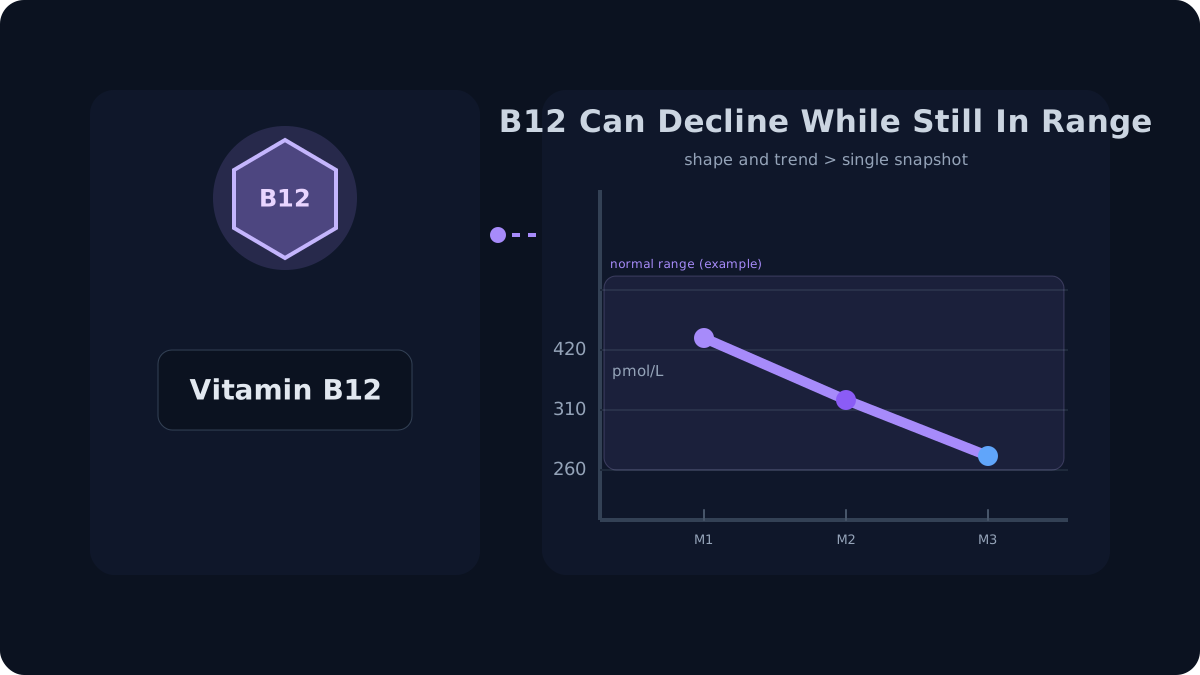
A single B12 result is a snapshot. Direction over time reveals system trajectory.
| Time | B12 | Context |
|---|---|---|
| Month 1 | 420 | baseline |
| Month 2 | 310 | stress + poor sleep |
| Month 3 | 260 | persistent fatigue |
All values may remain in range while direction still suggests declining functional reserve.
High B12 is not always meaningful
Elevated B12 is often expected with supplementation or injections.
Unexplained high values without supplementation may require additional clinical evaluation.
As always, interpretation depends on context, trend, and associated markers.
Practical interpretation framework
- Check where B12 sits within the lab range, not just in-range/out-of-range.
- Compare trend direction across repeated tests.
- Match laboratory trend with symptom pattern and recovery state.
- Review adjacent systems: sleep, stress, absorption, and iron context.
- Retest under comparable conditions before final conclusions.
For repeatable longitudinal review across multiple markers, use how to track lab results over time.
What actually moves B12 in real life
- improving intake quality and consistency
- addressing absorption constraints when present
- optimizing sleep and recovery capacity
- reducing chronic stress burden
- retesting under stable conditions
The goal is not fixing one number; it is restoring system function.
Final takeaway
Vitamin B12 is more than a nutrient marker. It reflects system-level behavior across energy, neurological integrity, and metabolic resilience.
Interpreted in isolation, B12 can mislead. Interpreted in context and over time, it becomes one of the most useful markers for understanding real function.
Frequently asked questions about vitamin B12 blood tests
What is the long form of B12?
B12 refers to vitamin B12, also called cobalamin. It is a cobalt-containing vitamin needed for nerve function, red blood cell production, and methylation chemistry.
What is a normal B12 level?
Many labs use ranges around 150-650 pmol/L, but ranges vary widely between laboratories. Interpretation depends on position within range, trend direction, and symptom context.
Can B12 be normal but still cause symptoms?
Sometimes. Symptoms can be non-specific, and serum B12 does not always reflect cellular status. Persistent symptoms or borderline patterns should be reviewed with a clinician; additional markers may be considered in some contexts.
Who is most at risk of low B12?
Higher-risk groups include vegetarians, vegans, older adults, and people with gastrointestinal or absorption-related issues.
Can B12 deficiency cause brain fog?
Yes. B12 supports myelin integrity and neurological signaling, so low effective availability can contribute to cognitive slowing and reduced clarity.
Is high B12 dangerous?
High B12 is commonly related to supplementation or injections. Unexplained elevation without supplementation may need clinical follow-up.
How often should B12 be tested?
Periodically, especially when symptoms persist, diet or recovery patterns change, or prior values show directional drift.
Track B12 trend direction, not just one value
Upload your lab reports and align vitamin B12 with symptom context and adjacent markers in one timeline so functional drift becomes visible early.