
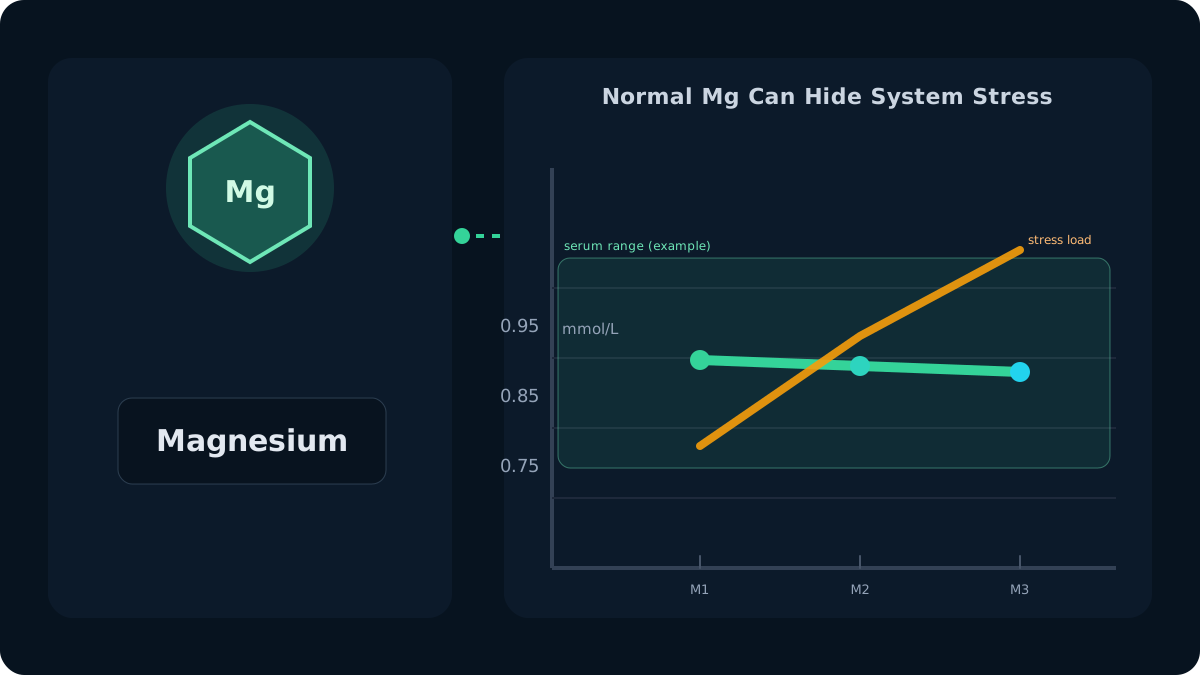
There is a recognizable state many people describe the same way: tired but not calm. The body feels tense, the mind stays active, and sleep does not feel fully restorative.
Then blood work comes back and magnesium is in range. Nothing looks wrong on paper, but system stability still feels off.
If you are building a baseline first, start with a focused biomarker priority set and then layer magnesium interpretation into stress-and-recovery context.
Quick summary
- Serum magnesium can stay normal while intracellular availability drifts.
- Magnesium is a regulator of downregulation, not just a static mineral value.
- Early magnesium strain often appears as pattern, not one dramatic symptom.
- Stress load and recovery quality strongly shape magnesium demand.
- Context and trend direction matter more than one in-range snapshot.
Why magnesium gets misunderstood
Magnesium is not just a mineral circulating in blood. It is a system-level regulator of stability, especially in the nervous system.
Less than one percent of total body magnesium is found in serum. Most is stored in cells, muscle, bone, and neural tissue. Because serum magnesium is tightly controlled for immediate survival, the body can keep serum values stable while drawing from internal stores.
So the number can look stable while the system becomes less stable.
The core mismatch: normal value, stressed system
A normal serum magnesium result does not always mean sufficient availability where regulation happens: intracellularly.
Magnesium is fundamentally about regulation capacity. When availability is marginal, the system may keep compensating for a long time before obvious lab abnormalities appear.
Nervous-system regulation (wired but tired pattern)
Magnesium helps buffer excitation and inhibition, including NMDA-related excitatory tone and inhibitory GABA pathway support.
In practical terms, this affects whether your system can shift out of activation. When magnesium is adequate, downregulation is easier. When it is not, excitatory tone tends to dominate and the system remains slightly "on."
That wired-but-tired state is not abstract. It is neurophysiology under load.
Stress response and recovery loop
Magnesium influences not only stress reactivity, but recovery speed back to baseline after activation. Reduced availability can make stress responses last longer and recovery feel incomplete.
This is one reason magnesium context often belongs next to cortisol patterns. They do not measure the same thing, but they sit in the same regulation loop.
Muscle tension and neuromuscular balance
Magnesium counterbalances calcium in contraction-relaxation dynamics. Calcium drives contraction; magnesium supports release.
If magnesium availability drops, muscles may not fully relax. This often appears as chronic low-grade tightness, jaw tension, shoulder stiffness, or nighttime restlessness, even with no dramatic acute event.
Energy resilience, not just energy level
Magnesium is required for ATP function. Lower availability can reduce energy efficiency, but the broader effect is reduced resilience: more sensitivity to stress and less ability to maintain stable output.
This is why magnesium issues rarely show up as one symptom. They appear as a cluster: lighter sleep, heavier stress response, slower recovery, and persistent low-level tension.
If fatigue is persistent, it can also help to review vitamin B12 in parallel, because nervous-system and energy symptoms can overlap across these regulation layers.
Functional magnesium deficiency
Functional magnesium deficiency describes a state where standard serum values can remain in range while intracellular availability is not sufficient for optimal regulation.
This is not the same as severe clinical deficiency. It is often a compensation state that looks acceptable in isolated lab interpretation but feels unstable in daily function.
System interactions: inflammation, metabolism, recovery
Magnesium does not operate in isolation. It modifies how the system handles stress, sleep pressure, metabolic load, and inflammatory reactivity.
In this systems view, magnesium context can be reviewed alongside hs-CRP when recovery patterns are unclear and internal load seems persistent.
Electrolyte partners such as potassium often drift in parallel when magnesium retention is impaired — a pattern serum magnesium alone can miss.
Inflammation, stress, and mineral balance are not separate stories. They are different views of one system state.
Why trend interpretation works better
Magnesium-related drift is usually gradual, not sudden. The progression is subtle: slightly worse sleep, slightly more tension, slightly slower recovery. Each signal may look small alone, but together they form a meaningful pattern.
A better question than "is magnesium in range?" is: can your system reliably return to baseline after activation?
Practical interpretation framework
- Treat serum magnesium as one signal, not final status.
- Map symptoms to regulation domains: sleep depth, tension, stress recovery.
- Review context load: stress, recovery debt, and training intensity.
- Cross-check related markers where relevant (for example cortisol or hs-CRP).
- Track direction over repeated tests under comparable conditions.
For repeatable longitudinal review, use a structured lab tracking workflow.
Common mistake
A frequent mistake is treating magnesium only as a supplementation problem. Intake matters, but magnesium is often also a signal of system load.
If activation stays chronically high, increasing intake alone may not fully restore regulation. Sleep consistency, stress reduction, and recovery balance remain core levers.
Final takeaway
Magnesium is not only a number in blood. It is a marker of regulation capacity.
When magnesium availability is sufficient, downregulation and recovery are accessible. When it is not, activation tends to become the default.
If labs look normal but your system never fully settles, the question may be less about one number and more about how compensated the system currently is.
One uncomfortable question
If your labs say normal but your body never fully relaxes, are you actually okay, or just well compensated?
Frequently asked questions about magnesium blood tests
What is a normal magnesium level?
Most labs define normal serum magnesium roughly between 0.75 and 0.95 mmol/L. This reflects circulating magnesium, not total body or intracellular magnesium.
Can magnesium be normal but still insufficient?
Yes. Serum magnesium is tightly regulated and can remain normal even when intracellular availability is not sufficient for stable regulation.
What are common signs of low magnesium?
Common early signals include muscle tension, lighter sleep, irritability, restlessness, and difficulty relaxing.
Does magnesium help with sleep?
Magnesium supports nervous-system downregulation and may help some people transition into deeper sleep, but it is not a guaranteed sleep treatment.
How does magnesium relate to stress?
Magnesium influences stress-response regulation and recovery back to baseline. Lower availability can prolong activation and slow recovery.
Should magnesium be tested regularly?
It can be useful, especially with persistent symptoms, but interpretation should include symptom pattern and broader system context rather than one value alone.
Keep magnesium context visible over time
Store your reports in one place and review magnesium together with stress and recovery signals when patterns feel unclear.