
Testosterone is one of the central hormones regulating human physiology. It influences muscle mass, bone density, red blood cell production, libido, mood, and aspects of cognitive function. Because of this broad role, the testosterone blood test is commonly used to evaluate hormonal health, reproductive function, and metabolic status.
Yet interpreting testosterone results is rarely straightforward. A single number on a laboratory report rarely tells the full story. Hormone levels fluctuate across the day, vary between individuals, and depend on other hormones that regulate testosterone availability.
This guide explains what the testosterone blood test measures, how to interpret testosterone levels correctly, and why tracking testosterone trends over time provides more insight than reviewing one isolated measurement.
If you are building a long-term biomarker tracking system, testosterone is usually interpreted together with metabolic markers such as insulin, triglycerides, and HDL cholesterol. You can see a practical overview in this first-pass biomarker framework.
What the testosterone blood test measures
The testosterone blood test measures testosterone concentration in the bloodstream. Most routine laboratory panels report total testosterone, which includes all testosterone circulating in blood.
Testosterone typically exists in three functional forms:
- Bound to SHBG (sex hormone binding globulin)
- Weakly bound to albumin
- Free testosterone
Only about 1-3% of circulating testosterone exists as free testosterone, which represents the biologically active fraction capable of entering cells and activating androgen receptors. Because SHBG strongly influences availability, total testosterone alone does not fully describe hormonal activity.
For this reason, clinicians often interpret testosterone with SHBG and may estimate or measure free testosterone.
Total testosterone vs free testosterone
Understanding total vs free testosterone is essential for interpretation. Total testosterone reflects the full circulating hormone concentration, while free testosterone reflects the unbound fraction available to act on tissues.
Two individuals can have the same total testosterone but different free testosterone because SHBG can differ substantially between people.
Illustrative example:
- Person A: total testosterone 550 ng/dL, high SHBG, relatively lower free testosterone
- Person B: total testosterone 550 ng/dL, lower SHBG, relatively higher free testosterone
In this context, symptoms and functional outcomes may differ despite similar total testosterone values. This is one reason isolated values can appear inconsistent with clinical symptoms.
When testosterone should be measured
Testosterone follows a circadian rhythm. Values are usually highest in the morning, often between 7:00 and 10:00 AM, and tend to decline through the day.
Testosterone levels can be 20-30% lower in the afternoon compared with morning measurements, which is why morning testing is recommended.
Most protocols recommend measuring testosterone:
- in the morning
- in a fasting state when possible
- on more than one occasion if a result appears abnormal
Late-day testing can produce lower values and may lead to misinterpretation. For trend tracking, consistent conditions are critical.
Typical testosterone reference ranges
Reference intervals vary by laboratory method, age, and population. In adult males, total testosterone often falls roughly within:
300 - 1000 ng/dL (about 10 - 35 nmol/L)
In adult females, testosterone levels are significantly lower. Typical reference ranges often fall roughly between 15-70 ng/dL, though exact ranges depend on laboratory methods and age.
Reference ranges are statistical distributions, not universal optimal targets. Testosterone values are also influenced by sleep, body fat, metabolic health, illness, medications, and stress.
Because of these influences, interpretation benefits greatly from repeated trend review.
What low testosterone levels may indicate
Persistently low testosterone can appear in several biological contexts:
- primary testicular dysfunction
- hypothalamic or pituitary disorders
- chronic illness
- obesity and insulin resistance
- sleep deprivation
- certain medications
- age-related hormonal changes
Metabolic dysregulation can play a major role. Elevated insulin and visceral adiposity are frequently associated with lower testosterone values in many individuals.
A single low value should not automatically lead to conclusions. Clinicians often confirm with repeat morning total testosterone and may add LH/FSH when values stay low. Related hormone context is typically needed.
What high testosterone levels may indicate
Elevated testosterone can occur in multiple settings:
- exogenous testosterone therapy
- anabolic steroid exposure
- certain endocrine disorders
- rare androgen-secreting tumors
- timing effects or laboratory variation
Mild elevations can reflect temporary biological variation rather than pathology. As with low values, trend context and related markers are essential for accurate interpretation.
Why testosterone trends matter
Hormonal systems are dynamic. Testosterone can vary with sleep, stress, illness, nutrition, and exercise. Because of this variability, one measurement rarely provides enough context.
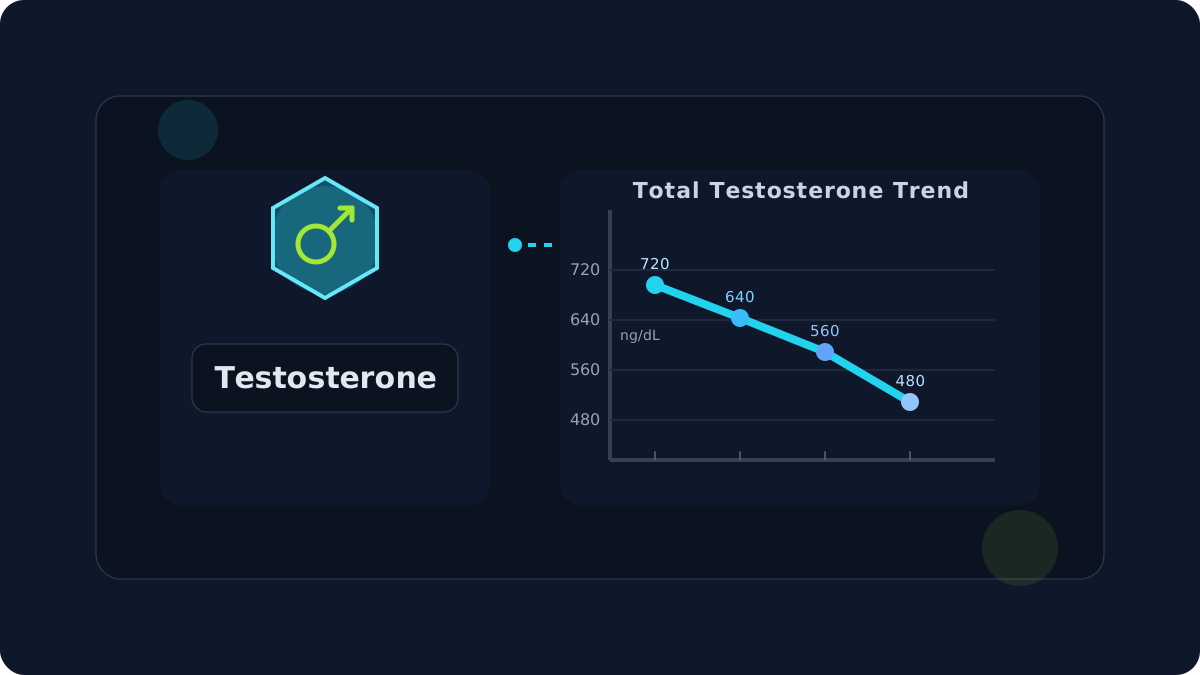
Illustrative testosterone trend:
- 720 ng/dL
- 640 ng/dL
- 560 ng/dL
- 480 ng/dL
A repeated downward trend under consistent morning conditions may warrant clinician review even while values remain in range. Trend analysis helps distinguish normal short-term fluctuation from sustained shifts.
Testosterone and related biomarkers
Testosterone interpretation is stronger when reviewed alongside related markers:
- SHBG - influences how much testosterone remains biologically available.
- LH - helps clarify pituitary stimulation of testosterone production.
- Estradiol - provides aromatization context.
- Insulin, triglycerides and HDL cholesterol - often shift alongside testosterone in metabolic conditions.
Reviewing these markers together gives a clearer endocrine and metabolic picture than isolated testosterone alone.
Practical steps after receiving a testosterone result
- Confirm collection time (morning vs later in the day).
- Check units and laboratory reference interval.
- Compare against prior testosterone values.
- Review SHBG and LH where available.
- Note context factors: sleep, illness, medications, body composition, and stress.
Why long-term tracking improves testosterone interpretation
Hormonal health is best interpreted longitudinally, not from one point estimate. Repeated measurements across months or years help identify gradual decline, treatment response, and trend direction after lifestyle interventions.
Tracking testosterone with metabolic and endocrine context produces a more coherent signal for clinical conversations and personal decision-making.
Final takeaway
The testosterone blood test provides valuable hormonal information, but interpretation rarely comes from a single measurement. Meaningful analysis requires proper testing conditions, free-vs-total context, related hormone review, and long-term trend tracking.
Frequently asked questions about testosterone blood tests
What is a normal testosterone level?
Reference ranges vary by laboratory and age, but adult male total testosterone often falls roughly between 300 and 1000 ng/dL. In adult females, total testosterone ranges are substantially lower, often around 15-70 ng/dL depending on assay and lab. Interpretation should be based on symptoms, age, and related hormones.
Should testosterone be tested in the morning?
Yes. Testosterone follows a daily rhythm and is usually highest in the early morning. Most protocols recommend blood collection between 7:00 and 10:00 AM.
What is the difference between total and free testosterone?
Total testosterone measures the full circulating hormone pool. Free testosterone is the small fraction not bound to proteins and is the most biologically active form.
Can testosterone levels change day to day?
Yes. Sleep quality, stress, illness, exercise, and time of day can all shift testosterone values. That is why repeat measurements are often needed for interpretation.
How often should testosterone levels be tested?
For general monitoring, testing frequency depends on clinical context. Many clinicians repeat testosterone only when symptoms, treatment decisions, or trend review require it.
Does lifestyle influence testosterone levels?
Yes. Sleep, body composition, physical activity, nutrition, and metabolic health can all influence testosterone production and hormonal regulation.
Track testosterone with endocrine and metabolic context
If you want testosterone trends in one timeline with insulin, lipids, and related hormone markers, MedicalHistory can help you organize and compare results over time.