
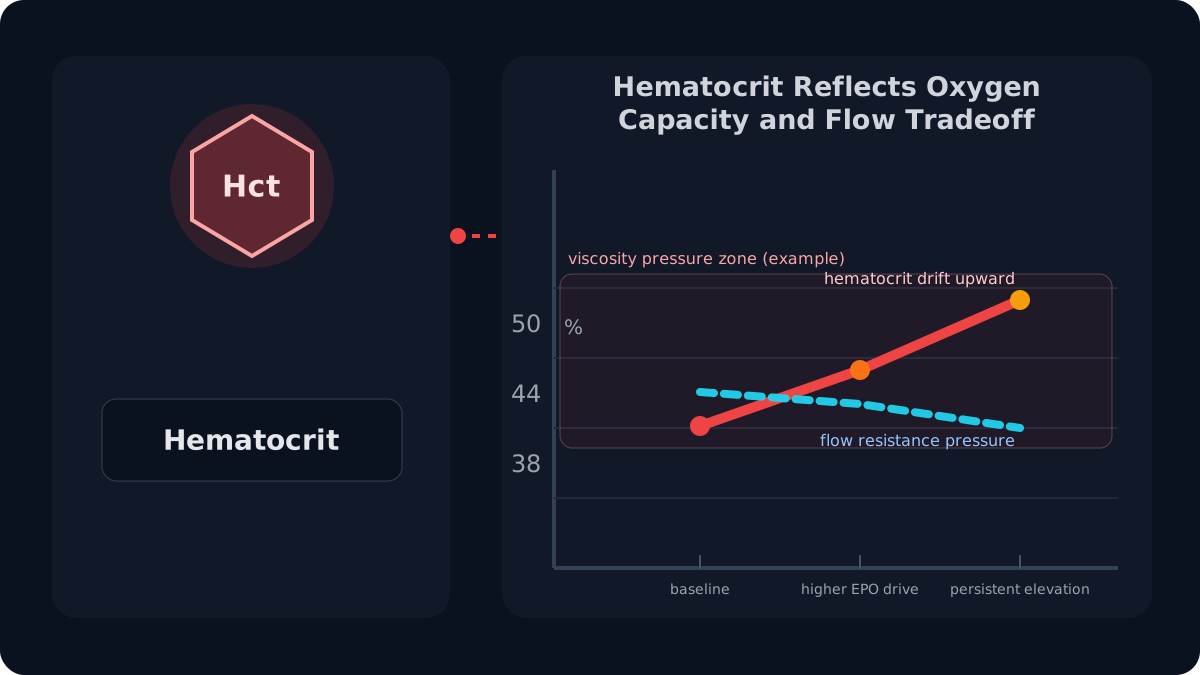
Most people see hematocrit as just a percentage on a blood test: a number that gets ignored unless it is clearly out of range.
But hematocrit is not just a number. It is a direct reflection of how much of your blood is made up of red blood cells and, by extension, how efficiently your system can carry oxygen, maintain flow, and regulate viscosity under load.
Hematocrit is not only a lab value. It is an adaptation signal. It shows how your body balances oxygen capacity against circulation resistance in real time.
If you are building a focused baseline first, start with core blood biomarkers to track first and then interpret hematocrit in context.
What hematocrit actually is
Hematocrit (Hct) is the percentage of blood volume occupied by red blood cells.
If hematocrit is 45%, it means roughly 45% red blood cell volume and 55% plasma volume.
That ratio sits at the intersection of oxygen delivery, blood-flow resistance, hydration status, and erythropoiesis.
Why hematocrit exists as a regulated system
Your physiology continuously balances two competing forces:
- oxygen transport capacity (more red cells improves carrying potential)
- flow resistance (more red cells also increases viscosity)
Too low means weaker oxygen delivery. Too high means thicker blood and harder circulation. Hematocrit is where that tradeoff becomes visible.
In practical terms, oxygen delivery is capacity multiplied by flow, not capacity alone.
More is not better. Better is balanced.
How hematocrit relates to hemoglobin and RBC count
Hematocrit should not be interpreted alone.
It is tightly linked to hemoglobin and RBC count.
- RBC count describes how many red blood cells are present.
- Hemoglobin describes oxygen-carrying protein concentration.
- Hematocrit describes how much blood volume red cells occupy.
Together, these three define practical oxygen-transport capacity.
What determines your hematocrit
1) Erythropoietin signaling
Kidneys produce erythropoietin (EPO) in response to oxygen demand. Higher EPO tends to increase RBC production and hematocrit.
2) Iron availability
Without sufficient iron, red blood cell production is constrained. This is why hematocrit trends often pair naturally with ferritin.
3) Hydration status
Hydration is frequently misread. Dehydration can raise measured hematocrit by shrinking plasma volume, while overhydration can lower it, even when RBC mass is unchanged.
4) Altitude and oxygen exposure
At higher altitude, lower oxygen pressure can increase EPO and raise hematocrit as adaptation.
5) Hormonal environment
Androgens, especially testosterone, stimulate erythropoiesis and can meaningfully raise hematocrit.
Normal ranges and what normal can hide
Typical ranges are often around 40-52% for men and 36-48% for women, but cutoffs are lab- and population-dependent — use your report interval.
But range alone can hide direction. Two people can both sit at 48%, while one is stable and another is climbing from 42%. The number is similar. The trajectory is not.
Low hematocrit: what it usually means
Low hematocrit often reflects reduced oxygen-carrying reserve.
Common contexts include iron deficiency, chronic inflammatory disease states, blood loss, and B12 or folate constraints.
CBC indices can sharpen interpretation: lower MCV/MCH often aligns with iron-restricted erythropoiesis, while higher MCV can point toward B12 or folate-related macrocytic pressure.
It often appears with lower hemoglobin and weaker iron stores. Clinically meaningful declines may present as fatigue, reduced exercise tolerance, or breathlessness, but gradual drift can be easy to miss.
High hematocrit: more complex than it seems
Higher hematocrit is not automatically better performance.
Beyond a threshold, viscosity rises and flow efficiency can decline. Common causes include dehydration, chronic hypoxia (smoking, sleep apnea, lung disease), androgen exposure, and rarer overproduction states such as polycythemia.
The practical concept is simple: oxygen delivery depends on capacity and flow. If flow worsens, additional capacity alone does not solve the problem.
Why hematocrit is often misinterpreted
A single value is easy to overread because hematocrit shifts with hydration, recent illness, training load, and altitude exposure.
This creates two common errors: overreacting to temporary fluctuation, or ignoring a slow trend that actually matters.
What trends in hematocrit reveal
Pattern quality is more useful than a one-time snapshot.
Pattern 1: gradual decline
Can suggest reserve depletion and early anemia direction.
Pattern 2: gradual increase
Can suggest hypoxia adaptation, hormonal drive, or overproduction pressure.
Pattern 3: frequent fluctuation
Often reflects variable hydration status or inconsistent testing conditions.
How to interpret hematocrit properly
- Compare hematocrit with hemoglobin and RBC direction.
- Add RDW when available to detect early production instability behind stable output.
- Check iron context (especially ferritin) for upstream production support.
- Use CBC morphology context (MCV/MCH) when low-hematocrit causes remain unclear.
- Add behavior and physiology context: hydration, sleep, altitude, medications, and hormones.
If all red-cell markers move together, true physiology shift is more likely. If hematocrit changes alone, plasma-volume effects are often the first explanation to test.
What can improve hematocrit when low
Treatment depends on cause: iron repletion when deficient, B12/folate correction when indicated, inflammatory burden reduction, and better nutritional support.
Blind supplementation without diagnosis usually underperforms.
What can lower hematocrit when high
Cause again determines strategy: rehydration for hemoconcentration, sleep-apnea treatment for hypoxic drive, testosterone dose adjustment in androgen-linked elevation, and therapeutic phlebotomy in selected medical scenarios.
What hematocrit does not tell you
- it does not directly measure oxygen utilization
- it does not diagnose a specific disease by itself
- it does not separate all causes without supporting markers and context
It is a system-level signal, not a final answer.
The real value of hematocrit
Hematocrit becomes high-value when tracked longitudinally, interpreted with hemoglobin and ferritin, and tied to real physiology context rather than reference-range labels alone.
On its own it is a percentage. Over time it becomes a directional marker of oxygen capacity, blood-flow efficiency, and system adaptation pressure.
Hematocrit is not about how much oxygen you can carry. It is about how efficiently you can deliver it.
Frequently asked questions about hematocrit blood tests
What is the long form of Hct?
Hct stands for hematocrit, the percentage of whole blood volume made up by red blood cells.
Is hematocrit the same as hemoglobin?
No. Hemoglobin measures oxygen-carrying protein concentration, while hematocrit measures the percentage of blood volume occupied by red blood cells.
Can dehydration raise hematocrit?
Yes. Dehydration lowers plasma volume, which can make hematocrit appear higher even when total red blood cell mass has not increased.
Is high hematocrit dangerous?
It can be, especially when elevation is significant or persistent, because higher blood viscosity can increase cardiovascular strain and clot-related risk.
Can low hematocrit exist without symptoms?
Yes. Mild reductions are often asymptomatic, especially when they develop gradually, but they can still indicate issues such as iron depletion or early anemia patterns.
Should hematocrit be tracked over time?
Yes. Trend direction over repeated tests is usually more informative than one isolated value, particularly when interpreted with hemoglobin and ferritin.
The uncomfortable question
If your hematocrit suddenly looks better on your latest test, is that true physiological improvement, or simply mild dehydration on test morning?
Those are not the same outcome. Without context tracking, you cannot confidently separate them.
Track hematocrit in full blood context
Review hematocrit alongside hemoglobin, ferritin, and behavior context in one timeline so direction is clear before thresholds mislead.