
Eosinophils are often ignored in blood tests.
They are small in number, rarely the primary focus, and often dismissed when they sit inside range. But that view misses what eosinophils actually represent.
They are not general responders like neutrophils, and they are not adaptive memory cells like lymphocytes. Eosinophils reflect patterned immune reactions that tend to repeat, persist, or reappear under specific triggers.
If neutrophils show acute pressure and monocytes show resolution, eosinophils often reveal what your immune system keeps reacting to over time.
If you are building your baseline first, start with important blood biomarkers to track, then add eosinophils for recurring-reactivity context.
What eosinophils actually are
Eosinophils are a white blood cell subtype involved in immune responses linked to allergens, parasites, and selected inflammatory patterns.
They are produced in bone marrow and released into circulation, but much of their activity occurs in tissues, especially respiratory lining, gastrointestinal mucosa, and skin.
Their role is not just broad defense. It is targeted reaction to recurring inputs, including substances that are not classically dangerous but still trigger immune sensitivity.
Eosinophil production and survival are largely regulated by IL-5 signaling.
Why eosinophils exist as a system
The immune system does not only defend against severe threats. It also reacts to environmental inputs. Some reactions are useful, some excessive, and some persist chronically.
Eosinophils are part of that pattern-handling layer, including parasitic defense, allergic reactions, and tissue-level inflammatory signaling.
Compared with neutrophils, eosinophils are more selective. But this selectivity can stay active even without one obvious acute trigger, which is why eosinophils often track recurring immune reactivity rather than one short event.
What an eosinophil blood test measures
In a standard CBC differential, eosinophils are reported as absolute eosinophil count and percentage of total white blood cells.
Absolute count reflects circulating eosinophil volume. Percentage reflects relative immune weighting against other white-cell populations.
Eosinophils gain interpretive value when reviewed with white blood cell count (WBC), neutrophils, lymphocytes, and hs-CRP.
Together, these markers help distinguish acute activation, adaptive response, resolution phases, and repeated-reactivity patterns.
In simple terms: what eosinophils mean
Eosinophils mostly reflect recurring immune reactivity rather than one-time acute pressure.
Higher values often align with allergic activation or environmental sensitivity, while lower values are usually less urgent. Pattern over time matters more than one isolated result.
High eosinophils: causes and interpretation
Elevated eosinophils (eosinophilia) are most commonly associated with allergic or hypersensitivity-related activity.
High eosinophils in blood tests are frequently linked to seasonal or chronic allergies, airway inflammation, eczema-pattern skin conditions, parasitic infection in selected contexts, and some medication reactions.
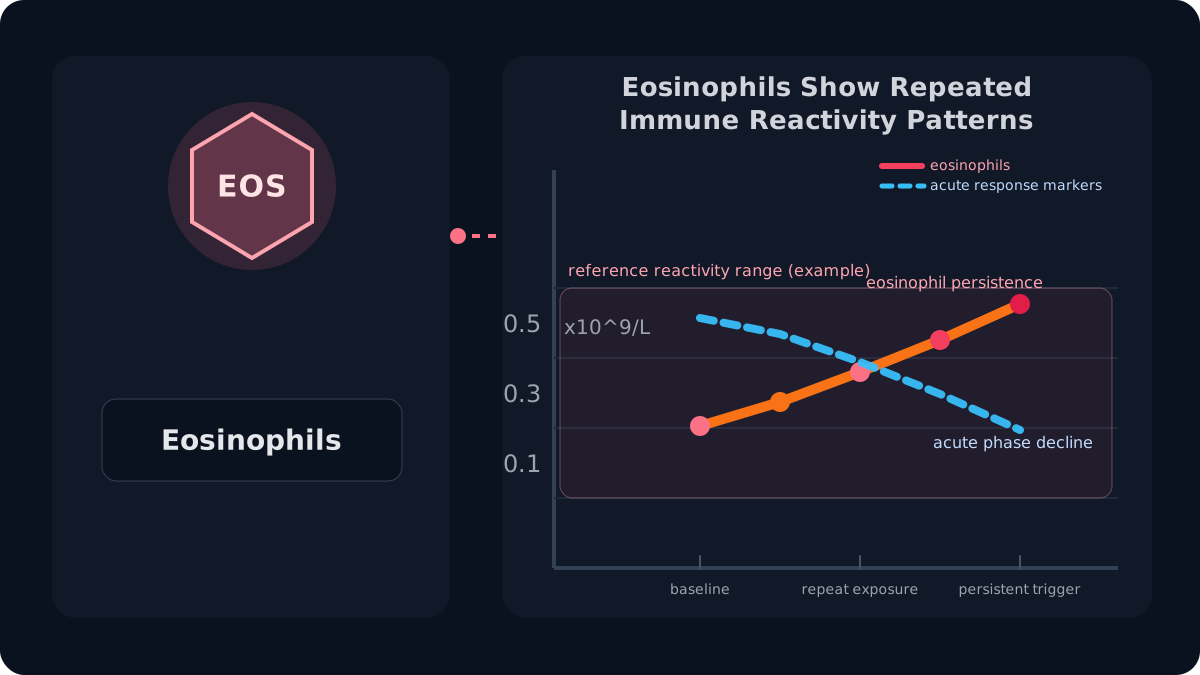
The most useful pattern distinction is persistence. Neutrophils often spike then normalize. Eosinophils can remain elevated when triggers continue to recur.
In practice, persistent eosinophilia often indicates ongoing exposure or sensitivity rather than one-time acute stress.
Low eosinophils: what it means
Low eosinophils are usually less clinically significant as an isolated finding.
Temporary reductions can occur during acute stress, higher cortisol states, or acute infection phases when immune priority shifts toward immediate defense.
Persistently low eosinophils are usually interpreted in broader context rather than as a standalone concern.
Eosinophils and allergic patterns
Eosinophils are one of the clearest blood markers of allergic-type immune behavior. They do not diagnose a specific allergen, but they can indicate repeated reactivity.
This can align with respiratory symptoms, skin irritation, or digestive sensitivity. In some people, elevated eosinophils appear before symptoms are obvious.
That makes eosinophils useful for identifying recurring immune load even when the trigger remains uncertain.
What drives eosinophil behavior over time
Eosinophils are shaped by exposure patterns. They often reflect environment plus repetition rather than one event.
Common drivers include allergen exposure (dust, pollen, selected food triggers), chronic airway irritation, gut-related immune sensitivity, and seasonal variation.
Stress biology also matters. High cortisol states can suppress eosinophils. As stress normalizes, eosinophils may rise again when underlying triggers remain active.
This interaction can create cyclical patterns that only become obvious when eosinophils are tracked over time.
Why reference ranges are not enough
Most eosinophil values sit inside reference intervals, but these ranges are broad and do not capture personal sensitivity patterns.
Values inside range can still show upward drift, seasonal recurrence, or persistent mild activation.
Normal eosinophil range is typically between 0.0 and 0.5 x10^9/L in many laboratories, though exact cutoffs vary by laboratory. Interpretation still depends more on persistence and trend shape than one threshold.
What trends in eosinophils reveal
Single measurements provide limited stage information. Trends reveal activation behavior.
Eosinophil trends can be transient (temporary exposure), cyclical (seasonal or behavior-linked), or persistent (ongoing trigger).
Stable mild elevation across repeated tests often suggests recurring sensitivity. Fluctuations can reflect changing environment, diet, stress load, or recovery quality.
When reviewed with the broader immune panel, eosinophils help separate acute immune events from chronic reactivity patterns.
How to interpret eosinophils properly
Start with structure: total WBC first, then eosinophils in absolute and relative terms.
Next compare with neutrophils and lymphocytes to determine whether the dominant pattern is acute response, adaptive response, or recurring sensitivity.
Then layer context: respiratory, skin, or digestive symptoms; environmental exposure; seasonality; stress and sleep behavior.
Finally, evaluate trend repeatability across time. Repeated patterns carry the strongest signal.
What eosinophils do not tell you
Eosinophils do not identify a specific allergen and do not confirm diagnosis on their own.
They do not measure reaction severity precisely, and they do not independently determine whether a response is protective or excessive.
They are not a conclusion. They are a marker of immune reactivity pattern.
The real value of eosinophils
Eosinophils show what your immune system keeps reacting to repeatedly.
They can expose mild but persistent inflammation, recurring environmental triggers, and subtle immune overactivation that one-off tests may miss.
On one panel, eosinophils can look minor. Across time, they can become one of the clearest markers of unresolved reactivity.
Frequently asked questions about eosinophils
What does high eosinophils mean in a blood test?
It most commonly reflects allergic or hypersensitivity-related immune activity, often driven by repeated exposure rather than one acute event.
Can eosinophils be high without allergies?
Yes. Parasitic infections, some inflammatory conditions, and certain medications can also raise eosinophil levels.
What does low eosinophils mean?
Low eosinophils are usually less clinically significant and may reflect stress-related suppression or normal variation.
Are eosinophils part of WBC?
Yes. Eosinophils are one component of the white blood cell differential in standard CBC testing.
Should eosinophils be tracked over time?
Yes. Trends can reveal persistent or cyclical immune-reactivity patterns that one measurement cannot show.
The uncomfortable question
If your eosinophils are repeatedly elevated across multiple tests but you do not feel obviously sick, are you truly stable, or continuously reacting to something your environment keeps reintroducing?
Track eosinophils alongside your full immune profile
Upload your CBC and review eosinophils with neutrophils, lymphocytes, and inflammation markers in one timeline, so repeated immune patterns become visible before they become problems.