
Phosphate is one of the most overlooked markers on a routine metabolic panel. It appears quietly beside calcium and kidney markers, rarely flagged, rarely discussed — and almost universally ignored unless something has already gone significantly wrong.
That is a missed opportunity. Phosphate is not a passive mineral. It is embedded in the structure of every cell membrane, drives the energy currency of human metabolism, and participates in the same regulatory axis that governs calcium and kidney function. When phosphate shifts — gradually, quietly, often within reference range — it is usually telling you something about systems that are under strain.
If you are building your mineral baseline, start with core blood biomarkers to track first, then layer phosphate alongside calcium, vitamin D, and kidney markers as part of your complete mineral regulation picture.
Quick summary
- Phosphate appears as phosphate, phosphorus, or P on laboratory reports — all refer to the same serum measurement.
- Approximately 85% of body phosphate is stored in bone alongside calcium — serum reflects only a small circulating fraction.
- Phosphate is required for ATP production — every cell in the body depends on it for energy metabolism.
- Kidneys are the primary regulators of phosphate balance — declining eGFR almost always raises phosphate.
- Phosphate and calcium move in opposite directions — when one rises, the other is often suppressed.
- Trend direction alongside calcium, eGFR, and vitamin D is more informative than any single phosphate value.
What phosphate actually does
Phosphate (HPO4²⁻) is the ionized form of phosphorus measured in blood. Like calcium, the vast majority — approximately 85% — is stored in bone as calcium phosphate, forming the mineralized matrix that gives bone its structural strength. The remaining 15% is distributed across soft tissues and circulating blood.
Phosphate is structurally essential in ways that are easy to underestimate. It forms the backbone of DNA and RNA. It is the central component of phospholipids — the molecules that make up every cell membrane in the body. And most critically for moment-to-moment function, phosphate is the mineral at the heart of ATP — adenosine triphosphate — the energy currency that powers virtually every cellular process from muscle contraction to protein synthesis to nerve signaling.
Without adequate phosphate, cells cannot generate ATP efficiently. This is why severe hypophosphatemia produces symptoms that are diffuse and systemic — weakness, fatigue, impaired cognition — rather than localized to one organ or tissue.
Phosphate also participates in acid-base regulation through its role as a urinary buffer, helping the kidneys excrete hydrogen ions and maintain blood pH within narrow physiological limits.
The calcium-phosphate relationship: the inverse that matters
The most important concept in phosphate interpretation is its inverse relationship with calcium.
Calcium and phosphate are regulated by overlapping hormonal systems — primarily parathyroid hormone (PTH) and vitamin D — and they move in opposite directions under most physiological circumstances.
- PTH rises when calcium falls — to restore serum calcium, PTH increases bone resorption, increases renal calcium reabsorption, and simultaneously increases renal phosphate excretion. Calcium rises; phosphate falls.
- Vitamin D promotes both calcium and phosphate absorption — in the gut, active vitamin D increases intestinal uptake of both minerals together.
- FGF-23 (fibroblast growth factor 23) is a hormone produced by bone cells that signals the kidneys to excrete more phosphate. It is the body's primary mechanism for preventing phosphate excess and is particularly relevant in kidney disease.
Reading phosphate without calcium context is like reading sodium without potassium. The relationship between the two often carries more signal than either value alone.
How the kidneys regulate phosphate
The kidneys are the primary regulators of phosphate balance. They filter large amounts of phosphate continuously and reabsorb most of it — adjusting the final excreted fraction based on PTH, FGF-23, vitamin D status, and dietary load.
When kidney function is intact, serum phosphate stays within a relatively tight range regardless of dietary variation. When kidney function declines — reflected by falling eGFR — the kidneys lose their ability to excrete phosphate efficiently, and serum levels begin to rise.
This is why hyperphosphatemia is one of the hallmark biochemical findings of chronic kidney disease. As eGFR falls below 30-45 mL/min/1.73m², phosphate retention becomes increasingly difficult to control through dietary means alone.
Elevated phosphate in the context of declining eGFR contributes to secondary hyperparathyroidism — PTH rises in an attempt to drive phosphate excretion — which can accelerate bone mineral loss and contribute to cardiovascular calcification risk over time.
Phosphate and eGFR are not separate conversations. In anyone with known or suspected kidney disease, they are part of the same clinical picture.
Phosphate and vitamin D: the absorption dependency
Active vitamin D (calcitriol) stimulates intestinal absorption of both calcium and phosphate. When vitamin D is deficient, phosphate absorption in the gut falls — but this is often partially compensated by reduced urinary excretion, which is why serum phosphate may appear normal despite underlying deficiency states.
In chronic kidney disease, the kidney's reduced ability to activate vitamin D compounds the phosphate regulation problem. Reduced active vitamin D means reduced gut absorption of calcium, which triggers more PTH, which further disrupts the calcium-phosphate balance.
This cascade — declining eGFR → reduced vitamin D activation → rising PTH → phosphate retention → secondary hyperparathyroidism — is one of the most clinically significant patterns in nephrology and illustrates why phosphate cannot be assessed in isolation.
High phosphate: causes and context
Hyperphosphatemia — serum phosphate above 4.5 mg/dL in adults — has a relatively narrow differential.
Chronic kidney disease
The most common cause globally. Impaired renal excretion is the primary driver of phosphate accumulation in CKD. Phosphate management is a central component of CKD care from stage 3 onward.
Hypoparathyroidism
Insufficient PTH reduces renal phosphate excretion. Because PTH normally drives phosphate out of the body, its absence — from surgical removal, autoimmune damage, or magnesium deficiency impairing PTH secretion — allows phosphate to accumulate. This pattern typically presents alongside low calcium, since PTH also drives calcium restoration.
Cellular phosphate release
Rapid cellular breakdown — from tumor lysis, rhabdomyolysis, or severe hemolysis — releases large amounts of intracellular phosphate into circulation. This can cause acute, severe hyperphosphatemia in clinical settings.
Excessive phosphate intake
High dietary phosphate — common in processed food diets high in phosphate additives — can transiently raise serum phosphate, particularly in people with reduced renal reserve. This is rarely the sole cause of persistent hyperphosphatemia in people with normal kidney function.
Low phosphate: causes and context
Hypophosphatemia — serum phosphate below 2.5 mg/dL in adults — can range from asymptomatic to severely debilitating depending on degree and rate of decline.
Vitamin D deficiency
Reduced intestinal phosphate absorption from inadequate active vitamin D. This mechanism often coexists with low calcium and elevated PTH.
Hyperparathyroidism
Excess PTH drives renal phosphate wasting. Primary hyperparathyroidism — the same condition that causes elevated calcium — typically produces low-normal or frankly low phosphate as the counterpart to hypercalcemia.
Refeeding syndrome
One of the most clinically significant acute causes. When a person who has been severely malnourished begins eating again, insulin release drives phosphate into cells for ATP synthesis — causing a rapid and dangerous drop in serum phosphate. Refeeding syndrome is a medical emergency in clinical nutrition settings.
Malabsorption
Conditions that impair nutrient absorption — celiac disease, inflammatory bowel disease, gastric bypass — can reduce phosphate uptake from the gut.
Alcohol use disorder
Chronic alcohol use is associated with poor dietary intake, malabsorption, and increased renal phosphate excretion — making hypophosphatemia common in this population.
Symptoms of low phosphate
Mild hypophosphatemia is often asymptomatic. Moderate deficiency can cause muscle weakness, fatigue, and bone pain. Severe hypophosphatemia can impair red blood cell function, respiratory muscle strength, and neurological function.
Why serum phosphate can mislead
Like calcium, serum phosphate represents only the circulating fraction of total body phosphate. Most phosphate is intracellular or stored in bone — serum values reflect the regulated equilibrium between input, storage, and excretion, not total body stores.
A normal serum phosphate does not rule out intracellular phosphate depletion. In refeeding syndrome, for example, total body phosphate may be severely depleted while serum levels appear borderline before the acute drop occurs.
Additionally, sample hemolysis — red cell rupture during collection — releases intracellular phosphate into the sample and can falsely elevate measured serum phosphate. A hemolyzed sample should prompt repeat testing before clinical action.
Why reference ranges are not enough
The adult reference range of 2.5 to 4.5 mg/dL is wider than calcium's range, reflecting greater day-to-day variation driven by meals, time of day, and physiological state. Phosphate is typically higher after meals and lower in the morning.
Within that range, position still matters. Phosphate at 4.3 in someone with declining eGFR and rising PTH tells a different story than phosphate at 4.3 in someone with normal kidney function and stable calcium. The number is identical. The regulatory burden is not.
Trend direction under comparable testing conditions — fasting, consistent timing — is more informative than isolated values.
Why trends matter more than single values
A single phosphate result is a snapshot. Direction over time reveals system trajectory.
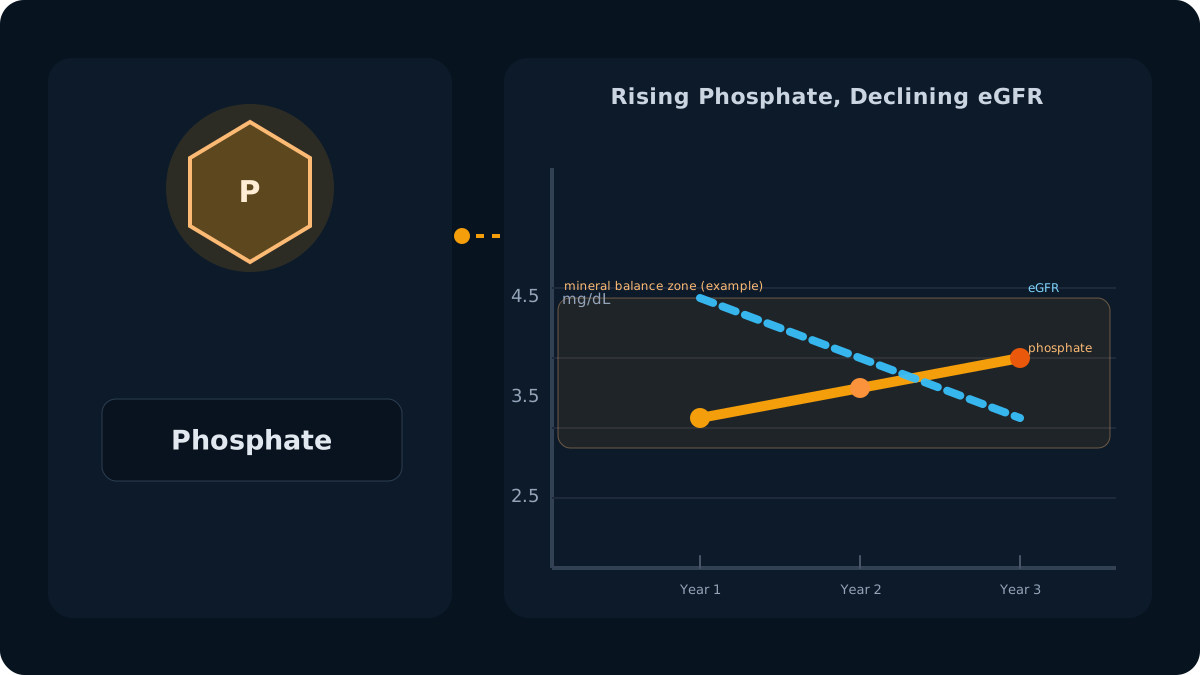
| Time | Phosphate (mg/dL) | eGFR | Context |
|---|---|---|---|
| Year 1 | 3.2 | 74 | Baseline, mildly reduced eGFR |
| Year 2 | 3.7 | 62 | Phosphate rising, eGFR declining |
| Year 3 | 4.2 | 51 | Both trending — mineral management warranted |
All phosphate values remain within the standard reference range. But the parallel trajectory — phosphate rising as eGFR falls — reflects progressive impairment of renal phosphate excretion. The trend is the signal; the individual values alone are not.
Practical interpretation framework
- Always read phosphate with calcium — the inverse relationship between the two often localizes the mechanism more precisely than either marker alone.
- Check eGFR — kidney function is the primary determinant of phosphate excretion capacity. Rising phosphate alongside declining eGFR is a kidney-related pattern until proven otherwise.
- Review vitamin D — vitamin D status affects intestinal phosphate absorption and activates the calcium-phosphate-PTH regulatory axis.
- Check magnesium — magnesium deficiency can impair PTH secretion and secondarily affect phosphate regulation.
- Consider albumin context — as with calcium, low albumin can affect total protein-bound mineral fractions, though phosphate binding is less albumin-dependent than calcium.
- Rule out sample hemolysis if phosphate appears unexpectedly elevated — hemolyzed samples falsely raise phosphate measurements.
- Evaluate trend direction under comparable fasting conditions — phosphate varies with meals and time of day, making consistent testing conditions important.
For longitudinal review across the full mineral and kidney marker set, use a structured lab tracking workflow.
What phosphate does not tell you
Serum phosphate does not measure intracellular phosphate stores or total body phosphate. Cellular depletion can coexist with normal serum values, particularly in malnutrition or refeeding contexts.
It does not identify the cause of dysregulation independently. High phosphate from kidney disease, hypoparathyroidism, and cellular breakdown all produce similar serum values through completely different mechanisms. Context and supporting markers separate them.
It also does not directly measure bone mineral density. Bone stores approximately 85% of body phosphate, but serum phosphate does not reflect skeletal reserve — just as serum calcium does not reflect bone density.
The real value of tracking phosphate
Phosphate is the mineral that most people on routine panels have never thought about — and one that becomes highly clinically relevant the moment kidney function begins to decline.
In the context of normal kidney function, phosphate is a quiet background marker. In the context of declining eGFR, it becomes one of the central management targets in chronic kidney disease — influencing PTH, bone metabolism, and cardiovascular risk simultaneously.
Interpreted alongside calcium, eGFR, vitamin D, and magnesium, phosphate completes the mineral regulation picture that most routine panels present but few people read as a connected system.
Frequently asked questions about phosphate blood tests
What is phosphate on a blood test?
Phosphate (or phosphorus) on a blood test measures inorganic phosphate circulating in serum. It reflects the balance between dietary intake, intestinal absorption, renal excretion, and bone metabolism. It appears as phosphate, phosphorus, or P on laboratory reports.
What is a normal phosphate level?
Most laboratories define normal serum phosphate between 2.5 and 4.5 mg/dL (0.81 to 1.45 mmol/L) in adults. Ranges are higher in children. Values vary by laboratory method and should always be interpreted with kidney function and calcium context.
What does high phosphate mean?
Elevated phosphate (hyperphosphatemia) most commonly reflects impaired kidney excretion, as seen in chronic kidney disease. It can also reflect hypoparathyroidism, excessive dietary intake, or cellular phosphate release during tissue breakdown.
What does low phosphate mean?
Low phosphate (hypophosphatemia) can reflect poor dietary intake, impaired absorption, vitamin D deficiency, hyperparathyroidism, or excessive renal phosphate loss. Symptoms in severe cases include muscle weakness, fatigue, and bone pain.
What is the difference between phosphate and phosphorus on a blood test?
Laboratories may report either phosphate or phosphorus depending on their conventions. Both refer to the same measurement — inorganic phosphate in serum. The numerical values differ slightly by unit but refer to the same physiological marker.
Should phosphate be tracked over time?
Yes. Phosphate shifts are often gradual and most meaningful when read alongside calcium, eGFR, and vitamin D. Trend direction across repeated tests is more informative than single values, particularly in the context of kidney disease monitoring.
One uncomfortable question
If your eGFR has been slowly declining across your last three tests and your phosphate has been quietly rising — both still within reference range — are you watching a mineral regulation pattern that deserves attention, or are you waiting for a number to cross a threshold before the trend feels worth understanding?
Track phosphate alongside calcium, eGFR, and vitamin D
Upload your blood panel and review phosphate with calcium, eGFR, magnesium, and vitamin D in one timeline — so mineral regulation patterns become visible before individual values cross thresholds.