
Selenium almost never appears on a routine panel. It is not part of a standard metabolic panel or CBC — testing it usually requires a specific request, which means most people go their entire lives without ever seeing a number for it.
That is a genuine gap, because selenium sits at the center of two systems most people already care about: thyroid hormone conversion and antioxidant defense. Selenium is a trace mineral in the truest sense — the body needs very little of it, the margin between adequate and excessive intake is narrower than for most nutrients, and its biological role is carried out almost entirely through a small family of specialized proteins built to contain it.
If you are building your nutrient baseline, start with core blood biomarkers to track first, then add selenium alongside thyroid markers if you supplement, follow a restrictive diet, or have a personal reason to review antioxidant and thyroid conversion status.
Quick summary
- Selenium is a trace mineral incorporated into selenoproteins — most of its biological role runs through roughly two dozen of them.
- It is required for glutathione peroxidase, a central antioxidant enzyme family, and for the deiodinase enzymes that convert T4 to active T3.
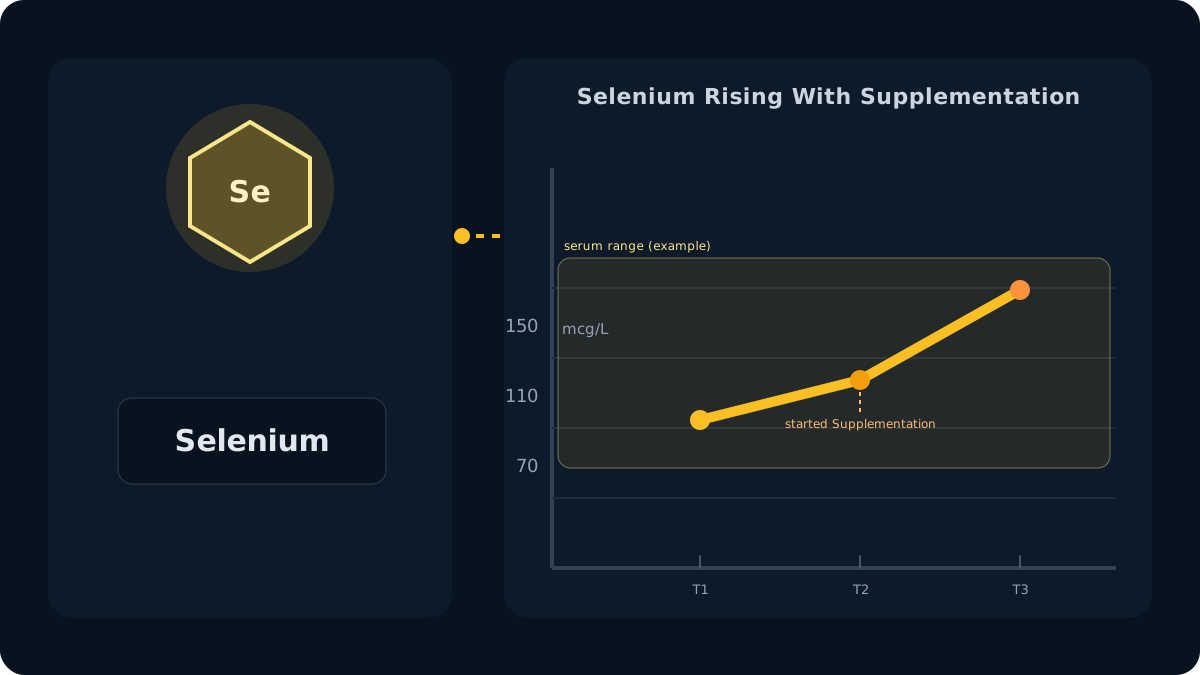
- Many labs report an adult reference range around 70 to 150 mcg/L, though exact cutoffs vary by lab and method.
- The margin between adequate and excessive selenium intake is narrower than for most nutrients — more is not automatically better.
- Selenium status reflects recent intake more than a fixed physiological set point, so trend direction is more informative than one value.
- Diet is the main source of variability — some foods (notably Brazil nuts) are far richer in selenium than others, with their own dosing caveats covered below.
What selenium actually does
Selenium's biological role is almost entirely mediated through selenoproteins — proteins that incorporate selenium in the form of selenocysteine, sometimes called the 21st amino acid. There are roughly two dozen known human selenoproteins, and unlike most trace minerals that act as passive cofactors, selenium is built directly into the functional structure of these enzymes.
The best-characterized family is glutathione peroxidase, a group of antioxidant enzymes that neutralize reactive oxygen species generated during normal cellular metabolism. Without adequate selenium, this antioxidant defense system operates at reduced capacity.
A second major family is the iodothyronine deiodinases — the enzymes responsible for converting thyroxine into its active form and for regulating how much active hormone reaches tissue. This is the mechanistic link between selenium and thyroid function, and it is more direct than most people realize.
A third selenoprotein, selenoprotein P, functions primarily as a selenium transport protein in blood and is increasingly used in research as a marker of selenium status in its own right, alongside serum selenium itself.
Normal selenium range: what the numbers usually look like
Many laboratories report an adult reference range for serum or plasma selenium of approximately 70 to 150 mcg/L (roughly 0.89 to 1.90 micromol/L). This is a reasonable default to orient around, but selenium ranges vary more between labs than many other biomarkers, partly because different assay methods and specimen types — serum, plasma, whole blood, or, in research settings, toenail or hair — each capture a somewhat different picture of status. Always compare your result to the interval printed on your own report.
There is also a functional nuance worth knowing. In research literature, different selenoproteins reach their maximum activity at different selenium concentrations: glutathione peroxidase activity tends to plateau around 70 to 90 mcg/L, while selenoprotein P does not plateau until roughly 100 to 120 mcg/L. This is part of why selenium status is better understood as a range of physiological sufficiency across different functions, rather than a single number with one universal meaning. For context, population averages differ by region — one summary of healthy German adults reported an average around 82 mcg/L — which reflects typical regional diet and soil selenium, not a personal target to aim for.
Selenium and thyroid function: the deiodinase connection
The thyroid gland has one of the highest selenium concentrations per gram of tissue of any organ in the body — a reflection of how selenium-dependent its hormone production process actually is.
Producing thyroid hormone generates hydrogen peroxide as a byproduct. Selenium-dependent glutathione peroxidase protects thyroid tissue from this oxidative byproduct during normal hormone synthesis. Separately, selenium-dependent deiodinase enzymes convert FT4 into active FT3, and also inactivate excess thyroid hormone when needed — selenium sits on both sides of that regulatory switch.
This means a person can have normal iodine intake and a structurally normal thyroid gland, yet still have impaired conversion efficiency if selenium status is inadequate. In practice, this is rarely the dominant explanation for an abnormal TSH or FT3 pattern, but it is a legitimate piece of context when markers on a thyroid panel are reviewed as a system rather than one number at a time.
Some research has also examined selenium supplementation in autoimmune thyroid conditions, particularly around antibody levels. Results across studies have been mixed, and major clinical guidelines do not universally recommend routine selenium supplementation for autoimmune thyroid disease. This is a conversation for a clinician, not a self-directed decision based on a single lab value.
High selenium: causes and context
Elevated selenium — selenosis in its more pronounced form — is uncommon from an ordinary varied diet. It is almost always related to supplementation or, less commonly, occupational exposure.
Supplement intake
Selenium is included in many multivitamins, standalone antioxidant formulas, and thyroid-support supplements. Because selenium's margin between adequate and excessive intake is narrower than for many nutrients, stacking several selenium-containing products is the most common route to excess.
Occupational or environmental exposure
Certain industrial settings involving selenium compounds can be a source of exposure — relevant in specific occupational contexts rather than the general population.
Symptoms of selenium excess
Early signs of chronically high intake include a garlic-like breath odor, a metallic taste, and nail brittleness or hair loss. Gastrointestinal symptoms, fatigue, and skin changes can also occur. These typically develop gradually with sustained over-intake rather than after a single high-selenium meal.
Low selenium: causes and context
Low selenium is more often related to intake and absorption than to a regulatory disorder.
Geographic and dietary factors
Selenium enters the food chain through soil, so dietary intake varies by region. People living where soil selenium is naturally low, or following diets low in selenium-containing foods such as seafood, organ meats, and eggs, can have lower baseline status. This is a population-level pattern rather than an individual disease process.
Malabsorption and restrictive diets
Conditions that impair nutrient absorption, long-term parenteral nutrition without adequate selenium, and diets that exclude most animal-based selenium sources can each reduce intake meaningfully over time.
Historical context: Keshan and Kashin-Beck disease
Severe, endemic selenium deficiency has been documented historically in specific regions — most notably a form of heart muscle disease (Keshan disease) and a joint disorder (Kashin-Beck disease) described in areas of China with very low soil selenium. These reflect extreme, population-level deficiency rather than the mild variation seen in typical clinical practice, but they confirm selenium deficiency is a real, historically documented finding rather than a theoretical concern.
Food sources and the Brazil nut variability problem
Because selenium enters the food chain through soil, the selenium content of most foods depends on where they were grown, not on the food type alone. Brazil nuts (Bertholletia excelsa) are the well-known exception: they grow in regions of the Amazon basin with unusually selenium-rich soil, and the tree concentrates selenium into the nut at levels far higher than almost any other food. This makes them genuinely one of the richest natural dietary sources of selenium available.
The catch is precision. Published analyses of Brazil nuts have found selenium content varying by an order of magnitude or more between different sources, and even within the same batch, content can differ several-fold from nut to nut — because it depends on exactly where within a selenium-variable soil region each individual tree grew. Regulatory and nutrition bodies that have measured this describe the variability as large enough that a handful of nuts from one source might provide a modest amount of selenium, while an equivalent handful from a different bag could deliver several times more.
The practical implication: Brazil nuts are a legitimate part of a selenium-containing diet, but they are not a precise dosing tool. Treating them as a fixed, predictable supplement — assuming a set number of nuts equals a set number of micrograms — does not hold up against how variable their actual content has been shown to be. Anyone using them specifically to address a documented low selenium result should treat them as one dietary input among others, not a substitute for a measured supplement, and should discuss the approach with a clinician.
Selenium and cancer risk: what the evidence actually shows
Selenium has a complicated research history with cancer risk, and this is a place where overstating the evidence is easy to do.
Earlier observational research raised the possibility that selenium supplementation might reduce risk of certain cancers. This led to the Selenium and Vitamin E Cancer Prevention Trial (SELECT), one of the largest cancer prevention trials ever conducted, involving over 35,000 men, specifically testing selenium and vitamin E for prostate cancer prevention.
The result: selenium supplementation did not reduce prostate cancer incidence. The trial was stopped early, with a small, non-significant signal toward increased prostate cancer risk in the vitamin E arm and a non-significant signal toward increased type 2 diabetes risk in the selenium arm on secondary analysis.
The practical takeaway is not that selenium is harmful, but that supplementing it specifically for cancer prevention in people who are not selenium-deficient is not supported by the best available trial evidence. Selenium's well-established roles in thyroid function and antioxidant defense stand on their own and do not require, or benefit from, a cancer-prevention narrative the largest relevant trial did not support.
Why trends matter more than single values
A single selenium result is a snapshot influenced heavily by recent diet. Direction over time, especially alongside diet or supplement changes, is more informative.
| Time | Selenium | Context |
|---|---|---|
| Test 1 | 82 mcg/L | Baseline, no supplementation |
| Test 2 | 108 mcg/L | Started a daily multivitamin containing selenium |
| Test 3 | 142 mcg/L | Same supplement continued — worth reviewing total intake |
Read alone, any one of these values might look unremarkable. Read as a sequence alongside a known intake change, the trend explains itself.
Practical interpretation framework
- Compare your result only to the reference range printed on your specific lab report — ranges vary enough by method that a generic number is a weak substitute.
- Review all selenium sources together: multivitamins, standalone supplements, and diet.
- If selenium is being reviewed in a thyroid context, look at it alongside TSH and FT3 rather than in isolation.
- Do not start or adjust selenium supplementation based on a single value — especially for thyroid or cancer-related reasons — without discussing it with a clinician.
- Evaluate trend direction alongside diet and supplement changes rather than reading isolated values across tests.
For repeatable longitudinal review across nutrient and thyroid markers, use a structured lab tracking workflow.
What selenium does not tell you
A selenium result does not diagnose a thyroid condition on its own. It is one contributing input to thyroid hormone conversion, not a replacement for reviewing TSH and FT3 directly.
It does not confirm or rule out cancer risk. As the SELECT trial demonstrated at scale, selenium status and supplementation do not translate into a reliable cancer-prevention signal in people who are not selenium-deficient.
It also does not tell you which specific source is driving a result. A high or low value can come from supplements, food, or both — the number itself does not distinguish between them.
The real value of tracking selenium
For most people eating a varied diet in a selenium-adequate region, selenium is a background nutrient that rarely needs active management. Its value becomes clearer in specific situations: restrictive diets, known thyroid conversion questions, or regular use of selenium-containing supplements.
Read alongside thyroid markers and diet and supplement history, selenium adds a layer of context that a single antioxidant or thyroid number cannot provide on its own.
Frequently asked questions about selenium blood tests
What is a normal selenium level on a blood test?
Many laboratories report an adult reference range for serum or plasma selenium of approximately 70 to 150 mcg/L (roughly 0.89 to 1.90 micromol/L), though exact cutoffs vary by lab and assay method. Always compare your result to the reference interval printed on your own report.
What does high selenium mean?
Elevated selenium most often reflects supplement intake, including multivitamins or standalone selenium formulas. Occupational exposure is a less common cause. Persistent elevation warrants review of all supplement and dietary sources with a clinician.
What does low selenium mean?
Low selenium can reflect low dietary intake, particularly in regions with selenium-poor soil, malabsorption, restrictive diets, or increased losses in certain gastrointestinal conditions. A single low value is best interpreted alongside diet history rather than in isolation.
Are Brazil nuts a reliable way to get selenium?
Brazil nuts are genuinely one of the richest natural dietary sources of selenium, but their content is extremely variable — differing by growing region and even from nut to nut in the same bag. This makes them a poor tool for precise dosing: a handful eaten regularly could provide too little or, depending on the source, approach higher intake levels than intended.
Does selenium affect thyroid function?
Yes. Selenium is required for the enzymes that convert T4 to active T3 and for antioxidant protection of thyroid tissue during hormone production. Research on selenium supplementation in autoimmune thyroid conditions has produced mixed results, and it is not a universally recommended routine intervention — this is a conversation for a clinician, not a self-directed decision.
Should selenium be tracked over time?
It can be useful to track if you supplement, follow a restrictive diet, or have a specific thyroid or gastrointestinal reason to monitor it. Because selenium status reflects recent intake more than a fixed set point, trend direction alongside diet and supplement changes is more informative than one isolated value.
One uncomfortable question
If you supplement selenium, or eat a food you have heard is selenium-rich, on the assumption that it is helping your thyroid — has that assumption ever actually been checked against a number, or is it running entirely on reputation?
Track selenium alongside thyroid and nutrient markers
Upload your blood panel and review selenium with TSH, FT3, and other nutrient markers in one timeline — so thyroid and antioxidant context becomes visible instead of assumed.