
Sodium is the mineral most people think they understand. Too much salt raises it. Too little salt lowers it. Drink more water if it is high. The reality is almost exactly the opposite.
Abnormal sodium on a blood test is rarely about how much salt you eat. It is almost always about how much water your body is holding relative to that sodium — and why.
That distinction changes everything about how sodium should be interpreted.
If you are building your electrolyte baseline, start with core blood biomarkers to track first, then layer sodium as part of your fluid regulation and kidney context.
Quick summary
- Sodium is the primary extracellular cation — it governs fluid distribution between compartments.
- Abnormal sodium almost always reflects water balance problems, not salt intake problems.
- The brain is the most sensitive organ to sodium shifts — neurological symptoms often appear before other signs.
- Both low and high sodium require understanding the underlying mechanism, not just the number.
- Kidney function, hormonal regulation, and hydration context must be interpreted together.
- Rate of change often matters as much as absolute value.
What sodium actually does
Sodium is also known as natrium — the name used in most European laboratory reports, derived from the Latin natrium. On blood test panels it commonly appears as Na or Na+. All refer to the same electrolyte.
Sodium (Na+) is the dominant cation outside cells — in blood plasma and interstitial fluid. While potassium governs the intracellular environment, sodium governs the extracellular environment. Together they maintain the electrochemical gradient that every excitable cell depends on.
Sodium's primary role is osmotic: it attracts water. Where sodium goes, water follows. This makes sodium the master regulator of fluid distribution between blood vessels, tissues, and cells.
Beyond fluid balance, sodium is essential for nerve impulse transmission, muscle contraction initiation, and the transport of nutrients across cell membranes. It is not passive infrastructure — it is active physiology running continuously.
Why abnormal sodium is rarely a salt problem
This is the most important conceptual correction in sodium interpretation.
When serum sodium is low, the intuitive explanation is not enough salt. When it is high, the intuitive explanation is too much salt. Both are almost always wrong as primary causes.
Serum sodium reflects concentration — the ratio of sodium to water in the blood. Change that ratio by altering water, and sodium levels shift without any change in salt intake.
- Low sodium (hyponatremia) — almost always means too much water relative to sodium, not too little sodium. The body is diluting its sodium with excess retained or consumed water.
- High sodium (hypernatremia) — almost always means too little water relative to sodium. The body is concentrating sodium because water has been lost or withheld.
Understanding sodium as a concentration signal rather than an intake marker is what makes interpretation clinically useful.
The brain: sodium's most sensitive organ
Of all the organs affected by sodium imbalance, the brain responds first and most dramatically.
Brain cells are particularly sensitive to osmotic shifts. When sodium drops rapidly, water moves into brain cells by osmosis, causing them to swell. The skull cannot expand to accommodate this, so intracranial pressure rises.
Even mild hyponatremia — sodium around 130 to 135 mmol/L — can cause subtle cognitive impairment, slower processing, and increased fall risk in older adults, often before any obvious neurological symptoms appear.
Severe or rapidly developing hyponatremia can cause confusion, seizures, and cerebral herniation. This is why the rate of sodium change often matters as much as the absolute value — a sodium of 125 that developed over weeks carries different risk than one that developed over hours.
How the body regulates sodium
Sodium balance is tightly controlled by two overlapping hormonal systems.
ADH (antidiuretic hormone)
ADH is released by the pituitary when sodium concentration or blood volume changes. It signals the kidneys to retain water, diluting sodium downward. When ADH is suppressed, kidneys excrete more water, concentrating sodium upward.
SIADH — syndrome of inappropriate ADH secretion — is one of the most common causes of hyponatremia in hospitalized patients. The body produces too much ADH, retains water inappropriately, and dilutes sodium even when intake is normal.
Aldosterone
Aldosterone is produced by the adrenal glands and signals the kidneys to retain sodium (and excrete potassium). It is part of the renin-angiotensin-aldosterone system that links blood pressure, kidney function, and electrolyte balance.
Adrenal insufficiency — insufficient cortisol and aldosterone production — can cause sodium loss through the kidneys and contribute to hyponatremia alongside cortisol dysregulation.
Low sodium: causes and clinical patterns
Hyponatremia — serum sodium below 136 mmol/L — is the most common electrolyte abnormality in clinical settings. Understanding why requires identifying the underlying water-sodium relationship.
Dilutional hyponatremia
Water intake or retention exceeds sodium. Common in heart failure, liver cirrhosis, and kidney disease, where the body retains water despite already being fluid-overloaded. Also seen in endurance athletes who drink excessive plain water during prolonged exercise.
Sodium loss hyponatremia
True sodium depletion through sweat, vomiting, diarrhea, or diuretic use. In this pattern, both sodium and water are lost, but if fluid replacement uses only plain water, the ratio shifts unfavorably.
Hormonal hyponatremia
Hypothyroidism can impair free water clearance, leading to water retention and dilutional hyponatremia. Adrenal insufficiency causes sodium loss through the kidneys due to insufficient aldosterone signaling. TSH should be checked when hyponatremia has no obvious cause, because hypothyroidism is a correctable and frequently overlooked contributor.
High sodium: almost always a water problem
Hypernatremia — serum sodium above 145 mmol/L — almost always reflects water deficit rather than sodium excess. Healthy people rarely develop hypernatremia from salt intake alone because thirst and kidney function correct it quickly.
Common causes include inadequate water intake (particularly in older adults with reduced thirst perception), diabetes insipidus (where ADH signaling is impaired and kidneys cannot concentrate urine properly), fever and sweating without adequate fluid replacement, and osmotic diuresis.
Because brain cells respond to high sodium by losing water and shrinking, hypernatremia causes symptoms that mirror hyponatremia in some ways — confusion, irritability, and in severe cases, seizures — but through the opposite osmotic mechanism.
Sodium and kidney function
Kidneys are the primary executors of sodium regulation. They filter roughly 25,000 mmol of sodium daily and reabsorb approximately 99% of it — adjusting the final 1% based on hormonal signals and physiological demand.
When kidney function declines — reflected by falling eGFR — sodium handling becomes progressively impaired. Both sodium retention (contributing to fluid overload and hypertension) and sodium wasting (contributing to hyponatremia) can occur depending on the type and stage of kidney disease.
Sodium and eGFR should be interpreted together. A sodium abnormality in the context of declining eGFR tells a different story than the same sodium value in someone with intact kidney function.
Sodium and hypertension: the real relationship
The connection between sodium and blood pressure is real but more nuanced than commonly understood.
Dietary sodium affects blood pressure primarily through fluid volume — more sodium retained means more water retained, which increases blood volume and pressure. But individual sensitivity varies substantially. Some people are highly sodium-sensitive; others tolerate high intake with minimal pressure change.
Serum sodium levels are a poor proxy for dietary sodium intake. People can have normal serum sodium while consuming very high amounts of dietary sodium — because the kidneys are efficiently excreting the excess. Serum sodium reflects concentration regulation, not intake.
This is why a normal serum sodium result does not mean dietary sodium is optimized for cardiovascular health. They are measuring different things.
What drives sodium levels over time
- Hydration status — the most direct short-term driver. Dehydration raises serum sodium; overhydration lowers it. This makes sodium sensitive to testing conditions — sample timing and recent fluid intake matter.
- Kidney function — progressive kidney disease alters sodium handling in both directions depending on stage and mechanism.
- Hormonal regulation — ADH, aldosterone, and cortisol all influence sodium balance. Conditions affecting adrenal or pituitary function can shift sodium persistently.
- Medications — diuretics, antidepressants (particularly SSRIs which can trigger SIADH), and several other drug classes can shift sodium meaningfully.
- Gastrointestinal losses — prolonged vomiting or diarrhea depletes both sodium and water; the net effect on serum sodium depends on the relative amounts lost and replaced.
- Age-related changes — older adults have reduced thirst sensitivity, lower total body water, and often reduced kidney concentrating ability, making them more vulnerable to both hypo- and hypernatremia.
Why reference ranges are not enough
The normal serum sodium range of 136 to 145 mmol/L is narrow by design. The body tolerates very little variation before physiological consequences appear.
But within range, context still matters. Sodium at 137 in someone who just finished a long endurance event tells a different story than sodium at 137 in someone with heart failure and progressive fluid retention. The number is identical. The physiology is not.
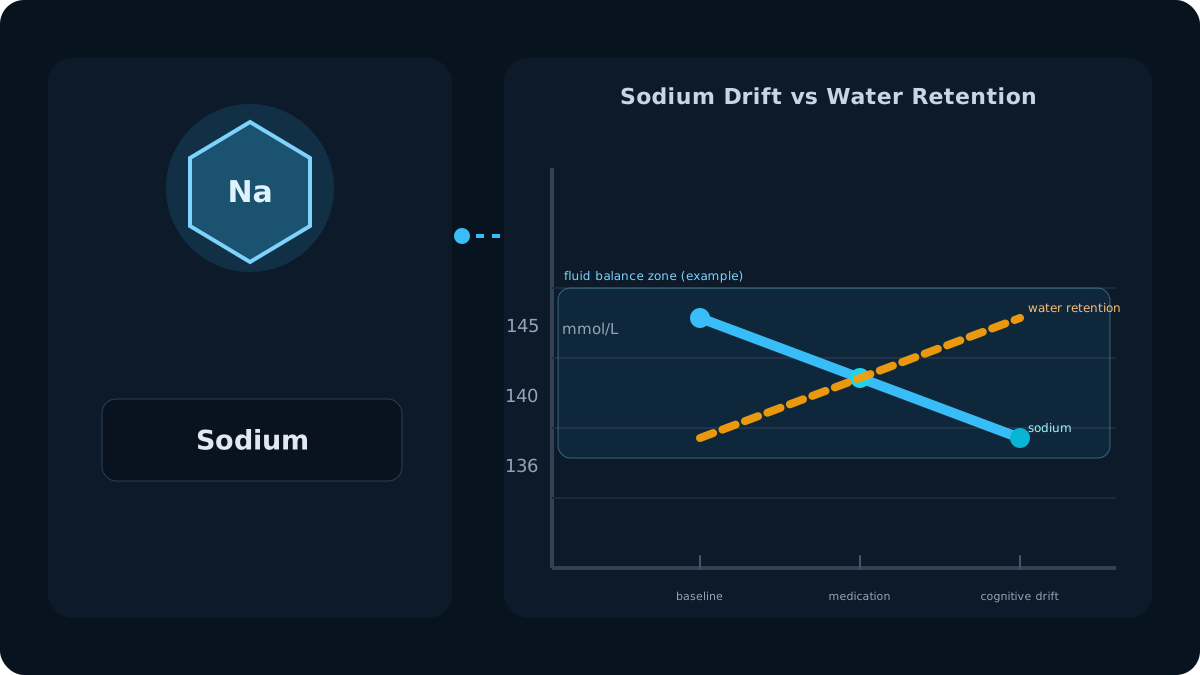
More importantly, direction matters. Sodium drifting from 142 to 139 to 136 over repeated tests — still within normal — may reflect a developing pattern worth investigating before it crosses below 136.
Why trends matter more than single values
A single sodium result is a snapshot. Direction over time reveals system trajectory.
| Time | Sodium (mmol/L) | Context |
|---|---|---|
| Month 1 | 142 | Baseline |
| Month 4 | 139 | New SSRI medication, increased fatigue |
| Month 8 | 136 | Cognitive slowing, persistent low energy |
All three values remain within the standard reference range. The downward trajectory, aligned with a medication change and emerging symptoms, carries more clinical signal than any single result in isolation.
Practical interpretation framework
- Check sodium position within the 136–145 mmol/L range — direction within range matters.
- Assess hydration context: recent fluid intake, sweat losses, and testing conditions can all shift sodium transiently.
- Review kidney function: eGFR and creatinine establish whether kidney sodium handling is intact.
- Check potassium — electrolyte imbalances often co-occur. Sodium and potassium should be read as a pair, not independently.
- Consider hormonal context: thyroid function, cortisol, and aldosterone all influence sodium regulation. Unexplained hyponatremia often warrants TSH testing.
- Review medication list: SSRIs, diuretics, and several other drug classes can shift sodium persistently.
- Evaluate trend direction across repeated tests under comparable conditions — single values are often insufficient for meaningful interpretation.
For repeatable longitudinal review across electrolytes and kidney markers, use a structured lab tracking workflow.
What sodium does not tell you
Serum sodium does not reflect dietary salt intake. This is the most common misunderstanding and it leads to incorrect conclusions in both directions.
It does not explain cause. Hyponatremia from heart failure, SIADH, hypothyroidism, and endurance overhydration all produce similar numbers through completely different mechanisms. The number alone cannot separate them.
It also does not directly measure brain risk. Symptoms depend on rate of change, absolute level, and individual factors. Chronic mild hyponatremia can cause significant cognitive impact with few obvious physical signs.
The real value of tracking sodium
Sodium is one of the most tightly regulated values on a routine blood panel. Its narrow reference range reflects how little tolerance the body has for sustained deviation.
Most people ignore sodium if it falls within range. But sodium drift — even within range — can reflect developing kidney dysfunction, medication effects, hormonal shifts, or chronic hydration patterns that deserve attention before they reach threshold levels.
Interpreted alongside potassium, eGFR, and clinical context, sodium becomes a window into how the body is managing one of its most fundamental regulatory challenges: keeping the right amount of water in the right places.
Frequently asked questions about sodium blood tests
What is natrium on a blood test?
Natrium is the Latin-derived name for sodium, used in most European laboratory reports. On blood panels it appears as Na, Na+, or natrium. It refers to the same electrolyte as sodium.
What is a normal sodium level?
Most laboratories define normal serum sodium between 136 and 145 mmol/L. Values outside this range — even modestly — can carry significant clinical implications, particularly for brain function.
What causes low sodium?
Common causes include excessive water intake, heart failure, kidney disease, liver cirrhosis, hypothyroidism, adrenal insufficiency, and SIADH — a condition where the body retains too much water. Low sodium is rarely caused by insufficient salt intake alone.
What causes high sodium?
High sodium usually reflects water deficit rather than excess salt intake. Common causes include dehydration, diabetes insipidus, excessive sweating without fluid replacement, and inadequate water intake.
What are symptoms of low sodium?
Mild hyponatremia can cause nausea, headache, fatigue, and confusion. Severe or rapidly developing hyponatremia can cause seizures, cerebral edema, and loss of consciousness.
Can drinking too much water cause low sodium?
Yes. This is called dilutional hyponatremia or overhydration hyponatremia. It occurs when water intake dilutes sodium concentration faster than kidneys can excrete the excess water. It is a known risk in endurance athletes.
Should sodium be tracked over time?
Yes. Chronic low-grade sodium shifts — especially below 135 mmol/L — can affect cognition and physical function before obvious symptoms appear. Trend direction alongside kidney function and hydration context is more informative than a single value.
One uncomfortable question
If your sodium has been drifting downward across your last three tests — all within range, no obvious symptoms — do you know why? Or are you waiting for a number below 136 before the question feels worth asking?
Track sodium alongside potassium, eGFR, and hydration context
Upload your blood panel and review sodium with kidney markers and electrolyte context in one timeline — so fluid regulation patterns become visible before they become problems.