
Chloride appears on almost every routine blood panel. Most people never look at it.
It sits quietly beside sodium, usually in range, rarely flagged. And so it gets ignored — treated as background noise in a panel full of more recognizable numbers.
That is a missed opportunity. Chloride is not a passive bystander. It is the primary negatively charged ion in extracellular fluid, and its movement — particularly its inverse relationship with bicarbonate — is one of the most direct windows into how the body is managing acid-base balance.
If you are building your electrolyte baseline, start with core blood biomarkers to track first, then layer chloride alongside sodium, potassium, and kidney markers as part of your full electrolyte picture.
Quick summary
- Chloride (Cl−) is the dominant anion in extracellular fluid — it balances the positive charge of sodium and other extracellular cations.
- Chloride moves in opposite directions to bicarbonate — when one rises, the other typically falls.
- Abnormal chloride almost always reflects acid-base disturbance, fluid imbalance, or kidney regulation issues — rarely a dietary problem.
- High chloride often accompanies metabolic acidosis; low chloride often accompanies metabolic alkalosis.
- Chloride is most interpretable when read alongside sodium, bicarbonate, and kidney function markers.
- Trend direction matters more than single values — persistent shifts carry more weight than transient fluctuations.
What chloride actually does
Chloride (Cl−) is also written as Cl on laboratory reports. It refers to the same electrolyte regardless of notation.
Chloride is the primary anion — negatively charged ion — in blood plasma and interstitial fluid. Where sodium is the dominant positive charge carrier outside cells, chloride is its primary counterpart, maintaining electrical neutrality in extracellular fluid.
Beyond charge balance, chloride plays essential roles in fluid distribution between compartments, gastric acid production (hydrochloric acid in the stomach requires chloride), and — most importantly for clinical interpretation — acid-base regulation through its inverse relationship with bicarbonate.
It is not a glamorous marker. But it is a precise one. Chloride shifts reliably and predictably when acid-base or fluid balance is disturbed, which makes it a useful diagnostic signal when interpreted correctly.
The chloride-bicarbonate relationship: the core of interpretation
This is the single most important concept in chloride interpretation.
Bicarbonate (HCO3−) is the body's primary buffer against acid buildup. Chloride and bicarbonate are both negatively charged and compete for the same anion space in extracellular fluid. When one rises, the other typically falls to maintain electrical neutrality.
This reciprocal relationship means chloride is essentially a mirror of bicarbonate status:
- High chloride → low bicarbonate — suggests the body is in or compensating for metabolic acidosis. Chloride rises as bicarbonate falls, producing a normal anion-gap (hyperchloremic) pattern — distinct from high anion-gap acidoses where chloride often stays normal or falls.
- Low chloride → high bicarbonate — suggests metabolic alkalosis. The buffer is elevated, often because chloride has been lost through vomiting, diuretics, or other mechanisms.
Reading chloride without bicarbonate — or without knowing the clinical context — misses most of what the number is actually communicating.
High chloride: causes and patterns
Hyperchloremia — serum chloride above 106 mEq/L — almost always accompanies or causes a shift in acid-base balance.
Metabolic acidosis
The most clinically significant cause. When bicarbonate falls — from diarrhea, renal tubular acidosis, or excessive saline infusion — chloride rises compensatorily to maintain electrical neutrality. This is called hyperchloremic metabolic acidosis, and it is one of the most common acid-base disturbances in clinical medicine.
Dehydration
When water is lost without proportional electrolyte loss, both sodium and chloride concentrate in blood. High chloride with high sodium in the context of dehydration is a common and straightforward pattern.
Excessive saline administration
Normal saline (0.9% NaCl) contains more chloride than plasma does. Large volume saline infusion is a well-recognized iatrogenic cause of hyperchloremic acidosis — relevant context for anyone reviewing results from a hospitalization.
Kidney dysfunction
Impaired kidney tubular function — visible through declining eGFR — can reduce the kidney's ability to regulate chloride and bicarbonate balance, leading to persistent hyperchloremia in some forms of chronic kidney disease.
Low chloride: causes and patterns
Hypochloremia — serum chloride below 98 mEq/L — typically accompanies metabolic alkalosis and is often driven by chloride loss rather than reduced intake.
Vomiting
Gastric fluid is rich in hydrochloric acid — and therefore in chloride. Persistent vomiting depletes chloride rapidly, causing serum levels to fall while bicarbonate rises compensatorily. This is one of the most common causes of hypochloremic metabolic alkalosis.
Diuretic use
Loop and thiazide diuretics increase urinary chloride excretion alongside sodium. Chronic diuretic therapy is a well-recognized cause of low chloride — the same mechanism that also lowers potassium.
Overhydration
Excessive fluid intake dilutes all electrolytes including chloride. Low chloride with low sodium in the context of fluid overload follows the same dilutional pattern seen in hyponatremia.
Adrenal insufficiency
Insufficient aldosterone reduces sodium and chloride retention by the kidneys, causing both to fall. This pattern often appears alongside low cortisol.
Chloride and sodium: the paired electrolytes
Chloride and sodium move together more reliably than almost any other electrolyte pair. Because chloride is the primary negative counterpart to sodium, changes in fluid balance affect both simultaneously.
When both are high — dehydration or hyperchloremic acidosis. When both are low — dilution, diuretics, or adrenal insufficiency. When they diverge — acid-base disturbance is usually the explanation.
A chloride value that is high while sodium is normal, or low while sodium is normal, is almost always an acid-base signal rather than a hydration signal. That distinction guides interpretation more than the chloride number alone.
Chloride and kidney function
The kidneys regulate chloride through tubular reabsorption and excretion — the same mechanisms that govern sodium and potassium balance. When kidney function declines, chloride regulation becomes progressively impaired.
In chronic kidney disease, the kidney's reduced ability to excrete acid leads to bicarbonate consumption and compensatory chloride retention. Monitoring chloride alongside eGFR and BUN provides a more complete picture of how kidney dysfunction is affecting electrolyte balance.
Why reference ranges are not enough
The standard chloride range of 98 to 106 mEq/L is relatively narrow. But within that range, position still carries signal — particularly when chloride is trending toward either boundary.
Chloride at 105 moving toward 107 across repeated tests, alongside declining bicarbonate and rising creatinine, tells a different story than chloride sitting stably at 103 for years. The absolute values may look similar. The trajectories are not.
This is where chloride becomes most useful — not as a standalone flag, but as a trend that, read in context, confirms or questions what other markers are suggesting.
Why trends matter more than single values
A single chloride result is a snapshot. Direction over time reveals system trajectory.
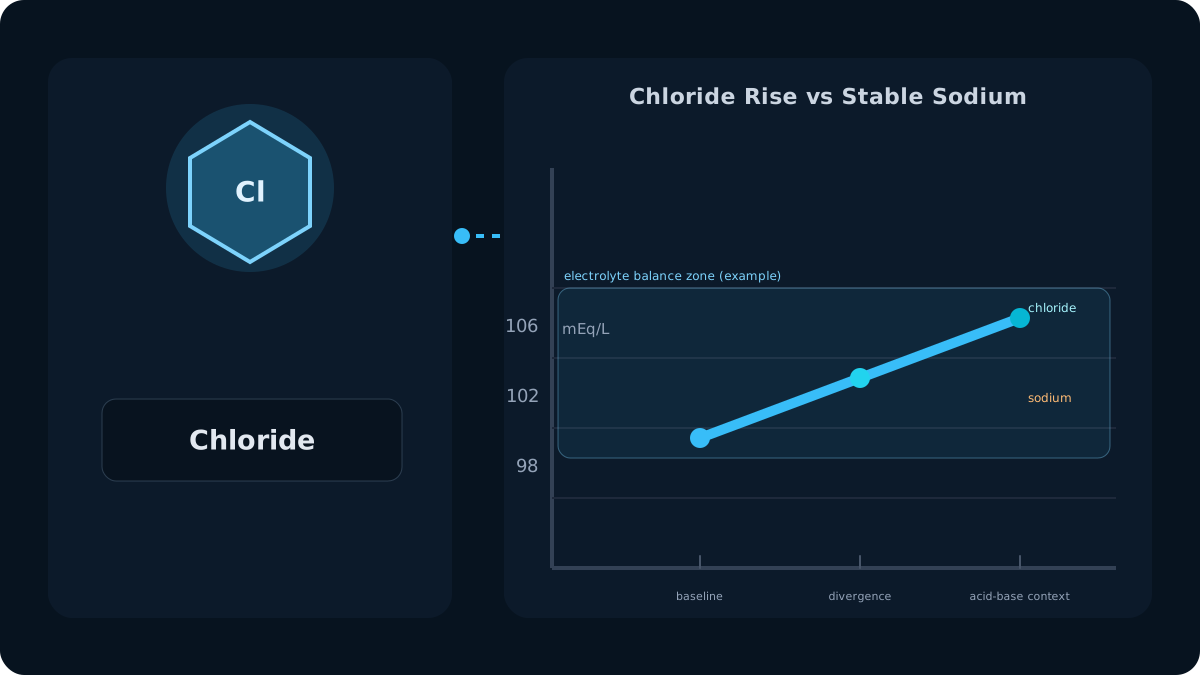
| Time | Chloride (mEq/L) | Sodium (mEq/L) | Context |
|---|---|---|---|
| Month 1 | 101 | 141 | Baseline, stable |
| Month 6 | 104 | 142 | Sodium stable, chloride rising |
| Month 12 | 107 | 141 | Chloride diverging — acid-base context warranted |
Sodium remains stable across all three tests. Chloride rises steadily and crosses the upper reference boundary. The divergence between sodium and chloride — rather than either value in isolation — is the signal that warrants further context.
Practical interpretation framework
- Read chloride with sodium — the relationship between the two is often more informative than either alone.
- Consider bicarbonate context — chloride and bicarbonate move in opposite directions. High chloride with low bicarbonate = acidosis pattern. Low chloride with high bicarbonate = alkalosis pattern.
- Review kidney function: eGFR and BUN establish whether kidney chloride regulation is intact.
- Check potassium — diuretic use affects both chloride and potassium simultaneously.
- Review medication list — diuretics, saline infusions, and antacids can all shift chloride independently of underlying disease.
- Evaluate trend direction under comparable conditions — single values fluctuate with hydration and recent intake.
For repeatable longitudinal review across the full electrolyte panel, use a structured lab tracking workflow.
What chloride does not tell you
Chloride does not identify the cause of an acid-base disturbance on its own. High chloride from diarrhea, renal tubular acidosis, and saline infusion all look identical on a standard panel. Context and clinical history separate them.
It does not directly measure bicarbonate, pH, or respiratory compensation — a full acid-base assessment requires arterial blood gas analysis. Serum chloride is a directional signal, not a complete acid-base picture.
It also does not reflect dietary chloride intake directly. Most dietary chloride comes from sodium chloride (table salt), but serum chloride is regulated by the kidneys independently of intake under normal conditions.
The real value of tracking chloride
Chloride is the electrolyte most people ignore — and often the one that quietly confirms what other markers are suggesting.
On its own, a single chloride result in range is easy to dismiss. But chloride drifting in one direction while sodium holds steady, or chloride consistently elevated alongside declining eGFR, adds a layer of context that neither marker provides alone.
Interpreted alongside sodium, potassium, bicarbonate, and kidney function, chloride completes the electrolyte picture that most routine panels present but few people read as a system.
Frequently asked questions about chloride blood tests
What is chloride on a blood test?
Chloride is an electrolyte measured as part of a basic or comprehensive metabolic panel. It is the primary negatively charged ion in extracellular fluid and plays a central role in maintaining fluid balance, electrical neutrality, and acid-base regulation.
What is a normal chloride level?
Most laboratories define normal serum chloride between 98 and 106 mEq/L (or mmol/L). Values outside this range can reflect acid-base disturbances, kidney dysfunction, or fluid imbalance — but context is required to interpret cause.
What does high chloride mean?
High chloride (hyperchloremia) often accompanies metabolic acidosis, dehydration, or excessive saline administration. It can also reflect diarrhea-related bicarbonate loss, which causes compensatory chloride retention.
What does low chloride mean?
Low chloride (hypochloremia) commonly accompanies metabolic alkalosis and chloride loss through vomiting, diuretics, or excessive fluid intake. It often moves in the opposite direction to bicarbonate.
What is chloride in European lab reports?
Chloride appears as Cl or Cl- on most laboratory reports globally, including European panels. The name and symbol are consistent across reporting systems.
Should chloride be tracked over time?
Yes. Persistent chloride shifts — particularly when paired with abnormal sodium or bicarbonate — can reflect developing acid-base disturbances or kidney regulation issues. Trend direction alongside sodium and kidney markers is more informative than a single value.
One uncomfortable question
If your chloride has been steadily rising across your last three tests while your sodium has stayed flat — do you know what that divergence is telling you, or have you been looking at each number in isolation and missing the signal between them?
Track chloride alongside sodium, potassium, and kidney markers
Upload your blood panel and review chloride with sodium, bicarbonate context, eGFR, and BUN in one timeline — so electrolyte and acid-base patterns become visible before individual values cross thresholds.