
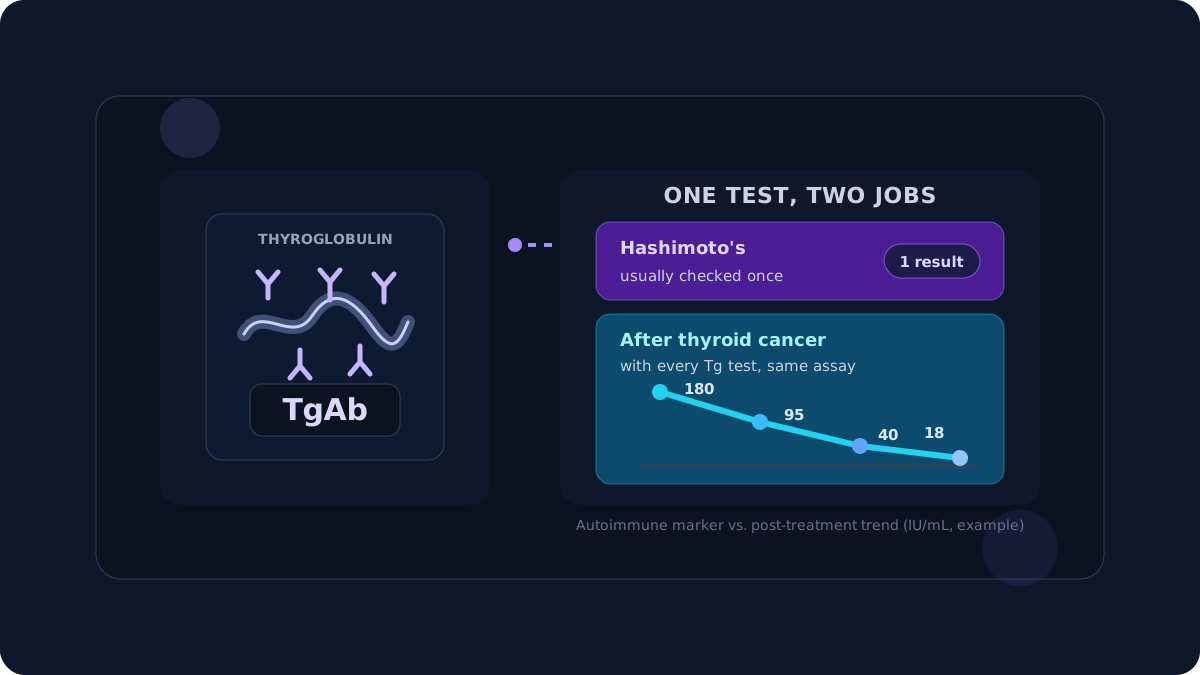
Thyroglobulin antibodies (TgAb, also called anti-Tg) are one of two common antibodies, with TPO antibodies, used to check whether the immune system is targeting the thyroid. For most people that makes TgAb a one-time question asked alongside TPO antibodies: is a thyroid problem autoimmune?
TgAb also has a second, very different job. After treatment for thyroid cancer, it is measured again and again, because it can distort the main cancer follow-up test. The same antibody can be a one-off result for one person and a long-term trend for another. This page explains both uses.
Quick summary
- TgAb are antibodies against thyroglobulin, the protein the thyroid uses to make its hormones. They're a marker of autoimmune thyroid disease, not of how much hormone you have.
- TgAb and TPOAb are often found together. On its own, without TPO antibodies, a positive TgAb was not significantly linked to thyroid disease in a large US population study.
- Cutoffs differ enormously between test kits, from under 4 IU/mL on one assay to 115 IU/mL on another. Always read your result against the cutoff on your own report.
- For Hashimoto's, TgAb is rarely repeated. TSH and free T4 are the tests that get tracked.
- After thyroid cancer, TgAb is tracked on purpose, measured with every thyroglobulin test, on the same assay and, ideally, at the same lab.
What TgAb measures
Thyroglobulin (Tg) is a large protein made only by thyroid cells. The thyroid stores its hormones T4 and T3 as part of this protein before releasing them. TgAb are antibodies the immune system makes against it.
A positive TgAb result means the immune system has recognized thyroid tissue as a target, the same autoimmune process that TPO antibodies point to. When either antibody is positive in someone with an underactive thyroid, Hashimoto's thyroiditis is the usual cause. TgAb are also often raised in Graves' disease.
Don't confuse TgAb with thyroglobulin itself. Thyroglobulin (Tg) is a separate test, used mainly to follow people after thyroid cancer treatment. Reports often list the two next to each other, so check the label before reading the number.
TgAb vs TPO antibodies
The two antibodies are often ordered together, but they don't carry the same weight:
- In the US NHANES III survey, about 10% of people had positive TgAb and 11% had positive TPOAb.
- TPOAb were significantly linked to underactive or overactive thyroid. TgAb alone, without TPOAb, were not.
- Both can appear years before diagnosis, but they are also found in people who never develop thyroid disease. In one study of women in the US military later diagnosed with Hashimoto's, 66% had TPO antibodies and 53% had TgAb in blood samples taken up to 7 years earlier; 14% of women without thyroid disease also had TPO antibodies.
In practice, TPOAb is the main antibody test for Hashimoto's, and TgAb adds supporting context. The thyroid panel guide shows how both fit with TSH and free T4.
Reference ranges: why the cutoff is on your report, not here
TgAb are usually reported in IU/mL (sometimes kIU/L, which is the same number, or U/mL). Each test kit uses its own calibration, so the cutoff for "positive" varies widely:
| Example assay | Reported as negative | What that cutoff is for |
|---|---|---|
| Roche Elecsys anti-Tg | 115 IU/mL or below | Autoimmune thyroid disease |
| Siemens Immulite | under 40 IU/mL (under 80 IU/mL over age 50) | Autoimmune thyroid disease |
| Beckman Access (Mayo Clinic Laboratories) | under 1.8 IU/mL | Tg assay interference in cancer follow-up — not the autoimmune diagnostic limit (Mayo's AITD TgAb assay uses under 4.0 IU/mL) |
A TgAb of 90 IU/mL is negative on the first kit and positive on the other two. Labs note that results from different assay methods can't be directly compared. Two practical consequences:
- Read every result against the cutoff printed on the same report.
- Don't compare TgAb numbers from different labs. A "jump" between two labs is often just a different kit.
What a positive TgAb result can mean
- With normal TSH and free T4: it isn't a diagnosis of hypothyroidism. It shows an autoimmune tendency, and the risk of developing hypothyroidism later is higher when antibodies are present, especially TPOAb. Your clinician may suggest checking TSH periodically.
- With a raised TSH: together with TPO antibodies, it supports an autoimmune (Hashimoto's) cause.
- With low TSH and high free T4: TgAb can be raised in Graves' disease too, but TSH receptor antibodies are the more specific test there.
- Planning a pregnancy: the 2026 American Thyroid Association guideline suggests rechecking TSH every 3–6 months in TPOAb-positive women with normal thyroid function who are planning a pregnancy. It says the same advice can reasonably be applied to TgAb-positive women, although that group wasn't specifically defined in the guideline's methods. See what the 2026 guideline says.
Two different jobs: once for Hashimoto's, tracked after thyroid cancer
For Hashimoto's and autoimmune thyroid disease, TgAb answers a single question. The British Thyroid Foundation notes that repeating TPOAb and TgAb in adults is rarely useful, and their level doesn't usually change treatment. One result is usually enough. The trends that matter are TSH and free T4.
After treatment for differentiated thyroid cancer, it's the opposite. The thyroglobulin blood test is the main marker for watching for recurrence, and TgAb can make that result falsely low or falsely high. So:
- TgAb is measured together with every thyroglobulin test. TgAb are present in about 10% of the general population, but in up to 30% of people with differentiated thyroid cancer. A TgAb result reported as negative doesn't completely rule out interference: kit cutoffs are set for diagnosing autoimmune thyroid disease and can be too high to catch the lower antibody levels that affect thyroglobulin tests.
- The same TgAb assay, and ideally the same lab, should be used for every follow-up test.
- The TgAb trend itself becomes informative. In one study of 116 people treated with surgery and radioactive iodine, who had TgAb but undetectable thyroglobulin and a normal neck ultrasound, those whose antibodies fell by more than half within about a year had a low recurrence rate (about 2%). Recurrence was about 14% when antibodies fell by less than half, and about 24% when they rose by more than 10%.
Trend example (illustrative). After treatment, someone's TgAb on the same assay reads 180 IU/mL, then 95 at six months, 40 at one year (a fall of more than half within the first year) and 18 at two years. A fall of more than half within the first year is the pattern linked to a lower risk. A stable or rising series is the one doctors follow more closely. Interpreting it belongs with your thyroid cancer team, together with thyroglobulin and imaging.
TgAb tracking checklist
- Note the lab and assay on every result, and keep the cutoff printed on the report.
- If you're in thyroid cancer follow-up, test at the same lab each time and keep TgAb next to the thyroglobulin result from the same blood draw.
- If you have Hashimoto's, you don't need to chase repeat TgAb tests. Track TSH and free T4 instead.
- Keep results like "<20" exactly as reported. A "<" result means the value is below the lowest level that test reports, not zero.
Keep TgAb with your TSH and TPO antibody results
Upload your thyroid lab reports. TgAb, TPO antibodies, TSH, free T4 and free T3 land on one Thyroid panel, with each report's cutoff and original value kept. Results like "<20" are shown exactly as reported, and results printed as words ("negative", "positive") are kept as reported. Thyroglobulin is mapped as its own marker, so it never mixes with TgAb.
Frequently asked questions
What does TgAb mean on a blood test?
TgAb stands for thyroglobulin antibodies, also called anti-Tg. They are antibodies against thyroglobulin, a protein made by the thyroid. A positive result suggests the immune system is reacting to the thyroid, as in Hashimoto's, but positive results are also found in people without thyroid disease. It doesn't measure thyroid hormone levels and isn't a diagnosis on its own.
What is a normal TgAb level?
It depends on the test kit. One widely used assay reports 115 IU/mL or below as negative for autoimmune disease, another uses under 40 IU/mL (under 80 IU/mL over age 50), and another uses under 1.8 IU/mL as an interference cutoff for thyroglobulin testing (that lab's autoimmune cutoff is under 4.0 IU/mL). Always compare your result with the cutoff printed on your own report, and don't compare TgAb numbers from different labs.
Is TgAb the same as thyroglobulin?
No. Thyroglobulin (Tg) is a protein made by the thyroid, and its blood test is used mainly in thyroid cancer follow-up. TgAb are antibodies against that protein. The two often appear next to each other on a report, and TgAb can make a thyroglobulin result falsely low or high.
Do I need to repeat a TgAb test?
For Hashimoto's or other autoimmune thyroid disease, usually not. Repeating thyroid antibodies in adults is rarely useful, and the level doesn't usually change treatment. After thyroid cancer treatment it's different: TgAb is measured with every thyroglobulin test, ideally at the same lab.
Which is better for Hashimoto's, TgAb or TPOAb?
TPO antibodies are the main antibody test. In a large US population study, TPOAb were significantly linked to thyroid dysfunction, while TgAb on their own were not. TgAb add supporting context and are often ordered together with TPOAb.
Why is TgAb tested after thyroid cancer?
Because TgAb can interfere with the thyroglobulin test used to watch for recurrence. Measuring TgAb at the same time shows whether antibodies may be interfering, which helps your care team judge the thyroglobulin result. A negative TgAb doesn't completely rule out interference. The TgAb trend itself also matters: antibodies that fall over time are linked to a lower recurrence risk.
Related biomarkers and guides
Sources
- American Thyroid Association. Thyroid Function Tests (TPO and Tg antibodies in Hashimoto's).
- American Thyroid Association. Thyroglobulin (Tg) Assays, 2020 (TgAb interference; measure with every Tg; same assay and lab; ~10% vs up to 30%).
- Hollowell JG, et al. Serum TSH, T4, and thyroid antibodies in the United States population (NHANES III). J Clin Endocrinol Metab. 2002.
- American Thyroid Association. Clinical Thyroidology for the Public, April 2016 (Rosario PW, et al. Thyroid 2016: TgAb trend after treatment).
- American Thyroid Association. Clinical Thyroidology for the Public, vol. 4 issue 10 (antibodies years before diagnosis).
- British Thyroid Foundation. Thyroid function tests (repeat antibody testing rarely useful).
- Northwell Health Labs. Thyroglobulin Antibodies (Roche Elecsys: ≤115 IU/mL negative; methods not directly comparable; raised in Hashimoto's and Graves').
- Mayo Clinic Laboratories. Thyroglobulin Antibody, Serum (TGABI) (<1.8 IU/mL interference cutoff for the Beckman Access Tg assay; measure with every Tg) and Thyroglobulin Antibody, Serum (TGAB) (<4.0 IU/mL reference value for autoimmune thyroid disease evaluation).
- Clinical Laboratory. Age-dependent reference limits for thyroid antibodies (Siemens Immulite).
- Korevaar TIM, et al. American Thyroid Association 2026 Guidelines for Thyroid Disease in Preconception, Pregnancy, and Postpartum. Thyroid. 2026;36(5):481–544.
- Vanderpump MPJ, et al. The incidence of thyroid disorders in the community: a twenty-year follow-up of the Whickham Survey. Clin Endocrinol. 1995.